 Mon - Fri: 9:00 - 19:00 GTM

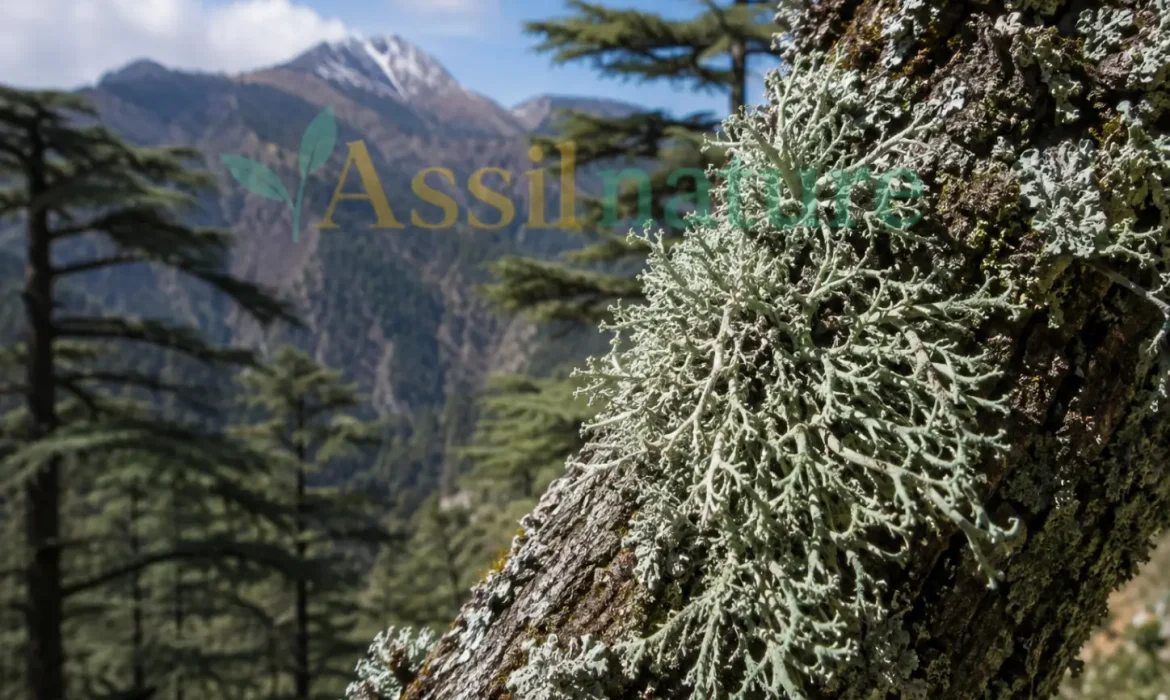
Moroccan Cedarmoss: Atlas Mountain Fragrance Lichens for Industrial Sourcing
Cedarmoss for extraction refers to raw fragrance lichen sourced and prepared as an industrial feedstock for companies that process botanical materials into fragrance ingredients. For professional buyers, the purchasing decision goes far beyond the commercial name of the material. Botanical context, origin, cleanliness, moisture, preparation, lot consistency and representative sampling can all affect whether a raw-lichen lot is suitable for an extraction program.
What Does “Cedarmoss for Extraction” Actually Mean?
In industrial sourcing, Cedarmoss is purchased as a raw botanical material rather than as a finished fragrance ingredient. The dried lichen is collected, prepared and supplied to processors that may subsequently subject it to their own extraction, purification and standardization procedures.
This distinction is important. A supplier of raw Cedarmoss is not necessarily supplying a Cedarmoss extract, absolute or resinoid. Instead, the buyer receives the botanical feedstock from which a processed fragrance material may later be produced.
Raw Cedarmoss as an Industrial Extraction Feedstock
Extraction companies generally need more information than a product name and a price per kilogram. Before qualifying a lot, a technical buyer may need to understand what material is being offered, where it originates, how it has been prepared and whether the supplied sample represents the commercial lot.
These questions become increasingly important when moving from a laboratory sample to a pilot trial and eventually to bulk procurement. Variability that appears insignificant in a small hand-selected sample can become commercially important when processing hundreds of kilograms or several tonnes.
Botanical Identity Matters Before Extraction
Commercial lichen terminology can create confusion. Cedarmoss, Treemoss and Oakmoss should not automatically be treated as botanical synonyms. Oakmoss is principally associated with Evernia prunastri, while Pseudevernia furfuracea is strongly associated with Treemoss terminology and, in specific historical and commercial contexts, with Cedarmoss.
For a buyer requesting a specific botanical species, a trade name alone is therefore insufficient. Origin and host-tree information can provide valuable sourcing context, but neither should automatically substitute for botanical verification.
How Industrial Buyers Evaluate Cedarmoss Before Extraction
A useful evaluation begins with the condition of the incoming raw material. Extraction companies do not necessarily need visually perfect lichen, but they do need material that is appropriate for their process and supplied according to an agreed specification.
The importance of each parameter depends on the buyer’s process. Nevertheless, several factors commonly deserve attention when qualifying Cedarmoss for extraction.
Identity
The commercial designation, botanical requirements and available identification information should be clearly distinguished.
Foreign Matter
Bark fragments, needles, soil, stones, unrelated vegetation and other non-target material can add non-productive weight and interfere with preparation.
Moisture
Moisture affects storage behavior, transported weight and the amount of dry botanical matter actually entering the process.
Preparation
Cleaning, sorting, drying and packing should correspond to the processor’s handling and extraction requirements.
Buyers who need a deeper raw-material qualification framework can continue with our guide to Cedarmoss quality , including moisture, foreign matter, sampling, documentation and lot consistency.
Why Moisture Deserves Particular Attention
Moisture is not simply a cosmetic quality parameter. When raw botanical material is purchased by weight, excessive or inconsistent moisture changes the relationship between invoiced mass and actual dry matter.
It can also influence storage stability and handling. For this reason, professional transactions should define the buyer’s moisture requirement or agreed testing method instead of assuming that one universal moisture specification applies to every extraction company.
Cleaning and Foreign Matter
Wild-collected lichen can naturally arrive with material from its forest environment. Depending on the collection and preparation method, this may include bark, conifer needles, twigs, soil particles or other vegetation.
Industrial preparation can reduce unwanted material through sorting and cleaning. However, the appropriate level of preparation should be defined commercially. A processor purchasing large-volume extraction feedstock may have different requirements from a laboratory purchasing a small botanical reference sample.
More Processing Is Not Automatically Better
Additional cleaning and preparation increase handling requirements and cost. The goal is therefore not to promise an abstract “maximum quality,” but to supply a preparation grade that matches the buyer’s technical and commercial specification.
Representative Sampling Before Industrial Extraction
A sample is useful only when it helps the buyer understand the material that could actually be supplied commercially. A visually selected handful of unusually clean lichen may create a misleading impression if it does not represent the larger lot.
For serious B2B qualification, the supplier and buyer should therefore agree on what the sample represents: a current prepared lot, a proposed preparation grade or a reference material for preliminary evaluation.
Why Pilot Extraction Comes Before Bulk Commitment
Visual inspection and basic raw-material measurements cannot fully predict how a botanical feedstock will perform in a buyer’s proprietary extraction system. Extraction method, solvent system, process conditions and downstream treatment can influence the resulting material.
For that reason, technically demanding buyers may perform laboratory or pilot extraction before approving a larger commercial purchase. This allows the processor to evaluate the raw material using its own equipment, analytical methods and acceptance criteria.
For the processing stage itself—from qualified raw lichen through extraction and toward a fragrance ingredient—see our dedicated guide to Cedarmoss extraction .
Can a Supplier Guarantee Extraction Yield?
A raw-material supplier should be cautious about guaranteeing a universal extraction yield. Yield can depend on the botanical material itself, but also on preparation, moisture, extraction technology, solvent selection, process parameters and the way the processor defines the recovered product.
Historical data from a buyer’s own process can become valuable after repeated trials with comparable lots. Before that relationship exists, a representative sample and pilot extraction provide a stronger technical basis than an unsupported yield promise.
Scaling Requires Lot Consistency
Once the buyer moves beyond testing, the sourcing question changes. The challenge is no longer simply whether one sample performs well, but whether future lots can be supplied with sufficiently consistent identity, preparation, condition and documentation for industrial production.
What Should a Cedarmoss Extraction RFQ Include?
The fastest way to qualify a potential supplier is to communicate the extraction company’s requirements before requesting a final quotation. This prevents price discussions from being based on different preparation grades or technical assumptions.
Industrial Buyer RFQ Checklist
- Required commercial material and botanical identity, where applicable
- Country or region of origin requirements
- Desired cleaning and preparation grade
- Moisture requirement or testing method
- Foreign-matter acceptance criteria
- Required sample quantity
- Initial trial-lot quantity
- Estimated annual or recurring volume
- Packaging format
- Required analyses and documentation
- Destination country and delivery term
Bulk Supply Is More Than Available Volume
For an extraction plant, the ability to source a large quantity once is not the same as having a dependable supply program. Industrial procurement also depends on repeatability, preparation capacity, lot control, packaging, documentation and realistic lead times.
This is especially relevant for wild botanical materials. Natural sourcing environments introduce variability, so commercial planning should distinguish between theoretical regional availability and material that can actually be collected, prepared and supplied according to the buyer’s agreed specification.
Moroccan Cedarmoss for Industrial Extraction
Morocco has a documented connection with fragrance-lichen sourcing, including Atlas Mountain forest environments. For industrial buyers, this origin can be commercially relevant, particularly when it is supported by clear sourcing information and responsible description of the supplied material.
However, Moroccan origin should not be used as a shortcut for botanical identification. A lot collected in an Atlas cedar environment is not automatically proven to be a particular lichen species. Where species-specific supply is required, botanical verification should form part of the qualification process.
A Better Way to Source Cedarmoss for Extraction
Industrial Cedarmoss sourcing works best when the transaction begins with a technical specification rather than a generic product name. The buyer defines the required material and preparation; the supplier confirms what can realistically be supplied; a representative sample is evaluated; and commercial volume follows only after technical qualification.
This approach reduces ambiguity around trade terminology, improves sample-to-lot consistency and creates a stronger basis for long-term relationships between raw-material suppliers and fragrance extraction companies.
Cedarmoss for Extraction: Buyer Questions
What is Cedarmoss for extraction?
Is raw Cedarmoss the same as Cedarmoss extract?
Is Cedarmoss the same as Oakmoss?
Is Cedarmoss always Pseudevernia furfuracea?
Why is moisture important for extraction feedstock?
What foreign matter can occur in raw lichen?
Should buyers test a sample before ordering?
Why perform pilot extraction?
Can raw-material suppliers guarantee extraction yield?
Does Atlas cedar origin prove the lichen species?
What should an industrial Cedarmoss RFQ specify?
Can Cedarmoss be supplied in bulk?
Does Assil Nature supply Moroccan Cedarmoss for extraction?
Technical References
Joulain, D. & Tabacchi, R. — Lichen extracts as raw materials in perfumery. Technical work addressing Oakmoss, Treemoss and Cedarmoss terminology and fragrance-industry use.
British Lichen Society — Botanical descriptions and identification information for Evernia prunastri and Pseudevernia furfuracea.
Moroccan lichen studies — Published botanical research documenting Pseudevernia furfuracea and fragrance-related lichens in Moroccan Atlas environments and on different host trees.
Editorial principle: Commercial names, geographic origin and host-tree association are treated as sourcing information and are not presented as substitutes for lot-level botanical verification.
Looking for Moroccan Cedarmoss for Industrial Extraction?
Assil Nature works with Moroccan Atlas-origin fragrance lichen for industrial buyers. Tell us your required preparation grade, sample quantity, estimated volume, packaging and botanical or analytical requirements so the supply can be qualified against your extraction needs.
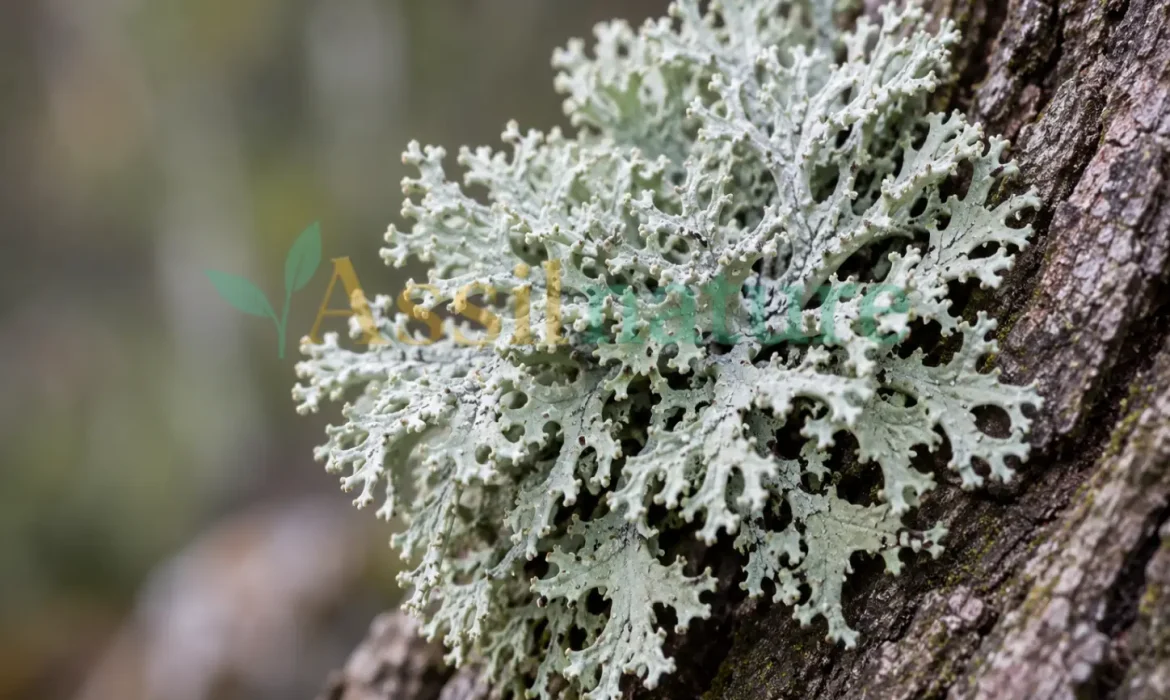
Pseudevernia furfuracea: Cedarmoss for Perfumery and Industrial Extraction
Pseudevernia furfuracea: Cedarmoss for Perfumery and Industrial Extraction
Pseudevernia furfuracea is a foliose lichen with a long connection to the fragrance industry. It occurs across forest environments that include parts of Morocco’s Atlas Mountains, where fragrance lichens have historically entered commercial supply chains for extraction and perfumery.
For industrial buyers, however, understanding this raw material requires separating three different concepts: botanical identity, commercial terminology and sourcing origin. These can overlap, but they should not be treated as interchangeable.
What Is Pseudevernia furfuracea?
Pseudevernia furfuracea is a lichen rather than a true moss. Like other lichens, it represents a symbiotic biological system and develops on suitable woody substrates in forest environments.
The species is particularly relevant to the fragrance sector because lichen material associated with it has historically been processed into aromatic extracts used in perfumery. As a result, its botanical identity intersects with long-established fragrance-industry terminology.
This industrial history is also why buyers may encounter several commercial terms when researching fragrance lichens. Those terms are useful for understanding the trade, but a commercial name should not automatically be treated as a scientific identification.
Pseudevernia furfuracea is a botanical species. Cedarmoss and Treemoss are fragrance-industry terms whose use can depend on historical and commercial context. The scientific name and the trade terminology should therefore be understood separately.
Why Is Pseudevernia furfuracea Important to Perfumery?
Fragrance lichens have historically provided perfumers and fragrance manufacturers with complex mossy, woody and forest-associated aromatic materials. Pseudevernia furfuracea belongs to this industrial history through the production of lichen extracts for fragrance applications.
The raw lichen itself and the finished fragrance ingredient should, however, be distinguished. Industrial processors qualify botanical feedstock before extraction, while the resulting extract becomes a separate processed fragrance material with its own composition, specifications and regulatory considerations.
For this reason, a company sourcing raw Cedarmoss for extraction may evaluate characteristics such as botanical requirements, origin, preparation, moisture, foreign matter, lot consistency and extraction performance rather than judging the material solely by its commercial name.
Collected, dried and prepared lichen evaluated as industrial botanical feedstock before entering the buyer’s extraction process.
A fragrance ingredient obtained after industrial extraction and further processing, with characteristics that cannot simply be equated with those of the unprocessed lichen.
How Is Pseudevernia furfuracea Connected to Cedarmoss?
Cedarmoss has an established place in the commercial vocabulary of fragrance lichens. One important technical explanation comes from perfumery literature that distinguishes lichen materials according to botanical identity and host-tree context.
Joulain and Tabacchi proposed reserving the term Cedarmoss extracts for extracts derived from Pseudevernia furfuracea growing on Atlas cedar (Cedrus atlantica). This provides an important technical basis for the connection between P. furfuracea, Atlas cedar and Cedarmoss terminology in the fragrance industry.
Nevertheless, commercial terminology in real supply chains is not always applied with the same taxonomic precision as scientific literature. Therefore, the presence of the word Cedarmoss in a commercial offer should not by itself be interpreted as proof that a particular lot has been botanically verified as Pseudevernia furfuracea.
Cedarmoss Is the Commercial Grade; Botanical Identity Is the Specification
A buyer can source Moroccan Cedarmoss as an industrial fragrance-lichen raw material while separately defining whether a particular botanical identity is required. If Pseudevernia furfuracea is mandatory, that requirement should be included in the technical specification and verified at lot level where appropriate.
Where Does Treemoss Fit into the Terminology?
Treemoss is another established fragrance-industry term strongly associated with Pseudevernia furfuracea. It appears throughout technical literature concerning lichen extracts and therefore remains relevant when researching the species or interpreting historical fragrance terminology.
In the technical distinction proposed by Joulain and Tabacchi, Cedarmoss refers specifically to the cedar-associated context described above, while Treemoss is used more broadly for P. furfuracea from other host situations.
For Assil Nature’s commercial positioning, however, the distinction is straightforward: Moroccan Cedarmoss is the sourcing product being presented. Treemoss is retained here because it is important for understanding the scientific and fragrance-industry terminology around P. furfuracea, not because the terms should be treated as interchangeable product labels.
| Term | Botanical Association | B2B Interpretation |
|---|---|---|
| Oakmoss | Primarily Evernia prunastri | A distinct fragrance lichen and not a botanical synonym for P. furfuracea. |
| Cedarmoss | Historically and technically associated with P. furfuracea in cedar-related fragrance contexts | Commercial fragrance-lichen term; botanical requirements should be specified separately when critical. |
| Treemoss | Strongly associated with Pseudevernia furfuracea | Important technical and historical fragrance terminology, retained here for botanical clarity and industry context. |
Pseudevernia furfuracea Is Not Oakmoss
One of the most important distinctions for professional sourcing is between Pseudevernia furfuracea and Evernia prunastri. They are different lichen species and should not be presented as interchangeable botanical names.
Evernia prunastri is primarily associated with Oakmoss in perfumery, while Pseudevernia furfuracea is associated with the fragrance terminology discussed above. Both have histories in fragrance extraction, but shared industrial use does not make them botanically or chemically identical.
Consequently, a buyer requesting Evernia prunastri should not automatically receive Cedarmoss as a substitute. Likewise, an industrial specification requiring P. furfuracea should be evaluated against that botanical requirement rather than inferred from appearance or trade name.
Evernia prunastri ≠ Pseudevernia furfuracea. Oakmoss, Cedarmoss and Treemoss may appear within the same fragrance-industry conversation, but botanical identity must remain distinct from commercial terminology.
For a broader comparison of the botanical identities, commercial names and fragrance-industry terminology, see our guide to Oakmoss vs Cedarmoss vs Treemoss .
Pseudevernia furfuracea in Morocco
Morocco is part of the documented geographical range of Pseudevernia furfuracea. Scientific research has recorded the species in Atlas Mountain environments, giving Moroccan fragrance-lichen sourcing a documented botanical context beyond commercial trade terminology.
Moroccan studies have examined P. furfuracea collected from Middle Atlas and High Atlas environments. These records are particularly relevant to Cedarmoss sourcing because Atlas forests include ecological settings historically connected with fragrance-lichen collection and industrial perfumery raw materials.
However, documented occurrence at regional level is not the same as identification of a commercial shipment. Finding P. furfuracea in an Atlas sourcing area does not prove that every lichen collected, prepared or traded from that region belongs to the species.
Moroccan scientific research has documented Pseudevernia furfuracea in Middle Atlas forest environments, including material collected in association with Atlas cedar.
Moroccan research has also reported authenticated P. furfuracea from High Atlas material associated with a different woody host, reinforcing that the species is not restricted to Atlas cedar.
Why Atlas Cedar Matters to Moroccan Cedarmoss
Atlas cedar (Cedrus atlantica) occupies an important place in the commercial and technical history of Cedarmoss. In Moroccan Atlas forests, it provides one of the documented host environments for Pseudevernia furfuracea, while the cedar association also helps explain the development of Cedarmoss terminology in perfumery.
This makes host-tree information useful for origin documentation and sourcing context. For an industrial buyer, knowing whether material was collected in cedar, pine or another forest environment can form part of the characterization of a raw-material lot.
Nevertheless, the commercial importance of Atlas cedar should not be converted into a botanical shortcut. A lichen found on Cedrus atlantica is not automatically Pseudevernia furfuracea, just as P. furfuracea is not restricted to cedar.
Host tree ≠ botanical identity. Cedar association can be highly relevant to Moroccan Cedarmoss origin and fragrance-industry terminology, but the host tree alone does not establish the scientific identity of the lichen growing on it.
Pseudevernia furfuracea Can Grow on Other Trees
Botanical sources describe Pseudevernia furfuracea on conifers and suitable acid-barked deciduous trees. Therefore, its ecology extends beyond a single host species.
Moroccan research reinforces this point. Documented Atlas material has included P. furfuracea associated with Atlas cedar as well as material from another host environment. Consequently, neither cedar nor pine should be treated as an exclusive botanical indicator.
For B2B sourcing, host information is better used as traceability data than as a substitute for taxonomy. A buyer interested specifically in cedar-associated material can state that requirement separately from a requirement for a particular lichen species.
Cedar, pine or another documented host can provide useful ecological and sourcing information about a collection lot.
When a buyer specifically requires Pseudevernia furfuracea, the scientific identity should be addressed independently rather than inferred solely from forest origin or host tree.
What Does Pseudevernia furfuracea Look Like?
Morphology can provide useful clues during preliminary identification. Botanical descriptions characterize P. furfuracea as a branching, foliose lichen with a generally grey to silver-grey upper surface. Older parts of the lower surface can become distinctly darker.
Features such as branching form, surface structures and differences between upper and lower surfaces can help distinguish it from other lichens. These characteristics are more informative than simply describing the material as grey-green or saying that it was collected from cedar.
However, morphology should be interpreted carefully. Natural variation, fragmented dried material, mixed collection lots and the condition of commercial raw material can make identification more difficult than examining an intact specimen in its natural habitat.
| Feature | Useful Observation | Limitation |
|---|---|---|
| Upper Surface | Commonly grey to silver-grey in botanical descriptions | Colour varies with condition, moisture, age and environment |
| Lower Surface | Older portions may appear dark grey to black | Broken commercial material may make this difficult to observe |
| Branching Form | Flattened branching lobes provide useful morphological context | Shape alone is not definitive identification |
| Host Tree | Useful ecological and sourcing information | Does not independently prove species identity |
Can a Buyer Identify Pseudevernia furfuracea from a Photo?
Photographs can support an initial assessment, especially when they clearly show branching structure, upper and lower surfaces and the condition of intact material. They are also useful for documenting the general appearance of a commercial lot.
A photograph alone, however, should not automatically become the basis for a species guarantee. Closely related or visually similar lichens can create uncertainty, while drying, compression and fragmentation may remove features that would otherwise assist identification.
Therefore, photographs are best treated as one layer of evidence. Where botanical identity is critical to an industrial specification, the buyer and supplier should agree on an appropriate identification procedure for the commercial lot.
A natural-looking photograph is not a botanical certificate. Images can support sourcing communication and preliminary evaluation, but species-specific purchasing requirements should be handled through appropriate lot qualification.
From Atlas Origin to Lot-Level Botanical Identity
A useful sourcing description can begin with what is known: Moroccan origin, Atlas forest environment, collection context, preparation method and the commercial Cedarmoss grade being offered. These are meaningful B2B characteristics in their own right.
If the buyer then requires Pseudevernia furfuracea specifically, botanical identity becomes an additional specification rather than an assumption derived from origin. This creates a clearer qualification path for both supplier and industrial processor.
The distinction is especially important when moving from a forest collection environment to a multi-kilogram or multi-ton commercial lot. Industrial sourcing needs the specification to follow the material being purchased, not merely the general ecology of the region.
Pseudevernia furfuracea as a Raw Material for Fragrance Extraction
The industrial importance of Pseudevernia furfuracea is closely connected to fragrance extraction. Rather than being used only as dried botanical material, suitable lichen feedstock can enter processing systems designed to recover the complex aromatic fraction valued by the fragrance industry.
For an extraction company, however, purchasing Cedarmoss is not simply a question of buying a named lichen by weight. The processor is purchasing industrial feedstock, and the commercial value of that feedstock depends on whether it performs consistently within the intended extraction process.
This changes the sourcing conversation. Origin and botanical identity can be important, but preparation, moisture, foreign matter, storage condition, lot consistency and extraction performance can also affect how useful the material is to an industrial processor.
A scientific name identifies the organism; it does not define the complete industrial performance of a commercial lot. Buyers still need to evaluate the physical condition and processing suitability of the Cedarmoss raw material they intend to extract.
From Raw Cedarmoss to a Fragrance Ingredient
Industrial fragrance extraction transforms raw lichen into a concentrated aromatic material. In broad terms, the feedstock is first prepared and then subjected to an extraction process selected by the manufacturer. Subsequent processing can further refine the recovered aromatic fraction.
Fragrance literature may use terms such as extract, resinoid and, in certain processing contexts, absolute. These terms describe processed fragrance materials rather than the dried lichen supplied as extraction feedstock.
Consequently, a raw-material supplier should avoid presenting dried Cedarmoss as though it already possesses the specifications of a finished Cedarmoss extract. Extraction method, downstream processing and the manufacturer’s own quality controls contribute to the characteristics of the final fragrance ingredient.
For a detailed explanation of the processing pathway from raw lichen to a fragrance ingredient, continue with our guide to Cedarmoss extraction .
Why Raw-Material Preparation Matters
Wild-collected fragrance lichen can arrive with material that does not contribute to the intended extraction. Depending on collection and preparation, this may include pieces of bark, twigs, needles, soil or other forest matter.
For an industrial buyer, the relevant question is therefore not simply whether a shipment looks natural or visually attractive. The processor needs to understand what proportion of the delivered material represents usable lichen feedstock and how consistently the agreed preparation can be maintained across the commercial lot.
Preparation requirements can differ between buyers. One extractor may accept a relatively raw grade for its own preprocessing line, while another may require more thoroughly sorted material. The correct specification is therefore the one agreed between supplier and processor rather than an undefined universal “premium grade.”
Cleaning, sorting, drying and removal of unwanted forest matter should be described in terms the buyer can evaluate rather than through undefined quality labels.
The required preparation level should reflect the extractor’s process, equipment, acceptable foreign matter and intended production workflow.
Moisture and the Real Weight of Extraction Feedstock
Moisture is commercially important because an extractor purchases material by weight while ultimately seeking usable dry botanical feedstock. Differences in moisture can therefore change the effective amount of dry lichen represented by a shipment.
Excess moisture can also complicate storage and lot stability. For this reason, buyers may define a moisture requirement or request a measurement method as part of their raw-material specification.
There is no need to invent a universal Cedarmoss moisture limit where one has not been established for the transaction. A stronger B2B approach is to define the buyer’s acceptable parameter, measurement method and pre-shipment verification procedure.
Does Pseudevernia furfuracea Guarantee a Specific Extraction Yield?
Botanical identification alone does not justify guaranteeing a fixed extraction yield. Even when a lot is reliably identified as Pseudevernia furfuracea, industrial performance can depend on additional variables involving both the raw material and the processor’s extraction system.
Raw-material condition, moisture, preparation and natural biological variation can influence the feedstock presented to the extractor. At the same time, solvent system, extraction conditions and downstream processing belong to the manufacturer’s process and can affect the quantity and character of the recovered material.
Therefore, published information about a species or another supplier’s extraction result should not automatically become a guaranteed yield for a new commercial lot. A representative sample and buyer-controlled pilot extraction provide a stronger basis for industrial qualification.
Species identity ≠ guaranteed extraction yield. Botanical identity can be an important qualification parameter, but commercial yield should be evaluated against the actual lot and the buyer’s extraction process.
Does the Host Tree Determine Cedarmoss Chemistry?
The relationship between lichen, environment and host substrate is scientifically interesting, but it should not be simplified into a commercial promise that cedar-associated material automatically has one fixed chemical profile.
Host information can form part of origin characterization, and differences between populations or collection environments may justify further study. However, claims about specific chemical composition, superior aromatic performance or extraction yield require analytical or experimental evidence relevant to the material being discussed.
This distinction is especially important for Moroccan Cedarmoss. Atlas cedar provides a commercially meaningful sourcing context, but Atlas origin should not be converted into unsupported claims of unique chemistry or guaranteed performance.
State documented origin, collection context, preparation, botanical verification where available and lot-specific analytical results when testing has been performed.
Do not infer a fixed chemical composition, guaranteed extraction yield or superior fragrance performance simply because the lichen originated in an Atlas cedar environment.
Why Pilot Extraction Matters Before Bulk Purchasing
A representative sample allows an extraction company to move from theoretical qualification to process-specific evaluation. Instead of relying only on a scientific name, origin description or supplier claim, the buyer can examine how the actual raw material behaves in its own system.
Depending on the buyer’s requirements, sample evaluation may include physical inspection, moisture or foreign-matter assessment, botanical confirmation, analytical testing and a small-scale extraction trial. Not every transaction requires every test; the qualification program should reflect the intended application and commercial risk.
Once the sample is accepted, the next challenge is ensuring that the commercial shipment corresponds reasonably to the qualified material. This is where lot definition, traceability and pre-shipment controls become important for recurring B2B supply.
What Should an Extraction Buyer Specify?
A useful Cedarmoss RFQ separates commercial terminology from measurable requirements. Instead of asking only for “best quality Cedarmoss,” the buyer can define the characteristics that matter to its process.
For industrial extraction, the strongest Cedarmoss offer is not the one making the most claims. It is the one that allows the buyer to connect origin, botanical requirements, physical preparation, representative sampling and process-specific evaluation to the commercial lot that will actually be supplied.
Industrial Uses of Cedarmoss in Fragrance Manufacturing
Cedarmoss is principally relevant to the fragrance industry as a raw botanical feedstock for extraction. The resulting processed ingredients can contribute mossy, woody, earthy and forest-associated tonalities to fragrance compositions, depending on the extraction method and the characteristics of the finished material.
Industrial applications may include perfumery bases, fragrance compounds and other aroma formulations in which lichen-derived ingredients are used as part of a broader composition. The exact role of a Cedarmoss-derived ingredient is determined by the fragrance manufacturer rather than by the raw-material supplier.
This distinction matters commercially. Assil Nature’s role is to qualify and supply Moroccan Cedarmoss raw material for industrial evaluation and extraction, not to imply that the unprocessed lichen is itself a finished perfumery ingredient.
Dried and prepared fragrance lichen supplied to industrial processors for qualification, extraction and further manufacturing.
Processing performed by fragrance or extraction companies to recover aromatic fractions suitable for downstream formulation.
The processed lichen ingredient can then be incorporated by the manufacturer into broader fragrance compositions and technical bases.
What Should a Professional Buyer Qualify Before Purchase?
A serious Cedarmoss purchase normally begins with specification rather than price alone. Before discussing container-scale supply, buyer and supplier should establish what material is actually required and how acceptance will be determined.
The first distinction is whether the buyer requires a commercial Cedarmoss grade or specifically requires Pseudevernia furfuracea. If species identity is mandatory, it should be stated clearly in the RFQ rather than inferred from the Cedarmoss trade name.
Physical requirements should then be defined around the intended industrial use. These may include cleaning level, foreign matter, moisture, packaging, compression, representative sampling, testing and lot traceability.
Representative Samples Matter More Than Marketing Claims
A buyer cannot qualify industrial Cedarmoss reliably from a product description alone. A representative sample gives the processor an opportunity to examine the actual material intended for commercial supply.
The sample should reflect the expected preparation and condition of the future shipment rather than being an exceptional hand-selected portion that cannot be reproduced at scale. This becomes increasingly important when a transaction moves from kilograms to several tons.
Industrial qualification may then combine physical inspection with botanical, analytical or extraction testing according to the buyer’s process. The purpose is not to perform unnecessary testing, but to establish enough evidence to support the commercial decision.
The qualified sample should represent the commercial grade. A sample has limited value if the bulk material that follows is prepared, cleaned or sourced according to a materially different standard.
Why a Trial Lot Can Be Better Than Jumping Directly to Bulk
Once a sample performs satisfactorily, an intermediate trial lot can provide another layer of confidence before a buyer commits to recurring or container-scale volumes.
The value of a trial lot is not simply its size. It tests whether the supplier can reproduce the agreed preparation, maintain traceability and deliver material whose characteristics remain aligned with the qualified sample under real commercial handling conditions.
For extraction companies, this stage can also provide more representative process data than a very small laboratory sample. If the material then performs as expected, the buyer and supplier can move toward larger recurring programs with a clearer technical baseline.
Moroccan Cedarmoss for Industrial B2B Sourcing
Morocco offers a commercially relevant sourcing context for fragrance lichens through Atlas forest environments and established collection knowledge. Scientific documentation of Pseudevernia furfuracea in Morocco adds botanical context to this origin, while the historical Atlas cedar association reinforces the commercial relevance of Cedarmoss terminology.
The strongest commercial positioning is therefore not to claim that every Moroccan lot is automatically one verified species. It is to offer Moroccan Cedarmoss with transparent origin and preparation information, while allowing the buyer to define any botanical verification or testing required for the intended application.
This approach is particularly suitable for fragrance manufacturers, extraction companies, botanical ingredient processors, importers and distributors that need repeatable industrial raw material rather than consumer-facing fragrance products.
For a dedicated view of Atlas origin, commercial positioning and Moroccan supply context, see our guide to Moroccan Cedarmoss sourcing and Atlas origin .Forest origin, collection context and local sourcing knowledge can be documented as part of commercial lot characterization.
Preparation, sorting, moisture, foreign matter and packaging can be discussed according to the buyer’s industrial specification.
Botanical identification, laboratory testing or pilot extraction can be incorporated when required by the buyer and commercially justified.
What Can Assil Nature Responsibly Offer?
Assil Nature works with Moroccan Atlas-origin fragrance lichen for industrial extraction and perfumery supply chains. Commercial discussions can begin with the Cedarmoss grade required, expected volume, preparation, packaging and destination market.
Buyers may also specify whether they require botanical confirmation of Pseudevernia furfuracea, defined moisture or foreign-matter parameters, analytical documentation, representative samples or other qualification procedures before scaling the order.
This creates a more reliable basis for cooperation than applying several scientific names to an unidentified raw material or promising industrial performance before the buyer has evaluated the actual lot.
Moroccan Cedarmoss with defined origin, preparation and commercial grade, followed by botanical or analytical qualification when required by the buyer.
Do not guarantee a specific species, chemistry, extraction yield or finished-fragrance performance solely from trade name, appearance, Atlas origin or host tree.
Cedarmoss Sourcing Is Stronger When Terminology and Taxonomy Are Separated
Pseudevernia furfuracea, Cedarmoss and Treemoss belong to the same broader fragrance-industry discussion, but they do not serve the same function. One is a scientific species name; the others are commercial and historical fragrance terms.
For Moroccan B2B sourcing, Cedarmoss can therefore remain the clear commercial product while Pseudevernia furfuracea is used when discussing botanical identity. Treemoss remains relevant in scientific and historical terminology without needing to appear as a parallel commercial offer.
This distinction gives fragrance-industry buyers a clearer sourcing path: understand the origin, define the Cedarmoss grade, specify botanical requirements where necessary, evaluate a representative lot and scale only after the material meets the intended industrial process.
Moroccan Cedarmoss should be sold through specification, not ambiguity. Atlas origin and fragrance-industry history create the commercial context; Pseudevernia furfuracea provides a scientifically important botanical reference; representative sampling and buyer-defined qualification connect both to the actual industrial lot.
For the complete framework connecting Moroccan origin, Oakmoss and Cedarmoss terminology, botanical identity, extraction, quality and industrial sourcing, explore our complete Moroccan Cedarmoss and Oakmoss guide .
Pseudevernia furfuracea and Cedarmoss: Buyer Questions
What is Pseudevernia furfuracea?
Pseudevernia furfuracea is a foliose lichen species with a documented history in fragrance extraction. It is a lichen rather than a true moss and occurs in forest environments across parts of Europe, North Africa and other suitable regions.
Is Pseudevernia furfuracea the same as Cedarmoss?
Not automatically. Pseudevernia furfuracea is a botanical species, while Cedarmoss is a fragrance-industry commercial term. Technical fragrance literature has associated Cedarmoss particularly with P. furfuracea growing on Atlas cedar, but a commercial Cedarmoss name alone does not prove species identity for a specific lot.
Is Pseudevernia furfuracea the same as Treemoss?
Pseudevernia furfuracea is widely associated with the term Treemoss in fragrance terminology. However, commercial naming has varied historically, and cedar-associated material has also been described as Cedarmoss. For industrial sourcing, trade terminology should therefore be distinguished from verified botanical identity.
Is Cedarmoss the same as Oakmoss?
No. Oakmoss is primarily associated with Evernia prunastri, while Cedarmoss has a different commercial and botanical context. Evernia prunastri and Pseudevernia furfuracea are distinct species and should not be used as interchangeable scientific names.
Does Pseudevernia furfuracea occur in Morocco?
Yes. Scientific research has documented Pseudevernia furfuracea in Moroccan Atlas environments, including Middle Atlas and High Atlas records. Regional occurrence, however, does not prove that every commercial fragrance-lichen lot collected in the Atlas belongs to this species.
Does growing on Atlas cedar prove that a lichen is Pseudevernia furfuracea?
No. Atlas cedar can provide important sourcing and ecological context, but host tree alone is not botanical identification. A lichen growing on cedar should not automatically be assigned the scientific name Pseudevernia furfuracea.
Can Pseudevernia furfuracea grow on trees other than cedar?
Yes. Botanical sources describe the species on conifers and suitable acid-barked deciduous trees. Moroccan research also supports the fact that the species is not restricted to a single host environment.
Can Pseudevernia furfuracea be identified from a photograph?
A photograph can support preliminary assessment, especially when branching form and upper and lower surfaces are visible. However, photographs alone should not normally be treated as definitive botanical verification for a commercial lot.
What is Cedarmoss used for in perfumery?
Cedarmoss is principally relevant as raw botanical feedstock for fragrance extraction. The processed extract can contribute mossy, woody, earthy and forest-associated characteristics to fragrance compositions, depending on the extraction and downstream processing.
Is raw Cedarmoss the same as Cedarmoss extract?
No. Raw Cedarmoss is dried lichen feedstock supplied before industrial extraction. Cedarmoss extract is a processed fragrance ingredient produced through extraction and further manufacturing. Their specifications and regulatory considerations are therefore different.
Does Pseudevernia furfuracea guarantee a specific extraction yield?
No. Botanical identity alone does not guarantee a fixed extraction yield. Yield can depend on the raw material, moisture, preparation, natural variation, extraction conditions and the processor's own manufacturing system. Representative pilot extraction is more useful than assuming a universal yield.
Does Atlas cedar origin guarantee a specific chemical composition?
No. Atlas cedar origin can be relevant to traceability and commercial context, but it should not be used by itself to guarantee a particular chemical profile, extraction yield or superior fragrance performance. Such claims require relevant analytical or experimental evidence.
What should an industrial buyer specify when sourcing Cedarmoss?
Buyers should define the required Cedarmoss grade, botanical identity if species-specific, origin, cleaning level, foreign matter, moisture, sample requirements, testing, packaging, trial quantity, lot traceability and expected commercial volume.
Can Assil Nature supply Moroccan Cedarmoss for industrial evaluation?
Assil Nature works with Moroccan Atlas-origin fragrance lichen for industrial extraction and perfumery supply chains. Buyers can define the required Cedarmoss preparation, quantity, packaging and technical qualification requirements, including botanical verification where a specific species is required.
References
1. Joulain, D. & Tabacchi, R. (2009).
Lichen extracts as raw materials in perfumery. Part 1: Oakmoss.
Flavour and Fragrance Journal, 24, 49–61.
DOI: 10.1002/ffj.1916.
2. Joulain, D. & Tabacchi, R. (2009).
Lichen extracts as raw materials in perfumery. Part 2: Treemoss.
Flavour and Fragrance Journal, 24, 105–116.
DOI: 10.1002/ffj.1923.
3. British Lichen Society.
Species information and identification resources for
Pseudevernia furfuracea and Evernia prunastri,
including morphology, habitat and host-tree context.
4. Aoussar, N. et al.
Moroccan scientific studies involving
Pseudevernia furfuracea collected from Atlas Mountain
environments, including material from different host-tree contexts.
5. European Commission scientific opinions on Oakmoss and Treemoss extracts.
Scientific assessments distinguishing Oakmoss extracts derived from
Evernia prunastri from Treemoss materials primarily associated
with Pseudevernia furfuracea.
6. IFRA Standards and technical documentation.
Industry standards and guidance relevant to lichen-derived fragrance
ingredients and their downstream use in fragrance formulations.
Botanical names in this article are used according to scientific literature, while Cedarmoss and Treemoss are discussed as fragrance-industry terminology where appropriate. Regional occurrence, host-tree association or commercial naming should not be interpreted as automatic botanical verification of an individual commercial lot. Lot-specific identity, analytical characteristics and extraction performance should be verified when required by the buyer’s specification.
Looking for Moroccan Cedarmoss Raw Material?
Assil Nature works with Moroccan Atlas-origin fragrance lichen for industrial extraction and perfumery applications. Buyers can specify the required preparation grade, volume, packaging and botanical or analytical requirements for lot evaluation.
Where a specification specifically requires Pseudevernia furfuracea, this requirement should be stated during qualification so the available commercial lot can be evaluated accordingly.
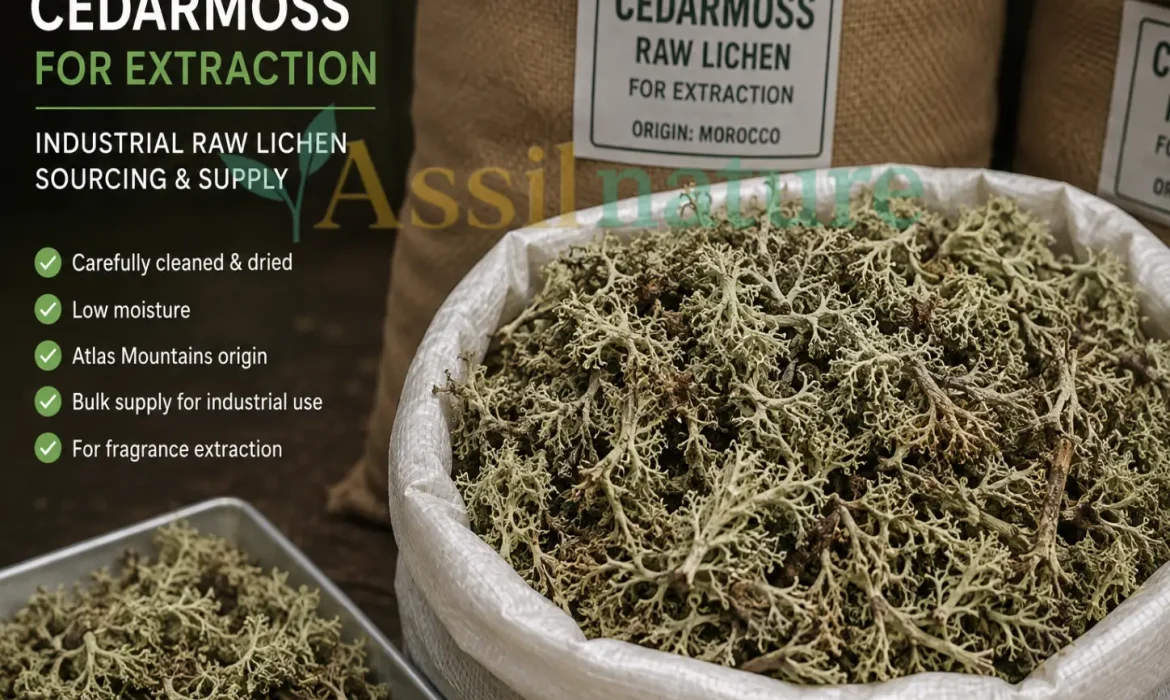
Moroccan Cedarmoss: Atlas Mountain Fragrance Lichen for Industrial Sourcing
Moroccan Cedarmoss is a fragrance-lichen raw material associated with the forest environments of Morocco’s Atlas Mountains and with the historical use of aromatic lichens in the perfumery industry.
For professional buyers, however, Cedarmoss should be understood through more than a trade name. Origin, botanical context, host environment, preparation, traceability and the requirements of the intended industrial application all matter when evaluating a commercial lot.
What Is Moroccan Cedarmoss?
In fragrance-industry terminology, Cedarmoss refers to aromatic lichen material historically associated with cedar forest environments and used as a botanical raw material for fragrance extraction.
Morocco is particularly relevant because the Atlas Mountains contain extensive cedar and other forest ecosystems in which fragrance lichens occur naturally. This geographical association has contributed to the commercial identity of Moroccan Cedarmoss within perfumery raw-material sourcing.
Cedarmoss is therefore best understood as a commercial fragrance-lichen designation linked to origin and industrial use. Where a buyer requires a specific botanical species, that requirement should be stated separately and verified for the relevant lot rather than inferred from the trade name alone.
Moroccan Cedarmoss is the commercial sourcing term. Botanical identity is a separate technical specification and should be confirmed when a buyer requires a particular species.
Why Are the Atlas Mountains Important to Cedarmoss Sourcing?
The Atlas Mountains form one of Morocco’s most important forest systems and include environments dominated by Atlas cedar (Cedrus atlantica), pine and other woody hosts.
These forests provide suitable ecological conditions for a variety of lichens, including species that have historical relevance to perfumery. As a result, Atlas origin is not simply a geographical label; it forms part of the sourcing context behind Moroccan fragrance-lichen raw material.
For industrial buyers, the most useful information is not a romantic description of the mountains but a practical record of where the material comes from, how it was collected and prepared, and whether the supplied grade can be reproduced consistently.
Moroccan Cedarmoss can be sourced from forest environments where cedar and other suitable woody hosts support naturally occurring lichens.
Origin becomes commercially useful when it is connected to collection, preparation, lot consistency and the technical requirements of the buyer.
Cedarmoss and Atlas Cedar: An Important Association
Atlas cedar plays a particularly important role in the history and terminology of Cedarmoss. Technical fragrance literature has linked cedar-associated lichen material, especially in the context of Pseudevernia furfuracea growing on Cedrus atlantica, with the Cedarmoss designation.
This association is useful because it helps explain why Morocco and the Atlas cedar forests have a distinctive place in fragrance-lichen sourcing. It should not, however, be transformed into the assumption that every lichen found on cedar is automatically one botanical species.
Host-tree information is therefore best treated as part of origin and traceability. Botanical identity remains a separate question when a buyer’s specification requires species-level confirmation.
Atlas cedar association is commercially meaningful, but host tree alone is not botanical proof. Buyers that require Pseudevernia furfuracea or another specific species should include that requirement in the technical qualification of the lot.
Is Moroccan Cedarmoss Always Pseudevernia furfuracea?
Pseudevernia furfuracea is scientifically documented in Morocco, including Atlas Mountain environments, and it has an established connection with historical Cedarmoss terminology in fragrance literature.
That does not mean every commercial Moroccan Cedarmoss lot should automatically be labelled P. furfuracea. Wild collection can involve different forest locations and natural lichen populations, while commercial terminology is not itself a taxonomic identification method.
A responsible supplier should therefore distinguish between what is documented about the sourcing region and what has been verified for the specific commercial lot.
Origin, collection region, host context where known, preparation grade and commercial sourcing information can be described transparently.
A commercial lot should not be guaranteed as Pseudevernia furfuracea solely because it comes from Morocco, the Atlas Mountains or a cedar forest.
How Does Treemoss Relate to Moroccan Cedarmoss?
Treemoss is an established fragrance-industry term strongly associated with Pseudevernia furfuracea. It appears in technical and historical perfumery literature and is therefore important when interpreting the naming of fragrance lichens.
Cedarmoss, however, has a more specific commercial relevance in the Moroccan Atlas context because fragrance literature has historically associated cedar-hosted Pseudevernia furfuracea, particularly on Cedrus atlantica, with the Cedarmoss designation.
For B2B sourcing, the practical distinction is simple: Treemoss is useful technical and historical terminology, while Moroccan Cedarmoss is the commercial sourcing position presented here. The two terms should not be used in a way that suggests an undefined mixture or makes commercial naming a substitute for botanical verification.
Trade terminology and taxonomy answer different questions. Cedarmoss describes the commercial
fragrance-lichen context, while a scientific name such as Pseudevernia furfuracea should only be applied to a lot when the required level of botanical confidence is available.
Why Is Pseudevernia furfuracea Important in the Cedarmoss Discussion?
Pseudevernia furfuracea is one of the principal lichen species associated with fragrance-industry terminology around Treemoss and Cedarmoss. Its relevance is particularly strong in technical discussions of lichen extracts used in perfumery.
Moroccan scientific research has documented the species in Atlas Mountain environments, including material from different host-tree contexts. This supports the botanical relevance of P. furfuracea to Moroccan fragrance-lichen sourcing.
Nevertheless, regional scientific documentation should not be converted into a lot-level guarantee. A documented species in Morocco is evidence about the country’s lichen flora; it is not proof that every commercial Cedarmoss shipment from Morocco consists exclusively of that species.
For a dedicated species-level discussion of its botanical identity, fragrance relevance and Moroccan context, see our guide to Pseudevernia furfuracea .Scientific records support the occurrence of Pseudevernia furfuracea in Moroccan Atlas environments.
A specific commercial lot should not be guaranteed as Pseudevernia furfuracea merely because it originates from an Atlas forest region.
Why Host-Tree Context Matters — and Where Its Limits Are
Host-tree information can be valuable in fragrance-lichen sourcing because it adds ecological and origin context to the collected material. Cedar, pine and other woody hosts may all form part of the forest environments where aromatic lichens develop.
In the case of Moroccan Cedarmoss, Atlas cedar is especially significant because of its historical link with Cedarmoss terminology. Still, this relationship should be described carefully.
A host tree can support a sourcing description, but it cannot replace botanical identification. The fact that a lichen was collected from cedar does not independently prove a scientific species, and the occurrence of P. furfuracea is not restricted to cedar.
Host-tree context can strengthen the description of collection environment and support documentation of sourcing origin.
A cedar, pine or other host association should not be treated as independent proof of botanical identity.
Why Commercial Naming Can Vary in Traditional Supply Chains
Traditional collection networks often develop practical local names long before botanical taxonomy becomes relevant to commercial trade. As a result, collectors, intermediaries and industrial buyers may not always use the same terminology for the same sourcing context.
In fragrance-lichen trade, this helps explain why historical terms such as Cedarmoss and Treemoss can overlap in industry discussion even though a professional buyer may require more precise botanical or host-origin information for a particular specification.
The correct response is not to force every traditional name into a scientific identity. Instead, the supplier should translate field terminology into a clearer commercial specification: origin, host context where known, preparation grade, physical condition and botanical verification when required.
What Can a Moroccan Cedarmoss Supplier Responsibly Claim?
Scientific precision does not weaken the commercial value of Moroccan Cedarmoss. In fact, it creates a stronger sourcing position because professional buyers can separate what is documented from what still needs to be qualified.
A supplier can responsibly describe Moroccan origin, Atlas forest context, commercial Cedarmoss grade, preparation level and available traceability. Where host-tree information is known, it can also be included as part of the collection record.
If a buyer specifically requires Pseudevernia furfuracea, Evernia prunastri or another defined species, that becomes a technical qualification requirement rather than something that should be assumed from the commercial name.
Moroccan Cedarmoss from Atlas forest environments; collection and host context documented when available; preparation grade clearly described; botanical identity specified when reliably verified or when required by the buyer’s specification.
Claims a Professional Supplier Should Avoid
The following shortcuts can create unnecessary technical risk in a B2B fragrance-lichen transaction:
Morocco can legitimately be presented as a documented origin of Pseudevernia furfuracea and as a commercial source of Cedarmoss for the fragrance industry. What should remain lot-specific is the claim that a particular commercial shipment has been botanically verified as a specific species. This distinction allows buyers to combine Atlas origin, established fragrance terminology, sourcing knowledge and modern botanical specification without confusing commercial naming with taxonomy.
How Is Moroccan Cedarmoss Prepared for Industrial Buyers?
Wild-collected Cedarmoss is not automatically ready for industrial use immediately after collection. Depending on the sourcing environment and buyer specification, the raw material may require drying, sorting and removal of unwanted forest matter before it is suitable for commercial supply.
Preparation is important because industrial buyers are not purchasing only a botanical name or an attractive natural appearance. They are purchasing a defined raw-material grade that must remain sufficiently consistent from sample to shipment.
The appropriate preparation level can vary according to the buyer’s process. Some companies may accept a more natural raw grade and perform additional cleaning themselves, while others may require more thoroughly sorted material before shipment.
There is no useful universal “premium Cedarmoss grade” unless the grade is defined. A professional specification should describe the actual preparation, acceptable foreign matter, moisture condition, packaging and other measurable requirements.
Cleaning and Sorting: What Does the Buyer Actually Receive?
Natural forest collection can introduce material that is not part of the intended lichen feedstock. Depending on the lot, this can include pieces of bark, twigs, needles, soil particles or other plant matter.
Sorting therefore affects more than appearance. It influences the proportion of usable lichen in the delivered weight and can change the true commercial value of two offers that appear similar on a price-per-kilogram basis.
A strong B2B offer should describe the delivered condition honestly. Terms such as “cleaned,” “sorted” or “selected” become more useful when they are connected to a sample or to agreed limits for unwanted material.
Suitable only where the buyer accepts additional natural matter or performs further preprocessing internally.
Sorting and removal of unwanted forest matter are performed to a level agreed with the buyer before shipment.
Why Moisture Matters in Cedarmoss Sourcing
Moisture is a practical commercial parameter because Cedarmoss is sold by weight. A shipment containing more moisture can represent less dry botanical material than another shipment of the same gross weight.
Storage also matters. Material that is not adequately dried or protected from unsuitable storage conditions can become more difficult to handle and may lose consistency before it reaches the buyer.
Instead of inventing a universal moisture limit for Moroccan Cedarmoss, the stronger approach is to agree on the buyer’s acceptable range, measurement method and pre-shipment verification when moisture is a critical specification.
Foreign Matter Is a Commercial Specification, Not a Cosmetic Detail
Foreign matter in a wild botanical raw material should be defined carefully. Bark, twigs or needles are not necessarily the same type of issue as contamination, but they can still reduce the usable proportion of the lot.
This distinction is important for professional purchasing. A buyer may accept a certain amount of natural forest material while rejecting other types of contamination entirely. The specification should make those categories clear.
When comparing Moroccan Cedarmoss suppliers, the buyer should therefore look beyond the quoted price and ask how much preparation has been performed and what the delivered grade actually contains.
Why Representative Sampling Matters Before Bulk Supply
A product photograph can show the general appearance of Cedarmoss, but a representative physical sample provides far more useful information for an industrial buyer.
Through a sample, the buyer can evaluate the preparation level, natural variability, moisture condition, presence of unwanted material and other characteristics relevant to the intended process.
The most important condition is representativeness. A carefully hand-selected sample that cannot be reproduced in the commercial shipment creates little value. The qualified sample should reflect the grade that will actually be supplied at scale.
Do not qualify only the photograph. Qualify the commercial grade. A representative sample should connect directly to the preparation and quality level expected in the future bulk shipment.
Packaging Moroccan Cedarmoss for Commercial Shipments
Packaging should protect the prepared lichen during storage and transport while remaining practical for the buyer’s receiving and processing system. The required format can depend on shipment size, degree of compression and downstream handling.
Compression can improve transport efficiency because dried lichen is relatively bulky. However, the buyer may have preferences regarding bale, bag or compressed-pack format, especially when the material must be opened and fed into an industrial preparation line.
Packaging should therefore be treated as part of the commercial specification rather than chosen independently from the buyer’s logistics and processing requirements.
Bag size and material can be selected according to handling, sampling and receiving requirements.
Larger volumes may benefit from compressed formats when agreed with the buyer and compatible with the receiving process.
Can the Qualified Grade Be Repeated at Ton Scale?
The transition from sample to bulk is one of the most important stages in a botanical raw-material transaction. A small sample may be easy to clean manually, but an industrial buyer needs confidence that the same preparation standard can be maintained across a much larger lot.
Consistency does not mean that a wild lichen must look identical piece by piece. Natural variation is expected. What should remain controlled are the commercial parameters that buyer and supplier have agreed upon.
For recurring supply, this means linking collection, sorting, preparation, packaging and lot identification into a repeatable sourcing program rather than treating each shipment as an unrelated purchase.
The goal is not visual uniformity; it is commercial consistency. A repeatable Moroccan Cedarmoss supply program should reproduce the agreed preparation, acceptable natural variation, packaging and lot-level qualification at the volume required by the buyer.
Who Buys Moroccan Cedarmoss?
Moroccan Cedarmoss is primarily relevant to professional fragrance and botanical-processing supply chains rather than to the consumer perfume market. The raw lichen is typically sourced as an industrial botanical material that will undergo further processing before becoming part of a finished fragrance ingredient or formulation.
Potential buyers can include fragrance-ingredient manufacturers, extraction companies, botanical processors, raw-material distributors, specialized importers and procurement teams sourcing natural aromatic materials for industrial applications.
These buyers may evaluate the same Moroccan origin differently. One company may prioritize botanical identity, another may focus on preparation and consistency, while another may require a particular packaging format, analytical documentation or trial quantity before approving larger volumes.
Extraction companies evaluating the raw material can continue with our dedicated guide to Cedarmoss for extraction , including feedstock qualification, sampling, pilot extraction and bulk sourcing.Companies processing natural aromatic raw materials into ingredients for professional fragrance applications.
Industrial processors qualifying lichen as feedstock for their own extraction and downstream manufacturing systems.
Specialized companies consolidating, importing or distributing fragrance and botanical raw materials.
What Should a Cedarmoss RFQ Include?
A useful request for quotation should contain more than the words “Cedarmoss price.” The clearer the technical and commercial requirement, the easier it becomes to determine whether the available Moroccan material is suitable for the buyer’s intended application.
Species-specific requirements are especially important. If the purchasing specification requires Pseudevernia furfuracea, that requirement should be stated explicitly rather than assumed from the commercial Cedarmoss name.
From Sample to Commercial Cedarmoss Supply
For a new industrial relationship, qualification can begin with a representative sample rather than an immediate large-volume commitment. The buyer can then determine whether the material fits its internal requirements before discussing a larger commercial program.
Where additional technical evaluation is required, the next step may involve an agreed trial lot. This provides a more realistic test of preparation, handling and consistency than a small laboratory sample alone.
Once the material and specification are accepted, discussions can move toward recurring bulk supply based on expected volume, preparation, packaging, documentation and shipment requirements.
Define product and requirements.
Evaluate representative material.
Confirm technical suitability.
Validate the commercial grade.
Scale the approved specification.
Atlas Origin Is Valuable — but It Should Not Become a Chemical Claim
The Atlas Mountains provide Moroccan Cedarmoss with a meaningful geographical and sourcing identity. Cedar forests, altitude, climate and natural forest conditions are all relevant to understanding where the raw material originates.
However, geographical origin alone should not be used to guarantee a particular chemical composition, extraction yield or olfactory performance. Those characteristics can depend on multiple biological and processing variables and should be evaluated with appropriate evidence when they form part of a buyer’s specification.
This distinction strengthens rather than weakens Moroccan origin. Atlas provenance can be presented confidently as provenance; analytical or performance claims can then be supported separately where relevant.
Atlas origin describes where the Cedarmoss comes from. It should not automatically be converted into claims about species, chemistry, extraction yield or superior fragrance performance without the evidence required to support those claims.
Building a Reliable Moroccan Cedarmoss Supply Program
For industrial buyers, long-term sourcing depends on more than locating wild lichen. A reliable supply program connects collection knowledge with preparation, lot management, representative sampling, packaging and communication of the buyer’s technical requirements.
Moroccan field knowledge is particularly valuable at this stage. Understanding collection areas, forest environments, seasonal or logistical conditions and the practical organization of raw-material preparation can help convert a traditional supply chain into a more structured industrial one.
The strongest commercial model combines that local sourcing knowledge with modern buyer qualification: clearly defined product terminology, realistic specifications, representative samples and lot-level documentation where required.
From Atlas Sourcing Knowledge to Buyer-Defined Specification
Assil Nature approaches Moroccan Cedarmoss as an industrial fragrance raw material rather than relying only on a traditional trade name. Commercial discussions can therefore begin with origin and available material, then move toward the preparation grade, sample, botanical or analytical requirements, packaging and volume defined by the buyer.
Moroccan Cedarmoss: Origin, Knowledge and Industrial Specification
Moroccan Cedarmoss occupies an interesting position between traditional fragrance-lichen terminology and modern industrial sourcing. Its Atlas Mountain origin provides a distinctive geographical context, while the history of cedar-associated fragrance lichens explains the commercial relevance of the Cedarmoss name.
Professional sourcing requires an additional layer of precision. Commercial naming should be separated from verified botanical identity, host-tree information should support rather than replace identification, and quality should be expressed through buyer-defined specifications rather than broad claims.
For fragrance-industry buyers, this creates a more useful sourcing model: Moroccan Atlas origin, transparent Cedarmoss terminology, representative qualification and a commercial grade designed around the requirements of the intended industrial supply chain.
For the broader scientific and industrial framework connecting Moroccan origin, Oakmoss, botanical identity, extraction, quality and B2B procurement, explore our complete guide to Moroccan Cedarmoss and Oakmoss .
Moroccan Cedarmoss: Buyer Questions
What is Moroccan Cedarmoss?
Moroccan Cedarmoss is a commercial fragrance-lichen raw material associated with Morocco’s Atlas forest environments and the historical use of cedar-associated aromatic lichens in perfumery. The commercial name should be distinguished from a verified botanical identification of a specific lot.
Where does Moroccan Cedarmoss come from?
Moroccan Cedarmoss is associated with Atlas Mountain forest environments, including areas where Atlas cedar (Cedrus atlantica) and other woody hosts occur. The precise collection region and host context can be documented where available.
Is Moroccan Cedarmoss always Pseudevernia furfuracea?
No automatic species claim should be made from the commercial name alone. Pseudevernia furfuracea is scientifically documented in Morocco and is historically relevant to Cedarmoss terminology, particularly in Atlas cedar contexts. However, a specific commercial lot should be identified at species level only when the appropriate botanical verification supports that claim.
What is the relationship between Cedarmoss and Treemoss?
Treemoss is an established fragrance-industry term strongly associated with Pseudevernia furfuracea. Historical fragrance terminology has also associated cedar-hosted material, particularly in the Atlas cedar context, with Cedarmoss. These trade terms can therefore overlap historically, but they should not be treated as proof that every commercial lot has the same botanical identity.
Is Cedarmoss the same as Oakmoss?
No. Oakmoss is primarily associated with Evernia prunastri. Cedarmoss has a different commercial and historical context, including an important association with cedar-hosted fragrance lichens. Evernia prunastri and Pseudevernia furfuracea are distinct botanical species.
Does Cedarmoss grow only on Atlas cedar?
Cedarmoss terminology has an important historical association with cedar-hosted fragrance lichen, but host-tree context should not be interpreted as a universal botanical rule. Relevant lichen species can occur on different suitable woody hosts.
Can the host tree identify the botanical species?
No. Host-tree information is valuable for origin and traceability, but it does not independently prove botanical identity. If a buyer requires a particular species, that requirement should be included explicitly in the qualification of the commercial lot.
What is Moroccan Cedarmoss used for?
Moroccan Cedarmoss is relevant primarily as an industrial botanical raw material for fragrance and extraction supply chains. The raw lichen can undergo further processing before becoming a fragrance ingredient used in professional perfumery applications.
How should Cedarmoss be prepared for industrial supply?
Preparation can include drying, sorting and removal of unwanted forest matter according to the buyer’s specification. There is no useful universal grade unless parameters such as preparation level, foreign matter, moisture and packaging are clearly defined.
Why does moisture matter when buying Cedarmoss?
Cedarmoss is purchased by weight, so moisture can influence the amount of dry botanical material represented by the shipment. Moisture also matters for storage and handling. Where it is critical, buyer and supplier should agree on an acceptable range and measurement method.
What foreign matter can occur in wild-collected Cedarmoss?
Natural forest collection can introduce bark, twigs, needles, soil particles or other plant matter. These should be distinguished from other forms of contamination and managed according to the preparation grade and limits agreed with the buyer.
Should industrial buyers request a Cedarmoss sample?
Yes. A representative sample allows the buyer to evaluate preparation, natural variability, physical condition and other relevant characteristics before larger-volume sourcing. The sample should represent the commercial grade that can actually be supplied.
Does Atlas origin guarantee better chemistry or extraction yield?
No. Atlas origin is valuable geographical and sourcing information, but it does not by itself guarantee a specific chemical composition, extraction yield or olfactory performance. Such characteristics should be supported by appropriate analytical or process-specific evidence when required.
Can Assil Nature supply Moroccan Cedarmoss in bulk?
Assil Nature works with Moroccan Atlas-origin Cedarmoss for industrial B2B supply. Buyers can specify required preparation, representative sample, botanical or analytical requirements, packaging and expected commercial volume so the available lot can be evaluated against the intended specification.
References
1. Joulain, D. & Tabacchi, R. (2009).
Lichen extracts as raw materials in perfumery. Part 1: Oakmoss.
Flavour and Fragrance Journal, 24, 49–61.
DOI: 10.1002/ffj.1916.
2. Joulain, D. & Tabacchi, R. (2009).
Lichen extracts as raw materials in perfumery. Part 2: Treemoss.
Flavour and Fragrance Journal, 24, 105–116.
DOI: 10.1002/ffj.1923.
3. British Lichen Society.
Species information and identification resources for
Pseudevernia furfuracea and Evernia prunastri,
including morphology, habitat and host-tree context.
4. Moroccan scientific literature on
Pseudevernia furfuracea.
Studies documenting the occurrence of
Pseudevernia furfuracea in Atlas Mountain environments,
including material associated with different woody hosts.
5. European Commission scientific opinions on Oakmoss and Treemoss extracts.
Scientific assessments distinguishing Oakmoss extracts derived from
Evernia prunastri from Treemoss materials primarily associated
with Pseudevernia furfuracea.
6. IFRA Standards and technical documentation.
Industry documentation relevant to lichen-derived fragrance ingredients,
downstream fragrance use and modern safety requirements.
Cedarmoss is discussed in this article as a fragrance-industry commercial term, while botanical names are used according to scientific literature. The documented occurrence of a species in Morocco, association with Atlas cedar or use of a traditional trade name should not be interpreted as automatic botanical verification of an individual commercial lot. Species-specific claims should remain lot-specific when required by the buyer’s specification.
Looking for Moroccan Cedarmoss Raw Material?
Assil Nature works with Moroccan Atlas-origin Cedarmoss for industrial fragrance and extraction supply chains. Buyers can define the required preparation grade, sample, packaging, commercial volume and technical qualification requirements for the intended application.
If the specification requires a particular botanical species, including Pseudevernia furfuracea, this requirement should be stated during qualification so the available commercial lot can be evaluated accordingly.
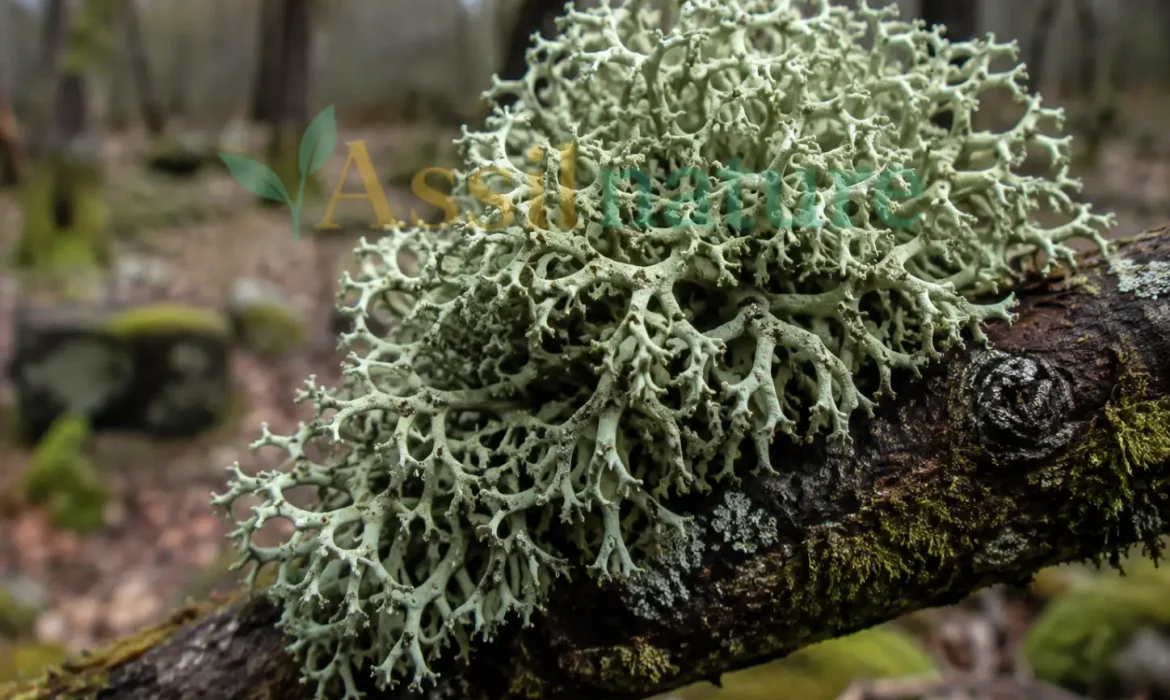
Oakmoss IFRA Restrictions: Atranol, Chloroatranol and Fragrance Safety
Oakmoss has played an important role in perfumery for generations, particularly in mossy, woody and classical fragrance structures. Its modern use, however, is closely connected with fragrance-safety standards, compositional controls and the management of sensitizing constituents such as atranol and chloroatranol.
This has created a common misunderstanding: that oakmoss has simply been “banned.” The industrial reality is more precise. Professional buyers and formulators need to distinguish the botanical raw material from processed moss extracts, understand the applicable IFRA requirements and evaluate the specification of the actual fragrance ingredient being used.
Is Oakmoss Banned by IFRA?
Describing oakmoss as simply “banned by IFRA” is misleading. IFRA Standards can prohibit a fragrance material, restrict its use or establish specifications that a material must meet. These are different forms of risk management.
Oakmoss extracts are covered by an IFRA Standard that includes restrictions on use as well as compositional specifications. This means the relevant question is not merely whether an ingredient carries the name “oakmoss,” but which material is being evaluated, how it has been processed, what its composition is and where it will ultimately be used.
For fragrance companies, this distinction is essential because the requirements associated with a processed oakmoss extract should not automatically be described as if they were identical requirements for every piece of dried lichen entering the upstream extraction supply chain.
Key distinction: raw botanical lichen, processed oakmoss extract and the finished fragrance containing that ingredient represent different stages of the industrial supply chain. Regulatory and technical requirements must be interpreted at the correct stage.
What Does an IFRA Standard Actually Mean?
The International Fragrance Association maintains the IFRA Standards as a risk-management system for the safe use of fragrance ingredients. Depending on the safety assessment of a material, a Standard can establish a prohibition, restriction or specification.
Oakmoss is a particularly useful example because understanding its modern use requires looking at both the permitted use level of the extract and the composition of the commercial material itself.
Oakmoss and Treemoss Must Not Be Treated as the Same Botanical Material
The safety discussion surrounding moss extracts also makes correct terminology important. In perfumery and botanical usage, Oakmoss is primarily associated with Evernia prunastri, while Treemoss is primarily associated with Pseudevernia furfuracea.
These lichens are related fragrance raw materials and can occupy overlapping parts of the industrial supply chain, but they are not the same species and should not be represented as scientifically interchangeable.
This distinction is also reflected in fragrance-industry documentation: Oakmoss extracts and Treemoss extracts are treated as separate materials, even though their use can interact within the same fragrance formulation.
Where Does Cedarmoss Fit into the Discussion?
Cedarmoss is another name encountered in the fragrance-lichen trade. In relevant commercial and historical contexts, the term can be associated with Pseudevernia furfuracea growing in connection with cedar, including Atlas cedar environments.
In real sourcing environments, however, commercial names and local collection terminology do not always provide sufficient botanical identification. This is especially important when wild lichens are collected across forest environments containing different host trees and potentially more than one lichen species.
For industrial procurement, a trade name such as Oakmoss, Treemoss or Cedarmoss should therefore be combined with botanical verification whenever a buyer’s specification requires a defined species.
B2B sourcing principle: commercial terminology can help identify a market category, but it should never replace botanical identification when species identity is a contractual or technical requirement.
Why Are Atranol and Chloroatranol Important?
Atranol and chloroatranol became central to the modern safety assessment of moss extracts because of concerns related to dermal sensitization.
Their significance contributed to tighter compositional control of commercial moss extracts and to the development of analytical methods capable of measuring these constituents at low concentrations.
This is one reason why a modern fragrance house evaluating an oakmoss-derived ingredient needs considerably more information than the botanical or commercial name alone.
Raw Lichen vs Moss Extract: Why the Difference Matters
For industrial sourcing, the compliance discussion becomes much clearer when the supply chain is separated into three stages.
For a deeper explanation of the processed ingredient and its relationship with the original botanical feedstock, see our guide to Evernia prunastri extract .
Understanding the terminology is only the first step. The next question is more technical: how are atranol and chloroatranol controlled in moss extracts, what does the IFRA Oakmoss Standard actually specify, and what do those requirements mean for extract manufacturers and industrial buyers?
What Does the IFRA Standard Specify for Oakmoss Extracts?
The IFRA Standard for Oakmoss extracts does more than establish maximum use levels in finished products. It also contains specifications concerning the composition of the Oakmoss extract itself.
Three points are particularly important for technical buyers: the control of atranol, chloroatranol and the presence of dehydroabietic acid (DHA) associated with resin-acid contamination.
Important: these figures describe specifications associated with the processed Oakmoss extract covered by the IFRA Standard. They should not be copied automatically onto a specification sheet for unprocessed wild lichen without understanding which material and supply-chain stage is actually being tested.
What Does “Below 100 ppm” Actually Mean?
Parts per million, or ppm, is a concentration measurement commonly used when substances need to be controlled at relatively low levels.
In the Oakmoss Standard, IFRA states that the levels of atranol and chloroatranol should each be below 100 ppm in Oakmoss extracts. The requirement applies individually: it is not a combined 100 ppm allowance for the two substances.
This makes analytical documentation important. A fragrance manufacturer cannot reliably determine compliance by the color, odor, viscosity or commercial description of an extract.
Why Analytical Testing Matters for Modern Moss Extracts
Modern moss-extract control depends on analytical chemistry rather than traditional trade descriptions alone. This is particularly relevant for atranol and chloroatranol because the safety concern relates to their concentration in the processed fragrance material.
IFRA provides an analytical method for the quantification of atranol and chloroatranol in moss extracts. For professional buyers, this reinforces an important procurement principle: claims such as “low-atranol” should ultimately be supported by appropriate analytical evidence.
The analytical profile becomes especially important when an extract is intended for use by fragrance houses operating under defined internal specifications, IFRA conformity procedures or additional regulatory requirements.
What Is Low-Atranol Oakmoss?
The fragrance industry may use descriptions such as low-atranol Oakmoss for commercial extracts that have been processed and controlled to reduce problematic constituents.
Such terminology should not be interpreted as a separate botanical species. It describes a characteristic of the processed fragrance ingredient rather than the taxonomic identity of the original lichen.
Likewise, the phrase should not replace the supplier’s technical documentation. Professional evaluation should consider the actual specification and analytical results of the commercial material.
To understand how one important processed form fits into this technical context, see our dedicated guide to Oakmoss resinoid , including production, quality evaluation and modern perfumery use.
Why Does IFRA Mention Dehydroabietic Acid (DHA)?
One of the most technically interesting parts of the IFRA Oakmoss Standard concerns resin acids.
IFRA specifies that Oakmoss extracts must not contain added Treemoss, which it identifies in this context as a source of resin acids. At the same time, the Standard recognizes that traces of resin acids can be carried into commercial Oakmoss qualities during manufacturing.
To control this, the Standard establishes a maximum of 0.1% — or 1000 ppm — of dehydroabietic acid (DHA) in the Oakmoss extract.
IFRA also identifies an HPLC reverse-phase spectrofluorometry method as a means of measuring resin acids in Oakmoss.
Why this matters: the IFRA specification itself demonstrates why Oakmoss and Treemoss should not simply be treated as interchangeable names. Their industrial relationship is close, but material identity and composition still matter.
What Happens When Oakmoss and Treemoss Extracts Are Used Together?
Oakmoss and Treemoss are separate fragrance materials, but their use becomes connected when both extracts are present in the same fragrance mixture.
The IFRA Oakmoss Standard states that, when Treemoss extract is also present, the permitted level of Oakmoss must be reduced accordingly so that the combined amount of both extracts does not exceed the maximum permitted level for the relevant IFRA category.
This is an important formulation principle. The two extracts cannot simply be assessed as completely independent allowances when they coexist in the same fragrance mixture.
Extract Specification and Finished-Product Limits Are Two Different Controls
This distinction is essential when reading the IFRA Standard.
This includes compositional requirements such as control of atranol, chloroatranol and DHA in the Oakmoss extract.
The Standard separately establishes maximum acceptable concentrations according to the applicable IFRA finished-product category.
An Oakmoss extract therefore needs to satisfy the relevant material specification, while the fragrance formulator must separately calculate whether the amount incorporated into the intended product complies with the applicable category limit.
What Should a Fragrance Buyer Ask an Oakmoss Extract Supplier?
For professional sourcing, a commercial name and price are not enough. Depending on the intended application, buyers may need to evaluate several technical elements before approving a material.
The specification tells only part of the story. The next step is understanding how IFRA product categories affect permitted Oakmoss levels, why the limit changes according to end use, and what these rules mean for fragrance houses, extract manufacturers and upstream raw-lichen suppliers.
Why Does the Permitted Oakmoss Level Depend on the Final Product?
An IFRA restriction is not interpreted as one universal concentration that applies equally to every consumer product. The permitted use of a restricted fragrance material depends on the IFRA category of the finished product.
This matters because exposure conditions differ substantially between applications. A fragrance applied to the skin, a rinse-off product and a product with little or no direct skin contact do not represent identical exposure scenarios.
Consequently, a formulator evaluating Oakmoss extract must first identify the intended finished-product category and then apply the relevant limit from the current IFRA Standard.
Practical rule: asking “What is the IFRA limit for Oakmoss?” is incomplete unless the intended end-use category is also known.
How Do IFRA Categories Change the Compliance Question?
IFRA organizes finished products into categories and subcategories according to their use and exposure characteristics. This allows restrictions to reflect how consumers are actually exposed to a fragrance ingredient rather than applying the same limit to every application.
There Is No Single Oakmoss Limit for Every Fragrance Application
This distinction prevents one of the most common mistakes in discussions about restricted fragrance materials: taking a concentration from one product category and presenting it as the universal IFRA limit.
For Oakmoss extracts, the current Standard contains category-specific maximum acceptable concentrations. These limits vary according to the applicable product category, while Category 12 is listed as “No Restriction” under the Standard.
A technical team should therefore work from the current official IFRA Standard and the correct category for the finished product rather than copying a percentage from a secondary source.
What Does This Mean for Fine Fragrance Manufacturers?
Fine fragrance is particularly relevant to Oakmoss because moss extracts have historically contributed depth, persistence and characteristic mossy, woody and forest-like facets to perfumery compositions.
Modern use requires the perfumer or regulatory team to consider both sides of the equation: the specification of the Oakmoss extract being purchased and the maximum acceptable concentration for the intended finished fragrance category.
Compliance therefore begins before formulation. Reliable supplier documentation allows the fragrance manufacturer to understand exactly which material is entering the formula and whether it meets the relevant compositional requirements.
Who Is Responsible for What in the Oakmoss Supply Chain?
Fragrance-lichen compliance becomes easier to understand when responsibilities are separated according to the industrial stage.
The upstream supplier focuses on the agreed botanical or commercial identity, origin, collection traceability, cleanliness, moisture, foreign matter, preparation, packaging and other requirements defined by the industrial buyer.
The extractor transforms the botanical feedstock into a concentrated aromatic ingredient and controls the resulting material according to the required chemical, analytical and technical specification.
The fragrance manufacturer evaluates the ingredient within the complete formula and determines compliance with the applicable IFRA category and other relevant legal or customer requirements.
Does Raw Oakmoss Lichen Need an IFRA Certificate?
This question requires careful terminology. IFRA Standards govern the safe use of fragrance ingredients, while dried wild lichen intended as extraction feedstock sits upstream of the finished fragrance ingredient.
An extractor purchasing raw lichen may impose detailed purchasing specifications and testing requirements, but these should not be confused with an IFRA conformity document for a finished fragrance mixture.
The appropriate documentation therefore depends on what is being sold, how the buyer intends to process it and the contractual specification agreed between supplier and buyer.
For raw-lichen buyers: botanical identity, traceability and raw-material specifications can be more immediately relevant at procurement stage than asking an upstream collector for documentation designed for a downstream fragrance formulation.
Why Botanical Identification Matters Before Extraction
Regulatory control downstream does not remove the need for botanical accuracy upstream. Evernia prunastri and Pseudevernia furfuracea are distinct lichen species even though Oakmoss, Treemoss and Cedarmoss have historically occupied closely related commercial spaces.
If an extraction company requires Evernia prunastri specifically, a broad local or commercial name should not be treated as sufficient evidence that the lot meets that specification.
Conversely, Pseudevernia furfuracea should not be presented as an inferior or “fake” Oakmoss. It is a distinct fragrance lichen with its own Treemoss/Cedarmoss industrial context and should be evaluated according to the material the buyer actually requires.
What Does This Mean for Moroccan Fragrance-Lichen Sourcing?
Morocco has Atlas forest environments in which fragrance lichens occur on woody hosts, including cedar and other trees. Within traditional collection and commercial supply chains, common names can sometimes be broader than the botanical specifications used by industrial laboratories and extraction companies.
This makes transparency particularly valuable. A professional supplier should distinguish between what is known about origin and collection, what is used as a commercial trade name and what has actually been botanically verified for a specific lot.
For buyers sourcing Moroccan material for extraction, this approach can reduce specification disputes and allows samples, botanical verification and pilot extraction to be used where greater certainty is required.
For the wider relationship between Moroccan origin, botanical identity, Oakmoss, Cedarmoss, extraction, quality and industrial sourcing, see our complete guide to Moroccan Cedarmoss and Oakmoss .A Practical Evaluation Path for Industrial Lichen Buyers
For extraction companies, technical qualification is usually more meaningful than purchasing a wild botanical solely by appearance or trade name.
IFRA compliance is therefore not a single laboratory number attached to a forest lichen. It is a chain of material identification, extract specification and finished-product assessment. The final sections will bring these elements together by examining buyer documentation, IFRA certificates, EU regulatory considerations, common compliance misconceptions and a practical checklist for industrial Oakmoss, Treemoss and Cedarmoss sourcing.
IFRA Standard vs IFRA Certificate: What Is the Difference?
The terms IFRA Standard and IFRA Certificate are often used as if they mean the same thing, but they refer to different parts of the fragrance-compliance process.
An IFRA Standard establishes the conditions under which a fragrance material may be used, including restrictions or specifications where applicable. Oakmoss extracts are covered by such a Standard.
A conformity document, by contrast, is associated with a fragrance mixture and its intended applications. It should not be treated as a generic certificate proving that every upstream natural raw material is automatically “IFRA approved.”
Defines applicable restrictions, specifications or prohibitions for fragrance materials covered by the Standards.
Relates the fragrance formulation to specified end-use categories and the applicable IFRA Standards.
Is IFRA the Same as Cosmetic Law?
No. IFRA Standards and national or regional legislation must be considered separately.
IFRA provides an industry risk-management framework for fragrance ingredients. Legal requirements, however, are established by the authorities governing the market in which a product is placed.
A fragrance company can therefore need to satisfy both the relevant IFRA requirements and the legal requirements applicable to its finished product and destination market.
Compliance principle: IFRA conformity does not replace compliance with applicable cosmetic, chemical or product legislation.
What Is the EU Position on Atranol and Chloroatranol?
Within the European Union, atranol and chloroatranol have been subject to particularly strict regulatory treatment because of their sensitization potential.
Following scientific safety assessments, EU legislation prohibited atranol and chloroatranol in cosmetic products. This legal development is one of the reasons why modern moss-extract manufacturing places such strong emphasis on purification, compositional control and analytical verification.
For fragrance houses supplying cosmetic applications in Europe, it is therefore not enough to rely solely on historical use of Oakmoss. The actual composition of the modern fragrance ingredient and the applicable cosmetic rules must be considered.
Does the EU Rule Mean Raw Oakmoss or Treemoss Lichen Is Banned?
The regulatory question must again be linked to the correct stage of the supply chain.
The EU prohibition discussed above concerns atranol and chloroatranol in cosmetic products. It should not be rewritten as a blanket statement that wild Oakmoss, Treemoss or Cedarmoss lichen cannot be collected, traded or supplied as botanical extraction feedstock.
Raw-material sourcing is instead governed by the commercial specification, botanical requirements, origin rules, harvesting legality, export requirements and any testing requested by the industrial buyer. The downstream extractor is then responsible for manufacturing a fragrance ingredient suitable for its intended market.
What Documentation Should Industrial Moss Buyers Request?
Documentation should match the material being purchased. A company buying raw wild lichen for extraction does not necessarily need the same document package as a fragrance house buying a finished Oakmoss extract.
• Country and region of origin
• Traceability information
• Harvest / collection documentation where required
• Moisture specification
• Foreign matter / cleanliness
• Packing specification
• Representative sample
• Buyer-specific testing requirements
• Certificate of Analysis where applicable
• Atranol / chloroatranol data
• Relevant DHA / resin-acid information
• Safety documentation
• Batch identification and traceability
• Regulatory / IFRA-related information
• Additional customer-specific analytical data
Five Mistakes to Avoid When Sourcing Oakmoss, Treemoss or Cedarmoss
Evernia prunastri and Pseudevernia furfuracea are distinct botanical materials. Commercial overlap does not make them scientifically interchangeable.
The correct interpretation depends on the material, the IFRA Standard, its composition and the legal requirements of the destination market.
Requirements such as atranol and chloroatranol specifications in the IFRA Oakmoss Standard concern the processed fragrance material, not automatically every raw wild lot.
If a contract requires a defined species, botanical verification should support the purchasing specification.
For industrial extraction, usable dry matter, cleanliness, consistency, botanical identity and pilot-extraction performance may be more commercially meaningful than the nominal price per kilogram alone.
A Practical Checklist Before Approving a Fragrance-Lichen Supplier
For serious extraction companies and fragrance-material buyers, supplier qualification should combine botanical, commercial and technical information rather than relying on one certificate or one photograph.
Why Botanical Transparency Matters More Than Marketing Claims
Industrial buyers do not need every wild lichen supplier to pretend that field collection is as controlled as a laboratory process. They need reliable information about what is known, what has been verified and what still requires confirmation.
In Atlas sourcing environments, traditional names such as Oakmoss, Treemoss and Cedarmoss may overlap commercially. Recognizing this reality is not a weakness when it is accompanied by clear botanical distinctions and buyer-specific verification.
For extraction companies, that transparency can be more valuable than a supplier making an unsupported species claim simply because one scientific name is commercially more familiar.
Oakmoss Compliance Begins with Knowing Which Material You Actually Have
Modern Oakmoss use sits at the intersection of traditional perfumery, botanical sourcing, extraction chemistry and fragrance regulation.
IFRA controls the use and specification of Oakmoss extracts, including important compositional requirements associated with atranol, chloroatranol and resin-acid contamination. European cosmetic legislation adds separate legal requirements, including the prohibition of atranol and chloroatranol in cosmetic products.
Upstream sourcing, however, begins one step earlier: with reliable information about the lichen itself. Evernia prunastri and Pseudevernia furfuracea are related fragrance lichens with overlapping industrial histories, but they remain botanically distinct materials.
For professional buyers, the strongest supply chain therefore combines botanical transparency, traceable origin, representative sampling, appropriate testing and clear communication between the raw-material supplier, extractor and fragrance manufacturer.
Frequently Asked Questions
Is Oakmoss banned by IFRA?
No. Describing Oakmoss as simply “banned by IFRA” is inaccurate. IFRA maintains a Standard for Oakmoss extracts that includes restrictions on use and compositional specifications. The applicable conditions depend on the material and the intended finished-product category.
What is the IFRA limit for Oakmoss?
There is no single universal Oakmoss limit for every application. IFRA maximum acceptable concentrations vary according to the finished-product category, so the current Oakmoss Standard and the correct product category must be consulted.
What are atranol and chloroatranol?
Atranol and chloroatranol are constituents associated with traditional moss extracts that became important in fragrance safety because of their strong skin-sensitization potential. Their control is a major part of modern Oakmoss-extract specifications.
What levels of atranol and chloroatranol are allowed in Oakmoss extracts?
The IFRA Oakmoss Standard specifies that atranol and chloroatranol should each be below 100 ppm in Oakmoss extracts. These are separate limits for each constituent, not a combined 100 ppm total.
What does low-atranol Oakmoss mean?
Low-atranol Oakmoss generally refers to a processed commercial Oakmoss extract in which sensitizing constituents such as atranol have been reduced and controlled. It is a processing and specification term, not a separate botanical species.
What is DHA in the IFRA Oakmoss Standard?
DHA refers to dehydroabietic acid, which is used in the Standard as a marker related to resin-acid contamination. The Oakmoss Standard specifies a maximum DHA content of 0.1%, equivalent to 1000 ppm, in the extract.
Is Treemoss the same as Oakmoss?
No. Oakmoss is primarily associated with Evernia prunastri, while Treemoss is primarily associated with Pseudevernia furfuracea. They are related fragrance lichens with overlapping industrial uses, but they are botanically distinct.
Is Cedarmoss the same as Oakmoss?
Not botanically. Cedarmoss is a commercial term that can be associated with Pseudevernia furfuracea occurring in cedar-related sourcing contexts, including Atlas cedar environments. It should not automatically be treated as Evernia prunastri.
Can Oakmoss and Treemoss extracts be used together?
Yes, but their combined use must be assessed correctly. The IFRA Oakmoss Standard states that when Treemoss extract is also present, the Oakmoss level must be reduced so that the combined amount does not exceed the permitted level for the relevant category.
Does raw Oakmoss lichen need an IFRA certificate?
Raw dried lichen used as extraction feedstock should not be confused with a finished fragrance mixture. Upstream buyers generally focus on botanical identity, origin, traceability, moisture, cleanliness and agreed specifications, while IFRA conformity is assessed further downstream in the fragrance supply chain.
Are atranol and chloroatranol banned in EU cosmetics?
Yes. European Union cosmetic legislation prohibits atranol and chloroatranol in cosmetic products. This legal requirement is separate from, although related to, the IFRA framework for Oakmoss extracts.
Does IFRA compliance mean a fragrance automatically complies with EU law?
No. IFRA Standards are an industry risk-management framework and do not replace applicable laws. A fragrance company must comply with both relevant IFRA requirements and the legal requirements of the markets where the finished product is sold.
What should an industrial buyer check when sourcing raw fragrance lichen?
Buyers should define the required species or accepted commercial material, verify origin and traceability, establish moisture and foreign-matter limits, evaluate representative samples and request botanical verification or pilot extraction where the intended industrial specification requires it.
Can a supplier guarantee Evernia prunastri based only on the name Oakmoss?
No. A commercial or local trade name alone is not sufficient botanical proof. If a buyer specifically requires Evernia prunastri, the relevant lot should be supported by appropriate botanical identification or another agreed verification method.
References
Editorial note: regulatory requirements can change over time. Industrial users should always consult the latest applicable IFRA documentation and the current legislation of the destination market when assessing a fragrance ingredient or finished product.
Looking for Moroccan Fragrance Lichen for Industrial Extraction?
Assil Nature works with Moroccan Atlas-origin fragrance lichen for industrial sourcing and extraction applications. Depending on buyer requirements, we can discuss available material, origin, lot characteristics, samples, traceability, packing and botanical verification where required.
If your specification requires a defined species such as Evernia prunastri or Pseudevernia furfuracea, please include this requirement in your inquiry so the relevant lot can be evaluated accordingly.
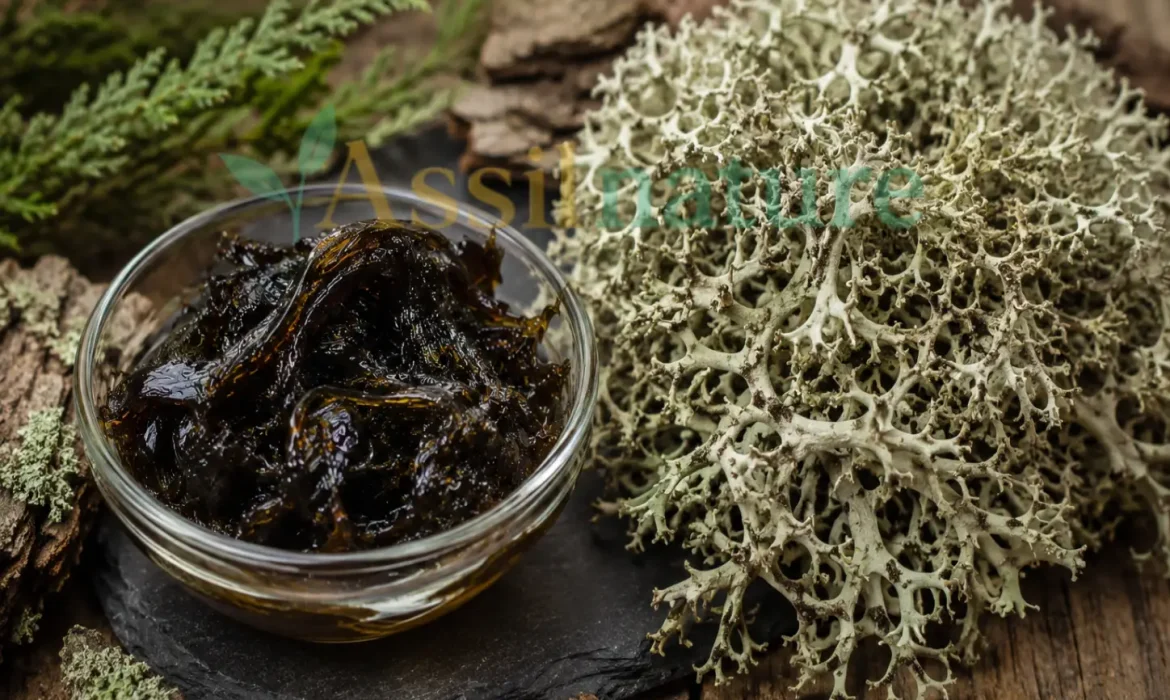
Oakmoss Resinoid: What It Is, How It Is Produced and Used in Perfumery
Oakmoss resinoid is a concentrated aromatic material associated with the extraction of
Evernia prunastri, the lichen traditionally known as true oakmoss in perfumery. It belongs to a very different stage of the fragrance supply chain from the dried lichen used as extraction feedstock.
What Is Oakmoss Resinoid?
In natural fragrance processing, a resinoid is a concentrated extract typically obtained from a dry botanical raw material through solvent extraction. In the case of oakmoss, the starting botanical traditionally associated with the material is Evernia prunastri.
Extraction transfers a complex mixture of soluble constituents from the dried lichen into the extraction medium. After separation of the spent botanical material and removal of the solvent under controlled processing conditions, a concentrated aromatic material remains.
The resulting resinoid is therefore not simply powdered or concentrated dried lichen. It is a processed fragrance ingredient whose composition, odor and physical properties depend on both the original botanical feedstock and the extraction process.
Essential distinction:
raw oakmoss is botanical extraction feedstock. Oakmoss resinoid is a manufactured fragrance ingredient obtained after extraction and concentration.
From Raw Oakmoss Lichen to Resinoid
Understanding where resinoid sits in the supply chain prevents a common sourcing mistake: treating the natural lichen and the finished fragrance ingredient as interchangeable commercial products.
Raw Lichen
Botanical material collected and prepared as industrial feedstock.
Preparation
Cleaning, inspection and preparation according to the extractor’s specification.
Extraction
Soluble aromatic constituents are recovered from the botanical matrix.
Concentration
The extraction medium is removed and the aromatic fraction concentrated.
Resinoid
Concentrated aromatic ingredient ready for further evaluation, processing or fragrance use.
What Does Oakmoss Resinoid Look Like?
Unlike the branching structure of dried lichen, a resinoid is generally a dense, highly concentrated material. Its physical appearance can vary with manufacturing method, degree of purification, temperature and commercial grade.
It may range from a viscous or semi-solid extract to a more solid resinous mass. Color can also vary, commonly appearing in darker green, brown-green or brownish tones depending on processing and specification.
Appearance alone, however, is not sufficient to establish quality. Industrial evaluation depends on the manufacturer’s sensory, analytical and regulatory specification for the particular commercial grade.
What Does Oakmoss Resinoid Smell Like?
Traditional oakmoss materials are valued for an unusually complex natural odor profile. A resinoid can present combinations of mossy, earthy, woody, forest-like, leathery and humid tonalities, together with darker nuances that contribute depth to a fragrance base.
The precise profile is not universal. Botanical variation, extraction conditions and subsequent treatment can change both the intensity and balance of individual facets.
Mossy & Forest-Like
The characteristic natural identity traditionally associated with oakmoss.
Earthy
Deep soil and woodland-floor impressions that reinforce natural depth.
Woody & Leathery
Darker base-note facets that can add structure and complexity.
Why Has Oakmoss Resinoid Been Important in Perfumery?
Oakmoss became historically significant because its extracts could provide a type of depth and natural complexity that was difficult to reduce to a single odor molecule.
It became particularly associated with classical chypre and fougère structures, where mossy materials helped build the darker, earthy and forest-like foundation of the composition.
Modern formulation practices and safety requirements have changed how natural oakmoss materials are processed and used, but their historical and technical importance remains central to understanding natural fragrance ingredients.
Oakmoss resinoid is only one form encountered in the fragrance industry. The next distinction is particularly important for buyers and formulators: how does an oakmoss resinoid differ from an oakmoss absolute, and why should the two terms not be used interchangeably?
Oakmoss Resinoid vs Oakmoss Absolute: What Is the Difference?
The terms oakmoss resinoid and oakmoss absolute are both used for processed fragrance ingredients, but they should not be assumed to describe the same material.
A resinoid is generally associated with the primary concentrated extract obtained from a dry aromatic raw material. An absolute usually refers to a further processed or selectively refined aromatic fraction derived from an earlier extract.
The exact manufacturing route and commercial terminology can vary between producers, which is why the technical specification supplied by the manufacturer is more reliable than the product name alone.
Oakmoss Resinoid
Typically a dense aromatic extract obtained from dried oakmoss through solvent-based extraction and concentration.
Oakmoss Absolute
A more selectively processed aromatic fraction whose composition and sensory profile depend on the producer’s refining process.
Buyer note: resinoid, absolute and extract are commercial fragrance-material terms. Their precise composition should always be verified through the supplier’s specification, analytical documentation and intended-use information.
For the broader ingredient category and its relationship with the botanical feedstock, see our guide to Evernia prunastri extract .
Why Processing Changes the Final Oakmoss Ingredient
Once the aromatic constituents have been extracted from the lichen, further processing can alter the composition, odor profile, physical properties and regulatory characteristics of the finished ingredient.
Several production variables can therefore distinguish one commercial oakmoss material from another.
How Is Oakmoss Resinoid Quality Evaluated?
Quality evaluation of a resinoid is different from evaluating the dried lichen used to produce it. The finished extract is judged as a fragrance ingredient and therefore requires a combination of sensory, physical, analytical and regulatory assessment.
Depending on the manufacturer’s specification and target market, evaluation may include:
Does Raw Oakmoss Quality Affect Resinoid Production?
Yes. The quality of the dried lichen determines the botanical matrix entering the extraction process. Although manufacturing has a major influence on the finished resinoid, processing cannot make raw-material identity and consistency irrelevant.
Excessive foreign matter, unstable moisture, mixed botanical material or inconsistent lot preparation can affect extraction efficiency and complicate standardisation.
For recurring industrial production, raw-material qualification therefore becomes part of finished-ingredient quality management.
Industrial principle: a consistent resinoid begins with a controlled extraction process, but also with correctly identified and suitably prepared botanical feedstock.
Why Batch Consistency Matters in Oakmoss Resinoid
Natural extracts inevitably reflect some variability in the biological material from which they are produced. For fragrance manufacturers, however, uncontrolled variation can create difficulties when an ingredient is used repeatedly in established formulas.
Extract producers therefore rely on raw-material qualification, process control, analytical assessment and, where appropriate, standardisation to maintain commercially acceptable consistency.
This is especially important for customers purchasing a fragrance ingredient under the same commercial specification over multiple production batches.
Quality is only one side of the modern oakmoss-resinoid market. Its use is also shaped by fragrance-safety requirements, atranol and chloroatranol controls, treated commercial grades and the way contemporary perfumers work with mossy ingredients.
How Modern Oakmoss Resinoids Differ from Historical Materials
The oakmoss materials used by the fragrance industry today should not automatically be assumed to have the same composition as historical extracts. Advances in analytical chemistry, fragrance-safety assessment and processing technology have changed the way commercial oakmoss ingredients are manufactured and specified.
Modern producers can apply additional purification, selective processing and quality-control steps to manage constituents that are important from a safety or regulatory perspective.
As a result, the term oakmoss resinoid describes a product category rather than one universally identical chemical composition. The specification of the individual commercial grade remains essential.
Why Are Atranol and Chloroatranol Important in Oakmoss?
Atranol and chloroatranol became particularly important in the modern history of oakmoss because of their association with skin sensitisation. Their presence in traditional oakmoss-derived fragrance materials contributed to significant changes in how these ingredients are processed and controlled.
This led the fragrance industry to develop more highly processed commercial materials in which relevant constituents can be reduced and analytically controlled.
For a fragrance manufacturer, the relevant information therefore comes from the actual analytical and regulatory documentation of the finished ingredient, rather than from the words “oakmoss” or “resinoid” alone.
Important distinction: the presence of naturally occurring precursors or related constituents in raw lichen and the regulatory specification of a processed fragrance ingredient are different technical questions. The finished extract must be assessed according to its own composition and intended use.
What Does “Low-Atranol Oakmoss” Mean?
The fragrance market includes specially processed oakmoss materials designed to reduce constituents of regulatory concern. These are sometimes described commercially using terms such as low-atranol, treated or purified oakmoss.
Such terminology should not be interpreted as a universal technical specification. Different manufacturers may use different processing technologies and product specifications.
Professional buyers should therefore request the relevant technical documentation and analytical data for the specific commercial material under evaluation.
Is Oakmoss Resinoid Banned in Perfumery?
Saying that oakmoss is simply “banned” does not accurately describe the modern fragrance landscape. Oakmoss-derived fragrance materials are subject to important safety restrictions and compositional requirements, and their use depends on the specific ingredient, its composition and the intended application.
IFRA Standards form an important part of fragrance-industry safe-use practice, while legal requirements can also apply according to jurisdiction and finished-product category.
Formulators and ingredient buyers should therefore work from current documentation for the specific commercial grade rather than relying on general statements about historical oakmoss use.
For a dedicated review of the applicable safety framework, see our guide to Oakmoss IFRA restrictions , including atranol, chloroatranol and modern fragrance-safety considerations.
How Is Oakmoss Used in Modern Perfumery?
The regulatory evolution of oakmoss has changed its use, but it has not erased the importance of the mossy olfactory family. Contemporary perfumers can work with compliant natural oakmoss-derived materials alongside other natural and synthetic ingredients to construct the desired mossy effect.
In modern formulations, the objective may be to preserve aspects of the traditional oakmoss character while achieving greater control over composition, consistency and safe-use requirements.
This makes oakmoss an interesting example of how a historically important natural material can evolve through analytical science and extraction technology while remaining relevant to contemporary fragrance creation.
Raw Lichen and Oakmoss Resinoid Are Two Different B2B Markets
For procurement purposes, it is useful to separate the upstream botanical market from the downstream fragrance-ingredient market.
| Factor | Raw Lichen | Oakmoss Resinoid |
|---|---|---|
| Product stage | Botanical feedstock | Processed fragrance ingredient |
| Primary buyer | Extractor / fragrance-ingredient manufacturer | Fragrance house / compounder / formulator |
| Core specification | Species, origin, moisture, cleanliness, foreign matter | Sensory, chemical, physical and regulatory parameters |
| Value creation | Sourcing and preparation | Extraction, refining and standardisation |
Commercial implication: a supplier of dried fragrance lichen should not be presented as a manufacturer of oakmoss resinoid unless extraction is actually performed and the resulting fragrance ingredient is supplied under its own technical specification.
The finished resinoid ultimately begins with a natural botanical feedstock. For extraction companies, this brings the discussion back upstream: which lichen is being purchased, how botanical identity is controlled, and what makes a bulk raw-material lot suitable for industrial resinoid production.
What Raw Material Is Used to Produce Oakmoss Resinoid?
In the traditional perfumery definition, true oakmoss raw material is associated with the lichen Evernia prunastri. When a manufacturer intends to produce an ingredient specifically identified as oakmoss resinoid, botanical identity therefore becomes a fundamental part of raw-material qualification.
Commercial names alone are not sufficient. The international lichen trade has historically used overlapping terminology, while different aromatic lichen species can enter related fragrance applications.
For industrial procurement, the safest approach is to specify the required botanical species, physical characteristics, origin and acceptance criteria before comparing commercial offers.
Evernia prunastri vs Pseudevernia furfuracea for Resinoid Production
Evernia prunastri and Pseudevernia furfuracea are both established fragrance lichens, but they represent different botanical raw materials and should not be merged into a single industrial specification.
Evernia prunastri is traditionally associated with oakmoss. Pseudevernia furfuracea is principally associated with treemoss and has also been described as cedarmoss in specific historical and trade contexts, particularly when associated with cedar hosts.
Because their chemical profiles and resulting extracts can differ, a manufacturer should qualify the species according to the fragrance ingredient it intends to produce rather than treating one lichen as an automatic substitute for the other.
Industrial rule: if the target product is specifically an oakmoss resinoid, the botanical identity required by the manufacturer’s specification should be established before purchasing the extraction feedstock.
What Should a Resinoid Manufacturer Specify When Buying Raw Lichen?
A useful RFQ for extraction-grade lichen should go beyond the product name and quantity. Defining the critical parameters before quotation allows suppliers to determine whether they can prepare material that genuinely fits the process.
| Parameter | Why It Matters |
|---|---|
| Botanical species | Establishes the identity of the extraction feedstock. |
| Origin & traceability | Supports lot control, supplier qualification and sourcing documentation. |
| Moisture | Influences dry-matter value, storage stability and processing. |
| Foreign matter | Bark, wood, soil and unrelated material reduce the proportion of useful feedstock. |
| Physical preparation | Cleaning, sorting and particle condition may influence processing efficiency. |
| Required testing | Buyer-specific analyses should be agreed before commercial preparation. |
| Annual volume | Determines whether the required specification can realistically be maintained at production scale. |
Why Pilot Extraction Can Be More Valuable Than Visual Inspection
Visual inspection can reveal cleanliness, color, physical condition and obvious foreign matter, but it cannot by itself predict how a raw lichen will perform in a manufacturer’s extraction system.
A representative sample allows the buyer to perform botanical verification and analytical evaluation and, where appropriate, a laboratory or pilot-scale extraction using its own process.
This can provide practical information about extract yield, physical behaviour and sensory characteristics before the manufacturer commits to a larger commercial lot.
Raw Lichen Price vs Extraction Value
For a resinoid producer, the cheapest raw lichen per kilogram is not necessarily the lowest-cost feedstock.
A shipment containing excessive moisture or non-lichen material may offer less usable dry botanical matter per purchased kilogram. Inconsistent material may also increase sorting, qualification and process-control costs.
Industrial purchasing decisions are therefore stronger when price is evaluated together with usable material, extraction performance, specification conformity and supply consistency.
Procurement perspective: the economically relevant question is not only “What is the price per kilogram?” but “What is the cost of the qualified raw material required to produce a consistent finished extract?”
Before Purchasing Lichen for Resinoid Production
Oakmoss Resinoid Connects Perfumery with Botanical Sourcing
Oakmoss resinoid occupies an important position between natural botanical sourcing and finished fragrance formulation. It transforms dried aromatic lichen into a concentrated ingredient with a complex mossy character and a long history in perfumery.
Yet the word “resinoid” alone does not define the quality of a commercial product. Botanical feedstock, extraction technology, refining, analytical control and regulatory requirements all influence the resulting ingredient.
For extract manufacturers, this makes upstream qualification essential. Correct species, clean and appropriately dried material, traceability and lot consistency create a stronger foundation for reproducible industrial extraction.
For the wider relationship between Oakmoss, Moroccan Cedarmoss, botanical identity, extraction, quality and industrial sourcing, explore our complete guide to Moroccan Cedarmoss and Oakmoss .
For fragrance buyers, the downstream principle is equally important: evaluate the actual resinoid specification and analytical documentation rather than relying solely on historical or commercial terminology.
In short: oakmoss resinoid is the result of an industrial extraction process, but the quality chain begins earlier—with the identity, preparation and consistency of the natural lichen entering that process.
Frequently Asked Questions
What is oakmoss resinoid?
Oakmoss resinoid is a concentrated aromatic material produced from oakmoss lichen through extraction and concentration. In traditional perfumery terminology, true oakmoss is associated with Evernia prunastri. The resinoid is a processed fragrance ingredient and should be distinguished from the dried lichen used as extraction feedstock.
How is oakmoss resinoid produced?
Oakmoss resinoid is generally produced by extracting prepared dried lichen with an appropriate extraction medium, separating the botanical material and concentrating the recovered aromatic fraction. The exact industrial process, solvent system and subsequent treatment can vary between manufacturers.
What is the difference between oakmoss resinoid and oakmoss absolute?
A resinoid generally refers to a concentrated primary extract obtained from a dry aromatic raw material, while an absolute usually involves further processing or selective refinement of an earlier extract. Commercial terminology can vary, so buyers should verify the technical specification of the actual ingredient.
Is oakmoss resinoid the same as Evernia prunastri extract?
Oakmoss resinoid can fall within the broader category of Evernia prunastri extracts, but the terms should not automatically be treated as exact synonyms. “Extract” is a broad description, whereas “resinoid” usually refers to a particular type or stage of concentrated aromatic extract.
What does oakmoss resinoid smell like?
Traditional oakmoss resinoids can display complex mossy, earthy, woody, forest-like and leathery facets. The precise odor profile depends on the botanical feedstock, extraction process, refining and the specification of the commercial grade.
What is oakmoss resinoid used for in perfumery?
Oakmoss materials have historically been important in fragrance bases, particularly in classical chypre and fougère structures. They contribute mossy, earthy and woody depth. Modern use depends on the composition and safe-use requirements of the specific commercial ingredient.
Is oakmoss resinoid made from Evernia prunastri?
In traditional botanical and perfumery terminology, true oakmoss is Evernia prunastri. When an ingredient is specifically represented as an oakmoss resinoid, botanical identity of the original feedstock is therefore an important part of technical qualification.
Is Pseudevernia furfuracea the same raw material as oakmoss?
No. Pseudevernia furfuracea and Evernia prunastri are different lichen species. P. furfuracea is principally associated with treemoss and, in specific cedar-host trade contexts, cedarmoss. The two materials should not be substituted automatically in an extraction specification.
What is low-atranol oakmoss?
Low-atranol oakmoss generally refers to specially processed commercial oakmoss material designed to reduce constituents of safety concern. The expression is not a universal specification, so buyers should review analytical and technical documentation for the particular ingredient offered.
Is oakmoss resinoid banned?
It is misleading to describe oakmoss resinoid simply as banned. Oakmoss-derived fragrance materials are subject to important compositional and safe-use requirements. The acceptability and permitted use of a particular ingredient depend on its composition, intended application and the applicable regulatory and fragrance-safety framework.
Does IFRA regulate the use of oakmoss materials?
IFRA Standards are an important part of the fragrance industry's safe-use framework for oakmoss-derived ingredients. Formulators should consult the current applicable IFRA documentation together with any legal requirements relevant to the destination market and finished product.
What affects the quality of oakmoss resinoid?
Quality can be influenced by botanical identity and condition of the raw lichen, extraction technology, refining, standardisation and batch control. Finished resinoids may also be evaluated for sensory profile, physical characteristics, chemical composition and regulatory conformity.
What should an extractor check before buying raw lichen for resinoid production?
Important parameters include botanical species, origin, traceability, moisture, cleanliness, foreign matter, physical preparation, required analyses, representative sample approval and the supplier's ability to maintain the agreed specification across commercial volumes.
References
The botanical, extraction and fragrance-industry distinctions discussed in this article are supported by established scientific literature and professional fragrance-safety documentation.
Joulain, D. & Tabacchi, R. (2009).
Lichen extracts as raw materials in perfumery. Part 1: Oakmoss.
Flavour and Fragrance Journal, 24, 49–61.
DOI: 10.1002/ffj.1916
Joulain, D. & Tabacchi, R. (2009).
Lichen extracts as raw materials in perfumery. Part 2: Treemoss.
Flavour and Fragrance Journal, 24, 105–116.
DOI: 10.1002/ffj.1923
British Lichen Society.
Evernia prunastri species account.
Botanical characteristics and identification information for true oakmoss.
British Lichen Society – Evernia prunastri
British Lichen Society.
Pseudevernia furfuracea species account.
Botanical reference supporting the distinction between treemoss-type material and Evernia prunastri.
British Lichen Society – Pseudevernia furfuracea
International Fragrance Association (IFRA).
IFRA Standards Documentation.
Professional reference for fragrance-material safe-use standards and related technical documentation.
IFRA Standards Documentation
Technical note:
fragrance-liken terminology has historically varied across scientific and commercial sources. For procurement and industrial extraction, botanical identity and the technical specification of the actual commercial material should take precedence over trade names alone.
Looking for Raw Lichen for Fragrance Extraction?
Assil Nature supplies Moroccan fragrance lichen in the Pseudevernia furfuracea sourcing context for professional B2B and industrial requirements. Buyers can discuss sample evaluation, raw-material specifications, bulk quantities and export supply.
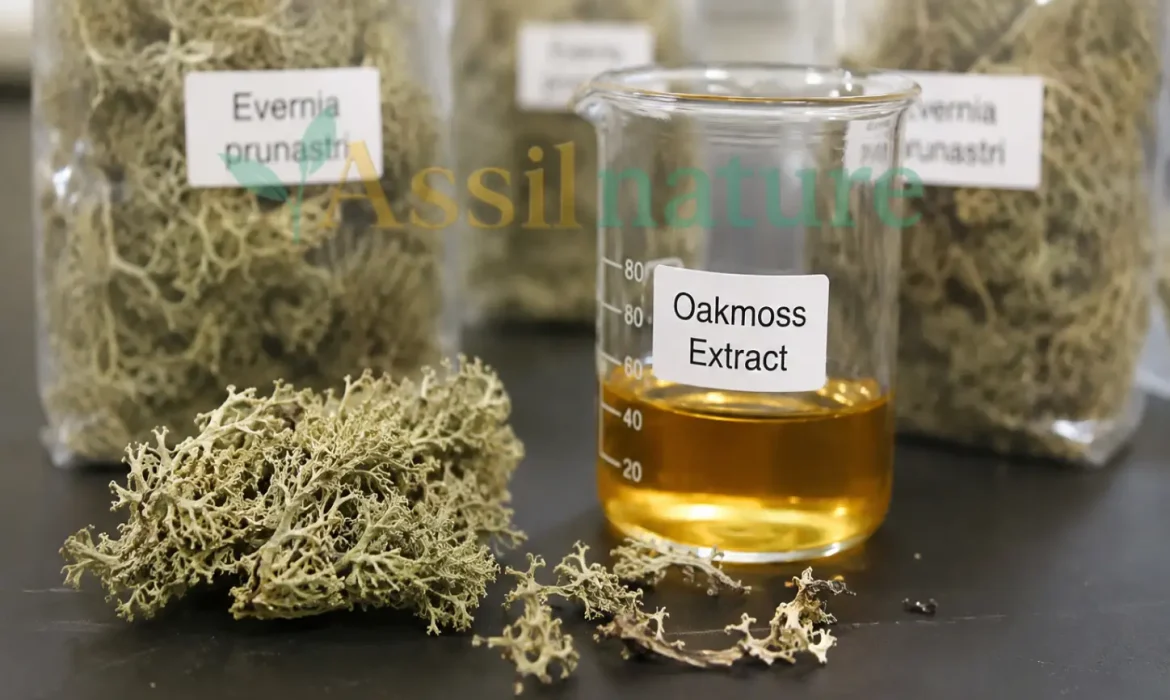
Evernia prunastri Extract: Oakmoss Extraction, Uses and Industrial Considerations
Evernia prunastri Extract: Oakmoss Extraction, Uses and Industrial Considerations
Evernia prunastri, commonly known as oakmoss, has been one of the most important natural lichen raw materials in traditional perfumery. Yet the dried lichen itself and an Evernia prunastri extract are not the same product.
What Is Evernia prunastri Extract?
Evernia prunastri extract is a fragrance ingredient obtained by processing the lichen
Evernia prunastri, the species traditionally associated with true oakmoss in perfumery.
The natural lichen is collected, dried and prepared as a botanical raw material. It may then undergo solvent extraction and further processing by specialised fragrance-ingredient manufacturers to concentrate its aromatic constituents.
Depending on the manufacturing process, the resulting commercial ingredient may be described using terms such as oakmoss extract, oakmoss resinoid or oakmoss absolute. These terms refer to processed fragrance materials rather than to the dried lichen itself.
Key distinction:
dried Evernia prunastri is the botanical feedstock. Evernia prunastri extract is a downstream fragrance ingredient manufactured from that feedstock.
Evernia prunastri Lichen vs Evernia prunastri Extract
Confusion often occurs because the botanical name appears in both raw-material and fragrance-ingredient descriptions. For an industrial buyer, however, the two stages of the supply chain are fundamentally different.
Dried Evernia prunastri
Naturally occurring lichen that has been collected, dried, cleaned or sorted and prepared for industrial processing. Its commercial value depends on botanical identity, origin, cleanliness, moisture, foreign matter, traceability and the buyer’s extraction specification.
Evernia prunastri Extract
A processed aromatic ingredient manufactured from oakmoss raw material through extraction and, depending on the commercial grade, additional refining or treatment.
Why Is Oakmoss Extracted for Perfumery?
The aromatic value of oakmoss becomes commercially useful to perfumers after its odor-active constituents are concentrated into an extract suitable for fragrance formulation.
Traditional oakmoss extracts are valued for their complex profile, often described through combinations of mossy, earthy, woody, damp-forest, leathery and slightly marine or mineral nuances. The exact sensory profile varies with the raw material and the extraction and refining process.
Historically, this complexity made oakmoss especially important in classical chypre and fougère fragrance structures, where it contributed depth, diffusion and a characteristic forest-like base.
Why the Quality of the Raw Lichen Matters
Extraction does not eliminate the importance of raw-material quality. Before an extractor considers yield or fragrance profile, the incoming lichen must first correspond to the botanical and physical requirements of the process.
Several characteristics can influence whether a lot is commercially suitable.
Botanical identity
The buyer may require confirmed Evernia prunastri rather than another fragrance lichen.
Foreign matter
Excessive bark, wood, soil or unrelated botanical material can affect usable yield and processing.
Moisture condition
Drying and storage influence shipment stability and the physical condition of the incoming material.
Lot consistency
Recurring industrial production benefits from a supply chain capable of maintaining agreed specifications between lots.
Extract, Resinoid and Absolute: Are They the Same?
The fragrance industry uses several commercial terms for materials obtained from oakmoss, and these terms can overlap in supplier catalogues. They should nevertheless not be assumed to describe an identical manufacturing process or identical finished composition.
The technical meaning depends on how the material was extracted, subsequently processed and standardised. Buyers should therefore evaluate the manufacturer’s specification rather than relying on the product name alone.
For industrial buyers:
“Evernia prunastri extract” describes a processed fragrance ingredient. When sourcing the original dried lichen, the relevant discussion is instead botanical identity, raw-material specification and suitability for extraction.
For a closer look at one of the principal processed forms, see our guide to
Oakmoss resinoid
,
including its production, characteristics and use in perfumery.
Understanding the distinction between raw oakmoss and its extracts provides the foundation for examining how industrial extraction works, what affects extraction yield and quality, and how manufacturers evaluate incoming lichen before processing.
How Is Evernia prunastri Extract Produced?
Commercial oakmoss ingredients are generally produced by specialised fragrance-extraction companies rather than by the raw-material collector or botanical supplier. The exact manufacturing process varies between producers, but the basic industrial logic follows a sequence of raw-material preparation, extraction, separation and refinement.
Because extraction technology, solvent systems and downstream treatment can differ, two products sold under broadly similar names may have different chemical and olfactory profiles.
The dried lichen is inspected and prepared according to the extractor’s requirements. Cleaning, moisture condition, particle size and foreign-matter content can influence processing efficiency.
The botanical material is contacted with an appropriate extraction medium to recover soluble aromatic constituents from the lichen matrix.
The liquid extract is separated from spent botanical material and concentrated to obtain a dense aromatic fraction.
Depending on the intended commercial ingredient, manufacturers may apply further purification, fractionation, standardisation or treatment.
The resulting material is evaluated against the manufacturer’s chemical, sensory and regulatory specifications before commercial release.
What Affects Oakmoss Extraction Yield?
Extraction yield is not determined by weight alone. The proportion of usable aromatic material recovered from a batch can be influenced by both the incoming lichen and the extraction process chosen by the manufacturer.
This is one reason why industrial buyers often qualify raw botanical material before committing to recurring bulk supply.
Commercial implication: a lower-priced raw lichen is not necessarily the lower-cost extraction feedstock if it contains more foreign matter, excess moisture or inconsistent botanical material.
How Do Extract Manufacturers Evaluate Raw Oakmoss?
A professional extraction company may evaluate incoming raw material at several levels before approving it for production. The exact specification varies by manufacturer, destination market and finished ingredient.
Typical evaluation areas may include:
Why a Representative Sample Comes Before a Bulk Order
For extraction-grade botanicals, photographs and basic product descriptions cannot replace physical evaluation. A representative sample gives the manufacturer an opportunity to determine whether the lichen matches its technical requirements.
The buyer may use the sample for species verification, physical inspection, analytical screening or a laboratory-scale extraction. This can reveal issues that are difficult to assess from commercial documentation alone.
Once the material has been qualified, the next commercial challenge is ensuring that the approved characteristics can be reproduced at the scale required for industrial production.
Extraction yield is only one part of the equation. The next question is how the raw lichen and the manufacturing process influence the odor profile, chemical composition and regulatory characteristics of the finished oakmoss ingredient.
How Raw Oakmoss Influences the Finished Extract
The characteristics of an Evernia prunastri extract are determined by more than the extraction technology alone. The botanical material entering the process establishes the starting chemical and sensory matrix from which the fragrance ingredient is produced.
Natural variation can occur between raw-material lots because lichens develop under different environmental conditions. Origin, host environment, maturity, collection conditions, storage and the proportion of non-lichen material can all contribute to differences in the incoming feedstock.
Extraction and subsequent processing then introduce another layer of variation. For this reason, the quality of a commercial oakmoss ingredient reflects a combination of raw-material selection and manufacturing control.
Raw material sourcing: Extraction companies evaluating Evernia prunastri feedstock can review our Moroccan Oakmoss raw material for sample and lot-specific sourcing enquiries.
What Does Evernia prunastri Extract Smell Like?
Oakmoss extract is known for a complex odor profile rather than a single easily isolated note. Traditional materials can combine mossy, earthy, woody, damp-forest, leathery and slightly marine or mineral facets.
The balance between these facets varies according to the botanical material and the way the extract is manufactured and refined. This complexity is one reason oakmoss became historically valuable as a base material in fine fragrance.
Important: an odor description is not a technical specification. Professional fragrance manufacturers evaluate actual samples and analytical documentation rather than purchasing an extract or raw lichen solely from descriptive scent terminology.
Why Oakmoss Extract Is Chemically Complex
Oakmoss is a natural complex substance rather than a single aromatic molecule. Its extracts can contain numerous constituents originating from the lichen itself as well as compounds formed, transformed or selectively concentrated during extraction and processing.
This complexity contributes to the characteristic depth of traditional oakmoss ingredients, but it also makes analytical control particularly important. Manufacturers need to understand not only the sensory performance of an extract but also its chemical composition and the presence of constituents relevant to safety or regulatory requirements.
Consequently, the commercial identity of an oakmoss ingredient cannot be fully described by the words “natural extract” alone. Extraction conditions, purification, standardisation and analytical specifications all matter.
Atranol, Chloroatranol and Modern Oakmoss Extracts
Discussions about modern oakmoss ingredients frequently involve atranol and chloroatranol. These substances became particularly important because of their strong association with contact sensitisation concerns in oakmoss-derived fragrance materials.
As fragrance safety requirements evolved, the industry developed processes and commercial grades designed to reduce or control problematic constituents. This is why buyers may encounter descriptions such as treated, purified or low-atranol oakmoss materials in the fragrance-ingredient market.
The regulatory status of a finished fragrance ingredient should therefore be evaluated using its current analytical specification and the applicable rules for its intended use—not inferred simply from the botanical name of the original lichen.
Raw-material distinction: requirements governing the use of a processed oakmoss fragrance ingredient should not automatically be applied as if they were a specification for every shipment of dried Evernia prunastri. The extractor’s raw-material specification and the regulatory requirements for the resulting ingredient are related, but they are not the same stage of the supply chain.
Is Evernia prunastri Extract Restricted in Perfumery?
Oakmoss-derived fragrance ingredients are subject to safety and regulatory controls. It is therefore misleading to reduce the issue to the statement that “oakmoss is banned.”
Professional formulators need to consider the identity and composition of the actual fragrance ingredient, its intended application and the standards or legal requirements applicable to the destination market.
IFRA Standards are particularly relevant to fragrance formulation and safe-use decisions, while additional regulatory obligations may apply depending on jurisdiction and product category.
Raw Lichen Supplier vs Extract Manufacturer: Different Responsibilities
Separating the two stages is essential for B2B sourcing because the raw botanical supplier and the extract manufacturer are responsible for different specifications and controls.
Raw Lichen Supplier
Focuses on botanical material, origin, traceability, collection and preparation, cleanliness, moisture, foreign matter, packing, lot consistency and any analyses agreed with the industrial buyer.
Extract Manufacturer
Controls extraction, refining and standardisation and establishes the analytical, sensory, safety and regulatory specification of the commercial fragrance ingredient produced from the botanical feedstock.
B2B sourcing principle: the best raw-material specification is developed backwards from the extractor’s process and finished-product requirements. This allows the supplier to prepare and qualify the lichen against parameters that actually matter to industrial production.
Once the extraction and ingredient-quality requirements are understood, the sourcing question becomes more practical: what specifications should an extraction company send to a raw-ligen supplier, how should samples and commercial lots be qualified, and what determines whether a bulk offer is genuinely suitable for industrial processing?
What Should an Oakmoss Raw-Material Specification Include?
A useful sourcing specification should describe the material that the extraction process actually requires. Simply requesting “oakmoss” leaves too much room for differences in botanical identity, preparation, cleanliness and commercial interpretation.
Before requesting a quotation, an industrial buyer can define several core parameters.
Specify whether Evernia prunastri is required and what form of botanical identification or supporting documentation is expected.
Define requirements for dried material, general appearance, particle condition and any preparation needed before extraction.
Establish acceptable limits or expectations for bark, wood, soil and unrelated botanical material.
Agree on the moisture or loss-on-drying requirement and the analytical method where necessary.
Identify any chemical, contaminant or other testing required before approval or shipment.
Define the level of geographical, lot and supply-chain information required by the buyer.
Specify unit weight, bag type, compression requirements, labelling and expected commercial volume.
From Laboratory Sample to Commercial Oakmoss Lot
Sample approval is an important milestone, but it is not the end of supplier qualification. The commercial objective is to ensure that the bulk material corresponds as closely as practical to the characteristics that were originally evaluated.
A structured qualification sequence can help reduce the gap between a successful laboratory sample and an industrial shipment.
How Should Extraction Companies Compare Bulk Oakmoss Offers?
A quotation expressed only as a price per kilogram provides an incomplete basis for comparison. Two suppliers may quote the same nominal botanical material while offering significantly different levels of preparation, usable lichen content, testing, packing and traceability.
For extraction companies, the more useful question is not simply “What does one kilogram cost?” but “What quantity of qualified, usable raw material does that kilogram represent for our process?”
| Comparison Factor | Why It Matters | Buyer Question |
|---|---|---|
| Species | Determines botanical conformity. | Is the material confirmed as Evernia prunastri? |
| Foreign matter | Influences usable feedstock per kilogram. | How clean and sorted is the commercial lot? |
| Moisture | Affects dry-matter value and storage. | Is moisture measured against an agreed method? |
| Testing | Can determine whether the lot meets internal requirements. | Which analyses are included and which are buyer-specific? |
| Traceability | Supports origin and lot control. | What sourcing and lot information accompanies the shipment? |
| Consistency | Critical for recurring extraction campaigns. | Can future lots remain within the agreed specification? |
Procurement perspective: the economically relevant figure is not always the lowest purchase price per kilogram. For an extractor, consistency, usable dry matter and performance against the approved specification can have a greater impact on the real cost of production.
Why Annual Volume Matters Before Pricing
Industrial demand can range from a small qualification lot to recurring multi-ton shipments. These are not equivalent sourcing projects.
Expected annual volume influences collection planning, sorting capacity, storage, testing frequency, packaging, transport and the supplier’s ability to reserve or prepare material according to a defined specification.
A serious RFQ should therefore communicate both the initial requirement and expected annual consumption whenever possible. This allows the supplier to evaluate whether the requested quality can be supported consistently rather than quoting an isolated spot quantity without considering continuity.
Traceability in Wild-Collected Lichen Supply
Unlike a standardised cultivated crop, wild lichen originates from natural ecosystems. This creates both sourcing value and additional responsibility for the supply chain.
A traceable system should make it possible, at an appropriate level, to connect commercial material with its sourcing region, collection or procurement records, preparation stages and final lot identification.
Buyers may also require evidence that collection and trade comply with applicable local requirements. The precise documentation depends on origin, sourcing arrangement, destination market and buyer policy.
For long-term industrial relationships, traceability is therefore not simply a marketing claim. It forms part of supplier qualification, risk control and supply continuity.
Questions an Extract Manufacturer Should Ask a Raw-Lichen Supplier
Technical qualification ultimately connects the chemistry of oakmoss extraction with the realities of botanical sourcing. Understanding that relationship is essential when evaluating origin, species, raw-material quality and alternative fragrance lichens available to the extraction industry.
Does the Origin of Evernia prunastri Matter to an Extract Manufacturer?
Geographical origin can matter, but not as a substitute for specification. Natural lichen develops under environmental conditions that vary with climate, altitude, host environment and local ecology, and these factors can contribute to differences between raw-material lots.
For an extractor, the relevant question is therefore not simply whether the material comes from a recognised sourcing region. The buyer must determine whether material from that origin consistently meets the botanical, physical and analytical requirements of the intended extraction process.
Origin becomes commercially useful when it is connected to traceability, lot history and measurable raw-material performance.
Can Pseudevernia furfuracea Replace Evernia prunastri in Extraction?
Evernia prunastri and Pseudevernia furfuracea are both important fragrance lichens, but they are not the same botanical material and should not automatically be treated as direct substitutes.
Evernia prunastri is traditionally associated with oakmoss, whereas Pseudevernia furfuracea is associated primarily with treemoss and, in specific cedar-host trade contexts, cedarmoss.
Because the two species can differ in chemical composition and in the aromatic profile of their extracts, an extraction company should evaluate each botanical according to the finished ingredient it intends to manufacture.
A lower-priced or more available fragrance lichen is therefore not automatically a technically acceptable replacement for a specified oakmoss feedstock.
Extractor’s rule: substitution should be based on botanical identity, analytical results and extraction performance—not on overlapping commercial names.
Morocco in the Industrial Fragrance-Lichen Supply Chain
Morocco has a long botanical and geographical relevance to natural fragrance raw materials, including lichen species occurring in Atlas forest ecosystems.
In particular, Pseudevernia furfuracea has documented relevance in Moroccan mountain environments and is commercially important in the broader treemoss and cedarmoss context.
True oakmoss, Evernia prunastri, should be treated separately and verified at species or lot level whenever an extraction specification requires it. A Moroccan origin claim alone should not be used to infer which fragrance lichen species is present.
This distinction is particularly important for international buyers because the commercial language around oakmoss, treemoss and cedarmoss has historically overlapped.
For the broader relationship between botanical identity, Moroccan Atlas origin, fragrance-lichen terminology, extraction, quality and B2B sourcing, see our complete Moroccan Cedarmoss and Oakmoss guide .
What Matters Most When Buying Raw Lichen for Extraction?
For a fragrance-ingredient manufacturer, the strongest purchasing decision combines technical suitability with commercial reliability.
Understanding Evernia prunastri Extract Starts with the Raw Material
Evernia prunastri extract is not simply dried oakmoss in another commercial form. It is a downstream fragrance ingredient created through specialised extraction, concentration and, depending on the grade, further refining or treatment.
The quality of that ingredient begins upstream. Botanical identity, cleanliness, moisture, origin, traceability and consistency influence the quality of the feedstock available to the extractor.
Extraction technology then determines which constituents are recovered, how the material is refined and what sensory, analytical and regulatory profile the final fragrance ingredient will have.
For industrial buyers, the most reliable sourcing strategy is therefore to work backwards from the finished ingredient: define the required botanical feedstock, qualify representative material, establish measurable acceptance criteria and then build recurring supply around the approved specification.
In practical terms: the value of an oakmoss raw material is not determined only by what it is called or what it costs per kilogram, but by whether it can reliably deliver the botanical and processing characteristics required by the extractor.
Frequently Asked Questions
What is Evernia prunastri extract?
Evernia prunastri extract is a processed fragrance ingredient obtained from the lichen Evernia prunastri, commonly known as oakmoss. The dried lichen serves as the botanical feedstock, while the extract is produced through specialised extraction and subsequent processing.
Is Evernia prunastri the same as oakmoss?
Evernia prunastri is the lichen species traditionally associated with true oakmoss in perfumery. Commercial terminology can sometimes be inconsistent, so industrial buyers should use the botanical name together with the trade name when defining a raw-material specification.
How is oakmoss extract produced?
Commercial oakmoss ingredients are generally produced by extracting dried Evernia prunastri with an appropriate extraction medium, separating the botanical material, concentrating the recovered aromatic fraction and, depending on the required grade, applying additional refining or treatment.
What is the difference between dried oakmoss and oakmoss extract?
Dried oakmoss is the natural botanical raw material used as extraction feedstock. Oakmoss extract is a downstream aromatic ingredient manufactured from that material. Their specifications, applications and commercial values therefore belong to different stages of the fragrance supply chain.
What is the difference between oakmoss extract, resinoid and absolute?
These terms describe processed fragrance materials, but they should not automatically be treated as identical products. Their precise characteristics depend on the extraction, refining and standardisation processes used by the manufacturer. Buyers should refer to the technical specification of the actual commercial ingredient.
What does Evernia prunastri extract smell like?
Traditional oakmoss extracts are known for a complex profile that can include mossy, earthy, woody, damp-forest, leathery and mineral nuances. The exact odor profile varies according to the raw material and the extraction and refining process.
What affects oakmoss extraction yield?
Extraction performance can be influenced by botanical identity, cleanliness, moisture, foreign matter, raw-material variability and the manufacturer's extraction technology. For this reason, industrial buyers often qualify representative samples before approving recurring bulk supply.
Why are atranol and chloroatranol associated with oakmoss?
Atranol and chloroatranol became important in the regulatory history of oakmoss-derived fragrance materials because of contact-sensitisation concerns. Modern fragrance-ingredient manufacturers may use specialised processing and analytical controls to manage constituents relevant to safety and regulatory requirements.
Is oakmoss extract banned in perfumery?
Describing oakmoss simply as “banned” is misleading. Oakmoss-derived fragrance ingredients are subject to restrictions and safety requirements that depend on the ingredient, composition, application and applicable regulatory framework. Professional formulators should consult current IFRA Standards and relevant legal requirements for their intended use.
Can Pseudevernia furfuracea be used instead of Evernia prunastri?
Pseudevernia furfuracea and Evernia prunastri are different fragrance lichens. P. furfuracea is associated mainly with treemoss and, in specific cedar-host trade contexts, cedarmoss. Any substitution should be evaluated according to botanical identity, analytical characteristics, extraction performance and the finished fragrance ingredient required.
What should an extractor check before buying raw oakmoss in bulk?
Important parameters can include botanical identity, origin, traceability, moisture, foreign matter, cleanliness, physical condition, analytical requirements, packaging, representative sample approval and the supplier's ability to maintain the agreed specification across commercial lots.
Should an extraction company test a sample before ordering bulk lichen?
Sample qualification is particularly valuable for extraction-grade botanical materials. Depending on the buyer's process, a representative sample may be used for botanical verification, physical inspection, analytical testing, sensory evaluation or laboratory-scale extraction before a commercial lot is approved.
Does Morocco supply fragrance lichens for industrial extraction?
Morocco is a source of natural fragrance lichens, including material from Atlas forest ecosystems. Botanical identity should nevertheless be established independently of geographical origin, particularly when an extractor specifically requires Evernia prunastri or Pseudevernia furfuracea.
References
Joulain, D. & Tabacchi, R. (2009).
Lichen extracts as raw materials in perfumery. Part 1: Oakmoss.
Flavour and Fragrance Journal, 24, 49–61.
https://doi.org/10.1002/ffj.1916
Joulain, D. & Tabacchi, R. (2009).
Lichen extracts as raw materials in perfumery. Part 2: Treemoss.
Flavour and Fragrance Journal, 24, 105–116.
https://doi.org/10.1002/ffj.1923
British Lichen Society.
Species account: Evernia prunastri.
British Lichen Society — Evernia prunastri
British Lichen Society.
Species account: Pseudevernia furfuracea.
British Lichen Society — Pseudevernia furfuracea
International Fragrance Association (IFRA).
IFRA Standards documentation and current safe-use framework for fragrance ingredients.
IFRA Standards Documentation
Technical note: fragrance-liken trade terminology can vary between historical literature, commercial catalogues and sourcing regions. For industrial procurement, botanical identity, lot documentation and the buyer’s technical specification should take precedence over trade names alone.
Sourcing Raw Lichen for Fragrance Extraction?
Assil Nature works with Moroccan Cedarmoss raw lichen in the Pseudevernia furfuracea sourcing context for professional B2B and industrial requirements.
Extraction companies and fragrance raw-material buyers can discuss required specifications, sample evaluation, preparation, packaging and commercial volumes before bulk supply.
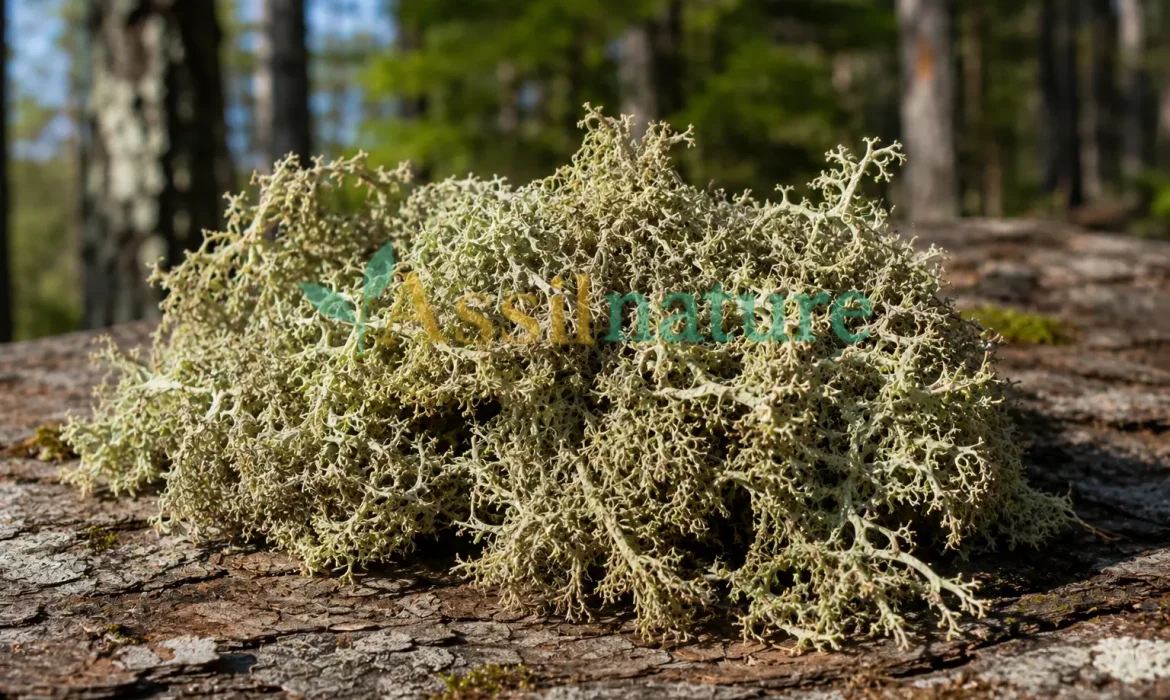
Cedarmoss Quality: How Industrial Buyers Evaluate Raw Lichen
What Defines Cedarmoss Quality?
Cedarmoss quality cannot be judged by color, appearance or origin alone. For an industrial buyer, quality means that the supplied fragrance lichen is suitable for the intended process and consistently meets the agreed raw-material specification.
This makes Cedarmoss different from a commodity that can be evaluated by weight and price alone. An extraction company may need to consider botanical or commercial identity, cleanliness, moisture, foreign matter, preparation, storage condition, lot consistency and extraction performance before approving a commercial source.
Importantly, there is no single universal specification that defines the perfect Cedarmoss lot for every processor. Extraction systems, finished ingredients and internal quality requirements differ. Therefore, the strongest B2B approach is to establish measurable requirements between buyer and supplier before scaling from sample to commercial volume.
Good Cedarmoss is not simply the cleanest-looking lichen. Industrial quality is the combination of identity, usable material, preparation, consistency and suitability for the buyer’s intended process.
Seven Factors Industrial Buyers Should Evaluate
A practical Cedarmoss specification can be built around several quality factors. Not every buyer will assign the same limit or priority to each one, but together they provide a stronger basis for qualification than visual inspection alone.
Define whether the purchase uses a commercial Cedarmoss grade or requires verification of a particular botanical species.
Bark, wood fragments, needles, soil and unrelated forest material can reduce the effective value of an extraction feedstock.
Moisture affects weight, storage stability and the economics of the usable dry feedstock delivered to the processor.
Cleaning, sorting, drying and handling determine how much additional preparation may be required before industrial processing.
Buyers should assess the physical condition of the material and investigate signs of unsuitable moisture exposure, contamination or deterioration.
A technically successful sample has limited commercial value if subsequent lots vary substantially in preparation or usable material.
For extraction buyers, representative pilot processing can provide stronger qualification evidence than appearance or generic yield claims.
Clean Appearance vs Clean Raw Material
Photographs are useful during an initial sourcing discussion, but a pale, uniform-looking batch should not automatically be classified as higher quality. Visual appearance cannot reveal every characteristic relevant to an industrial extraction process.
Physical cleanliness is more useful when it can be defined. Instead of asking whether the material “looks clean,” a buyer can specify what kinds of foreign matter are unacceptable and, where commercially necessary, establish an agreed measurement or tolerance for the supplied grade.
This converts a subjective quality discussion into a repeatable procurement requirement. It also gives the supplier a clearer target for sorting and preparation before shipment.
Why Foreign Matter Changes the Real Cost of Cedarmoss
Wild-collected lichen can arrive with material from its natural environment. Depending on the source and preparation grade, this may include pieces of bark, wood, needles, leaves, soil particles or other non-target matter.
For an industrial buyer, every kilogram of non-usable material can affect transport, handling and preparation economics. A cheaper offer with a lower proportion of usable lichen may therefore be less attractive than a higher-priced but better-prepared lot.
This is why procurement teams should compare the cost of usable feedstock, not merely the supplier’s headline price per kilogram.
Price per kilogram is not the same as cost per kilogram of usable feedstock.
Moisture, foreign matter, preparation losses, logistics and actual process suitability can all influence the economic value of a Cedarmoss lot.
Why Moisture Matters in Cedarmoss Quality
Moisture is one of the most practical variables in bulk Cedarmoss sourcing. It affects shipment weight, storage behavior and the amount of dry raw material actually available to the processor. For this reason, two lots offered at the same price per kilogram may not represent the same economic value.
Excess moisture can also create undesirable storage conditions, particularly when botanical material is compressed or packed for transport. On the other hand, moisture specifications should not be invented as universal numbers. The appropriate requirement should reflect the buyer’s process, packaging, transport conditions and internal raw-material standard.
A professional RFQ can therefore ask the supplier to report moisture according to an agreed method or to meet a buyer-defined limit. This makes comparison between samples and commercial lots more meaningful.
When moisture differs substantially between offers, headline price per kilogram can become a misleading comparison. Moisture should therefore be considered together with foreign matter and preparation losses.
Drying and Storage Before Industrial Processing
Once collected and prepared, Cedarmoss should be handled in a way that preserves the condition of the raw material until processing. Drying and storage are therefore part of quality management rather than purely logistical steps.
Material packed while inadequately conditioned can behave differently during storage from properly prepared dry feedstock. Consequently, suppliers should pay attention to moisture exposure, warehouse conditions and packaging before dispatching commercial lots.
At the same time, industrial quality should not be reduced to an unrealistic demand for visually perfect botanical material. Cedarmoss is a natural forest raw material. The objective is controlled, suitable feedstock that meets an agreed specification—not an artificial cosmetic appearance.
Remove or reduce unwanted forest matter according to the required grade.
Bring the material to the agreed condition before bulk packing.
Protect the prepared lot from inappropriate moisture exposure and contamination.
Pack the approved grade for transport while preserving lot identification.
Foreign Matter Is Not the Same as Contamination
These two concepts should be separated during quality discussions. A wild forest raw material can naturally contain pieces of bark, needles, wood or other plant debris after collection. These materials may be undesirable for extraction, but their presence is fundamentally a question of sorting, preparation and foreign-matter specification.
Contamination is a broader quality and safety issue. Depending on the buyer’s intended application and risk assessment, this may involve unwanted substances or conditions that require specific analytical, hygiene or handling controls. The appropriate testing program should be defined by the buyer’s market and manufacturing requirements.
Calling every piece of natural forest debris “contamination” can therefore create confusion. Professional specifications are clearer when physical foreign matter and analytical or safety requirements are addressed separately.
Bark, wood, needles, soil particles and other non-target material that may be controlled through sorting and preparation specifications.
Buyer-defined chemical, microbiological or other unwanted conditions that may require appropriate controls or analytical testing.
Can Cedarmoss Be Sold in Different Quality Grades?
Yes, different preparation levels can be commercially useful. However, terms such as “Grade A,” “premium” or “extra clean” have limited technical value unless the supplier and buyer define what those terms actually mean.
One processor may prefer a highly cleaned material to reduce preparation work before extraction. Another may accept a less intensively prepared grade if its own facility already includes an efficient cleaning stage and the economics remain attractive.
Therefore, a useful Cedarmoss grade is not simply a marketing label. It is a repeatable combination of measurable characteristics agreed between supplier and buyer.
Commercial or botanical requirement.
Agreed physical cleanliness criteria.
Buyer-defined requirement where necessary.
Sorting, drying and handling expectations.
How to Build a Representative Cedarmoss Sample
The purpose of a B2B sample is not to show the buyer the most attractive pieces available. It is to give the buyer a realistic preview of the commercial material being proposed.
A representative sample should therefore come from the relevant sourcing or prepared lot and reflect its normal range of material. If the supplier manually selects only unusually clean pieces, subsequent laboratory or pilot results may not represent the bulk shipment.
Where a buyer intends to perform extraction trials, the sample quantity should also be sufficient for the planned evaluation. The buyer is best placed to specify that amount because laboratory and pilot processes vary between facilities.
The best sample is not necessarily the best-looking material. It is the sample that most accurately represents the quality the supplier can reproduce at commercial scale.
Building a Cedarmoss Quality Specification Sheet
Once a sample is accepted, the agreed quality should be converted into a written specification wherever possible. This gives procurement, quality control and the supplier a common reference for subsequent shipments.
The document does not need to begin with dozens of parameters. A practical raw-material specification can start with the characteristics that materially affect the buyer’s process and become more detailed as the commercial relationship develops.
| Specification Field | What to Define | Why It Matters |
|---|---|---|
| Product Identity | Cedarmoss trade grade and botanical identity if specifically required | Prevents ambiguity about the purchased material |
| Origin | Country and relevant sourcing information | Supports traceability and procurement records |
| Preparation | Cleaning, sorting, drying and supplied form | Defines the physical grade expected at receipt |
| Foreign Matter | Agreed categories and limits where required | Protects usable-feedstock economics |
| Moisture | Buyer-defined limit and measurement method where applicable | Supports consistent weight and storage condition |
| Analytical Requirements | Tests required for the intended market or process | Aligns testing with actual buyer requirements |
| Packaging | Bag or bale format, unit weight and labeling | Supports handling, transport and traceability |
| Lot Reference | Lot or batch identification | Connects sample, analysis and commercial shipment |
A Specification Is Stronger Than a Quality Label
Words such as “premium,” “high quality” and “extra clean” can support commercial communication, but they cannot replace a technical agreement. Two suppliers may use the same quality label for very different materials.
A written specification creates a more objective relationship. The buyer knows what should arrive, while the supplier knows which characteristics must be controlled during sourcing, preparation and packing.
For long-term Cedarmoss supply, this transition from subjective descriptions to measurable requirements is one of the most important steps from a sample transaction to a repeatable industrial sourcing program.
Lot Traceability: Connecting the Sample to the Shipment
Traceability becomes increasingly important as Cedarmoss moves from a small sample to an industrial order. A buyer that has approved a particular sample needs a practical way to connect that evaluation with the material prepared for commercial shipment.
Lot identification provides that connection. The relevant sourcing or preparation lot can be assigned a reference that follows the material through sampling, testing, packing and shipment documentation. This does not require an unnecessarily complex system; it requires enough control to know which material each document and sample represents.
For repeat purchases, traceability also helps both parties investigate differences between shipments. Instead of relying on memory or photographs, the buyer and supplier can refer to defined lots and compare their preparation, analyses and technical performance.
When Does Cedarmoss Need Botanical Verification?
Botanical verification becomes particularly important when the buyer’s specification requires a defined species rather than a commercial Cedarmoss grade. In that situation, the scientific name is part of the purchasing requirement and should be treated accordingly.
For example, Pseudevernia furfuracea should not be guaranteed merely because the material was collected in a cedar environment or resembles reference photographs. Host tree, geographic origin and visual appearance can provide useful context, but they are not automatically equivalent to species-level confirmation.
Conversely, not every commercial transaction necessarily requires the same identification protocol. If an extraction company purchases according to an established commercial grade and qualifies that grade through its own process, the documentation should reflect the actual agreement rather than adding an unsupported botanical guarantee.
Documentation should describe what has actually been verified. A trade name, collection area or host-tree association should not be converted into an unsupported scientific-species declaration.
Which Analyses Should Be Required for Cedarmoss?
There is no universal analytical package that every Cedarmoss shipment must undergo regardless of its destination or application. Testing should follow the buyer’s risk assessment, manufacturing process, finished ingredient and applicable market requirements.
Some parameters concern the physical condition of the raw material, while others may involve chemical or microbiological requirements. An extraction manufacturer may also have its own incoming raw-material tests before a lot enters production.
Therefore, testing is strongest when it answers a defined commercial question. Running an expensive panel simply to produce a long certificate can add cost without necessarily improving the buyer’s qualification decision.
| Quality Area | Possible Evaluation | When Relevant |
|---|---|---|
| Identity | Appropriate botanical verification | When a species-specific specification applies |
| Moisture | Moisture measurement using an agreed method | When dry-matter consistency or storage condition matters |
| Physical Purity | Foreign-matter assessment | When preparation grade affects usable feedstock |
| Chemical Safety | Buyer-defined contaminant testing | According to origin, process, destination and risk assessment |
| Microbiological Quality | Buyer-defined microbiological testing | Where relevant to the process, specification or intended application |
What Should a Cedarmoss COA Actually Show?
A Certificate of Analysis is most useful when it refers to a defined lot and reports results that are relevant to the agreed specification. It should not function as a generic marketing document copied from one shipment to another.
Where analyses have been performed, the COA should clearly connect the reported results with the tested sample or lot. The document can also identify the product, lot reference, analysis date and applicable methods or specifications where appropriate.
Equally important is what a COA should not do: it should not present an unverified species name, invented analytical values or results from another lot as though they apply to the current shipment.
Clear commercial identity.
Connects results to material.
Agreed limits where applicable.
Actual measured values or findings.
Testing basis where relevant.
Pre-Shipment Samples Reduce Scale-Up Risk
The first qualification sample and the final commercial shipment do not always occur at the same time. When significant preparation or sourcing takes place between them, a pre-shipment sample can provide an additional quality checkpoint.
This sample should represent the prepared commercial lot rather than another specially selected collection of attractive pieces. Depending on the agreed procedure, the buyer can compare its appearance, physical characteristics or required analytical results with the approved specification before release.
Pre-shipment approval does not eliminate every commercial risk, but it creates a useful control point between laboratory qualification and container-scale delivery.
Packaging and Compression Can Affect Raw-Material Handling
Bulk fragrance lichen is a lightweight, irregular material, so packaging efficiency becomes important when commercial volumes increase. Compression can reduce transport volume and make handling more practical, but the selected format should remain compatible with the buyer’s receiving and processing system.
Buyers may prefer bags, compressed bales or another agreed bulk format depending on shipment size and factory handling. Packaging should also preserve lot identification so individual units can be connected to the shipment documents.
The objective is not maximum compression at any cost. It is an efficient packing system that protects the agreed raw-material condition while improving storage, loading and international transport.
How Do You Keep a 10-Ton Shipment Consistent with a 500-Gram Sample?
This is one of the central challenges in industrial botanical sourcing. A 500-gram sample can be manually selected and inspected in detail, while a multi-ton shipment depends on sourcing controls, preparation procedures and representative lot management.
The solution is not to promise that every individual piece of natural lichen will look identical. Instead, the supplier should work toward consistency at the lot level: the same agreed preparation standard, acceptable physical parameters, controlled packing and representative sampling.
This distinction allows natural variation while still creating a commercially repeatable raw material. For industrial extraction, that is generally more meaningful than cosmetic uniformity.
Do not scale the photograph. Scale the specification.
Moving from grams to tons requires lot control, representative sampling, defined preparation, relevant testing and traceable documentation. These controls provide a stronger basis for consistency than attempting to make every piece of a natural forest raw material visually identical.
Supplier Qualification Should Come Before Large-Scale Purchasing
Industrial Cedarmoss sourcing becomes more reliable when supplier qualification happens in stages. A buyer does not need to treat the first inquiry as a container-scale decision. Instead, the relationship can move from documentation and samples toward controlled commercial volume.
The first stage is usually information: available material, origin, preparation, approximate capacity, packaging and any buyer-specific botanical or analytical requirements. A representative sample can then be evaluated against the intended extraction or raw-material specification.
If the sample performs successfully, a trial commercial lot provides the next level of evidence. Only after the buyer is satisfied with both technical performance and the supplier’s ability to reproduce the agreed grade does recurring bulk purchasing become substantially easier to manage.
Buyers qualifying raw material specifically as extraction feedstock can continue with our guide to Cedarmoss for extraction , covering sourcing, sample qualification and preparation before industrial processing.Why a Trial Lot Matters
Laboratory samples are essential for initial qualification, but they cannot reproduce every operational condition of a commercial purchase. A trial lot tests the supplier’s ability to prepare, pack, document and deliver a larger volume under real commercial conditions.
It also allows the buyer to evaluate incoming quality across more material. Questions about lot uniformity, packing density, handling losses and process performance become easier to assess at this stage than with a small courier sample.
Successful trial supply creates a practical reference for future purchasing. The buyer can define what should remain consistent, while the supplier gains a clearer understanding of the preparation standard expected for repeat orders.
When qualification moves from raw-material approval to processing performance, see our dedicated guide to Cedarmoss extraction for the pathway from qualified lichen feedstock to fragrance ingredient.How to Compare Two Cedarmoss Offers
Two Cedarmoss quotations can look similar while representing very different commercial value. A comparison based only on price per kilogram may overlook differences in usable lichen, moisture, preparation, packaging and technical qualification.
A more useful procurement comparison evaluates both the financial offer and the condition in which the raw material reaches the extractor.
| Comparison Factor | Offer A | Offer B | Buyer Question |
|---|---|---|---|
| Price/kg | Compare | Compare | Is the supplied grade actually equivalent? |
| Foreign Matter | Verify | Verify | How much of each kilogram is usable feedstock? |
| Moisture | Verify if specified | Verify if specified | Are the dry-material economics comparable? |
| Botanical Requirement | Confirm | Confirm | Do both offers satisfy the same identity specification? |
| Sample Quality | Evaluate | Evaluate | Is the sample representative of bulk supply? |
| Extraction Performance | Pilot test | Pilot test | Which material performs better in the buyer’s actual process? |
| Scale & Consistency | Assess | Assess | Can the approved grade be repeated at commercial volume? |
Cedarmoss Sourcing Red Flags
Certain sourcing practices should trigger additional questions before a buyer commits to volume. None of these points automatically proves that a supplier is unreliable, but they justify closer qualification.
A supplier should not convert a trade name or host-tree story into a guaranteed botanical identity without a reliable basis.
Highly selected pieces may not represent what will arrive at commercial scale.
Extraction performance depends on feedstock and the manufacturer’s extraction conditions, so universal yield promises deserve scrutiny.
Analytical documentation is more useful when it clearly identifies the material actually tested.
Marketing labels should be translated into measurable preparation and quality expectations.
Serious industrial sourcing generally benefits from verifying suitability before committing to substantial volume.
From One Shipment to a Repeatable Cedarmoss Supply Program
The commercial objective for both supplier and industrial buyer is often not a single successful shipment. It is the ability to reproduce an acceptable raw-material grade across future orders.
Repeatability requires the critical quality factors to be understood. If the buyer knows which characteristics materially influence extraction, those characteristics can become part of the ongoing sourcing specification and supplier quality controls.
Natural variation cannot be removed entirely from a wild botanical raw material. The goal is instead to manage variation within commercially acceptable parameters while maintaining transparent lot identification and communication whenever meaningful changes occur.
Consistency does not mean making a natural raw material artificial. It means controlling the quality factors that matter to the buyer and communicating significant lot changes before shipment.
Industrial Buyer Checklist for Cedarmoss Quality
Before approving a new bulk source, procurement and technical teams can use the following questions to make the qualification process more precise.
01. What commercial or botanical identity does the specification require?
02. Is the submitted sample representative of the proposed bulk lot?
03. What cleaning and preparation standard has been agreed?
04. How will foreign matter be defined and controlled?
05. Is a moisture specification necessary for this process?
06. Which tests are actually required for qualification?
07. Can the sample, analyses and commercial lot be linked by traceability?
08. Is pilot extraction required before purchasing commercial volume?
09. Will a pre-shipment sample be required?
10. What packaging and compression format fits factory handling?
11. Can the supplier reproduce the approved grade at commercial scale?
12. What recurring volume may follow successful qualification?
Cedarmoss Quality Is a B2B Specification, Not a Marketing Claim
High-quality Cedarmoss cannot be defined responsibly by one photograph, one adjective or one price. Industrial quality emerges from the relationship between the raw material and the process for which it is being purchased.
Botanical or commercial identity, foreign matter, moisture, preparation, storage condition, representative sampling, testing and lot consistency can all become relevant depending on the buyer’s requirements.
The strongest sourcing relationship therefore replaces vague quality promises with an agreed specification. Once that specification performs successfully in the buyer’s process, both sides have a practical foundation for scaling Moroccan Cedarmoss from sample quantities to recurring industrial supply.
Define it. Sample it. Test it. Scale it.
A reliable Cedarmoss supply program is built around clear specifications, representative lots, relevant testing, controlled scale-up and repeatable preparation—not around subjective claims of “premium quality.”
For the broader framework connecting Moroccan origin, botanical identity, Oakmoss and Cedarmoss terminology, extraction, quality and industrial procurement, explore our complete guide to Moroccan Cedarmoss and Oakmoss .
Frequently Asked Questions
What defines high-quality Cedarmoss?
High-quality Cedarmoss is raw material that consistently meets the buyer’s agreed specification. Relevant factors can include identity, foreign matter, moisture, preparation, storage condition, lot consistency and suitability for the intended extraction process.
Is there a universal Cedarmoss quality specification?
No. Different extractors and fragrance manufacturers may require different raw-material characteristics. A commercial specification should therefore be agreed between buyer and supplier according to the intended process.
Why does moisture matter in Cedarmoss?
Moisture affects shipment weight, storage behavior and dry-feedstock economics. Buyers may define an acceptable moisture requirement and measurement method when this parameter is important to their process.
What is foreign matter in raw Cedarmoss?
Foreign matter can include non-target material such as bark, wood, needles, soil particles and other forest debris. Its acceptable level should be defined according to the preparation grade purchased.
Is foreign matter the same as contamination?
No. Foreign matter usually refers to physical non-target material that may be reduced through sorting and cleaning. Contamination concerns can involve chemical, microbiological or other unwanted conditions requiring separate risk assessment or testing.
Can Cedarmoss be sold in different grades?
Yes. Different preparation levels can be commercially useful, but labels such as “premium” or “Grade A” should be supported by measurable criteria such as preparation, moisture or foreign-matter requirements.
How should a representative Cedarmoss sample be prepared?
The sample should reflect the commercial lot being proposed rather than contain only specially selected attractive pieces. This gives the buyer a more realistic basis for laboratory or pilot evaluation.
When is botanical verification required?
Botanical verification is particularly important when the buyer’s specification requires a defined species. A commercial name, host tree or geographic origin should not be treated as automatic species confirmation.
What analyses should be performed on Cedarmoss?
Testing should follow the buyer’s intended application, risk assessment, destination market and internal specification. There is no single analytical panel that is automatically appropriate for every Cedarmoss lot.
What should a Cedarmoss COA include?
A useful COA should identify the product and lot, report relevant test results and, where appropriate, state specifications and methods. It should only contain claims and results that apply to the actual tested lot.
Why use a pre-shipment sample?
A pre-shipment sample can help confirm that the prepared commercial lot still matches the agreed quality before bulk release, particularly when substantial sourcing or preparation occurred after initial qualification.
Does compression reduce Cedarmoss quality?
Compression is mainly a packaging and logistics decision. The appropriate level should preserve the agreed raw-material condition while making handling, storage and international transport more efficient.
How can a buyer compare two Cedarmoss suppliers?
Compare identity, preparation, foreign matter, moisture where relevant, representative sample quality, extraction performance, documentation, packaging, supply capacity and price rather than price per kilogram alone.
How can Cedarmoss quality remain consistent at bulk scale?
Consistency at scale is built through defined specifications, lot traceability, representative sampling, controlled preparation, relevant testing and communication of meaningful changes between sourcing lots.
References
1. Joulain, D. & Tabacchi, R. — Lichen extracts as raw materials in perfumery. Part 1: Oakmoss. Flavour and Fragrance Journal, 2009, 24:49–61. DOI: 10.1002/ffj.1916.
2. Joulain, D. & Tabacchi, R. — Lichen extracts as raw materials in perfumery. Part 2: Treemoss. Flavour and Fragrance Journal, 2009, 24:105–116. DOI: 10.1002/ffj.1923.
3. British Lichen Society — botanical resources concerning Evernia prunastri and Pseudevernia furfuracea.
4. Aoussar, N. et al. — scientific work documenting Moroccan Pseudevernia furfuracea and Atlas-region material.
5. International Fragrance Association (IFRA) — standards and technical documentation relevant to fragrance raw materials and moss extracts.
6. Buyer-specific raw-material specifications, analytical requirements and extraction protocols remain essential because there is no single universal Cedarmoss quality grade applicable to every industrial process.
Looking for Moroccan Cedarmoss with a Defined Quality Specification?
Assil Nature works with Moroccan Atlas-origin fragrance lichen for industrial sourcing and extraction. Buyers can define the required preparation grade, sample quantity, packaging, commercial volume and quality parameters needed for their qualification process.
Where a botanical species, analysis, moisture limit, foreign-matter requirement or other technical parameter is part of your specification, include it in the RFQ so the available lot can be evaluated before commercial scale-up.
Representative samples, lot requirements and testing can be discussed according to buyer specifications and available material.
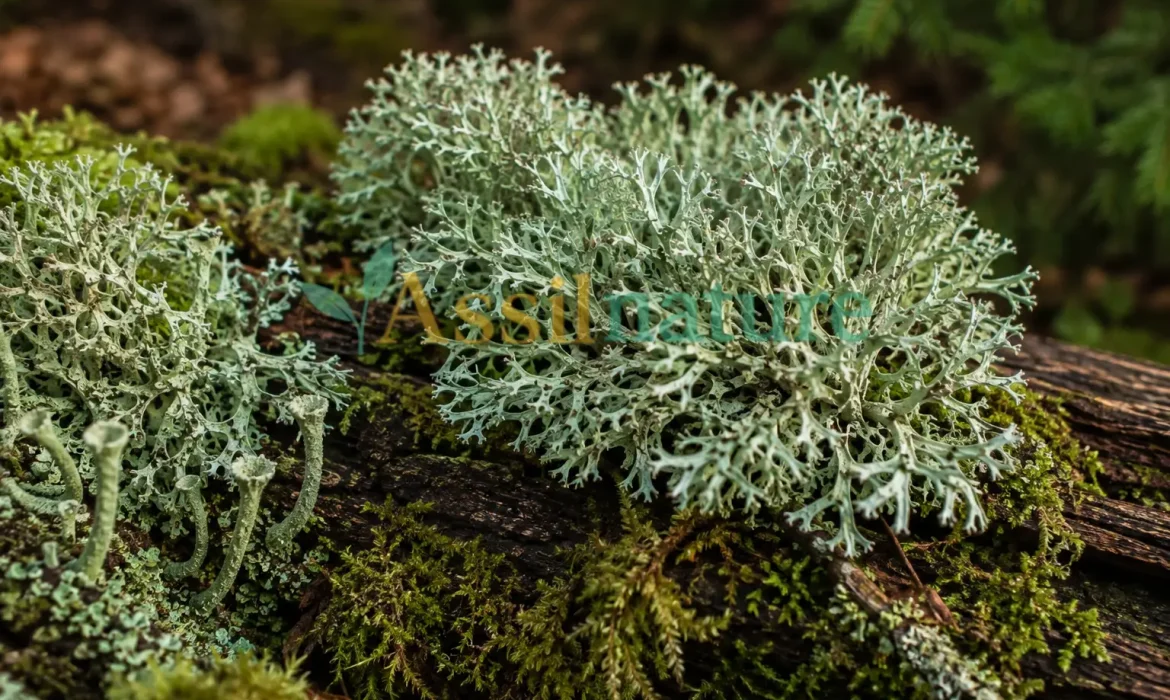
Cedarmoss vs Oakmoss: Botanical, Perfumery and Sourcing Differences
Cedarmoss vs Oakmoss: Are They the Same?
Cedarmoss and Oakmoss belong to the specialized world of fragrance lichens, but professional buyers should not treat the two names as automatically interchangeable. Their commercial histories overlap, and both have been associated with mossy fragrance materials, yet botanical identity remains an important distinction.
In established perfumery terminology, Oakmoss is primarily associated with Evernia prunastri. Cedarmoss has historically been associated with fragrance lichen collected from cedar environments and, in technical literature, particularly with Pseudevernia furfuracea growing on Atlas cedar (Cedrus atlantica).
That distinction matters commercially. A fragrance manufacturer asking for Oakmoss may have an Evernia prunastri-specific requirement, while a buyer sourcing Moroccan Cedarmoss may be evaluating a different fragrance lichen raw material for extraction. The buyer’s specification should determine what must be supplied.
The species primarily associated with Oakmoss in perfumery and fragrance-industry literature.
A fragrance-trade material historically associated with cedar-hosted lichen and particularly with Pseudevernia furfuracea on Cedrus atlantica in technical literature.
The Most Important Difference Is Botanical Identity
The clearest way to understand the difference is to separate the commercial name from the organism itself. Evernia prunastri and Pseudevernia furfuracea are different lichen species. Similar fragrance applications do not make them botanically identical.
This distinction becomes particularly important in B2B transactions. A scientific name appearing in a technical specification is not merely another marketing synonym. If the buyer requires Evernia prunastri, material of another botanical identity should not be supplied under that specification simply because both materials belong to the fragrance-lichen trade.
Likewise, Cedarmoss should not be presented as Oakmoss merely because the two materials share historical links with mossy fragrance extraction. Botanical transparency makes sourcing clearer for both supplier and processor.
Evernia prunastri ≠ Pseudevernia furfuracea. Commercial overlap in perfumery does not make the two species scientifically interchangeable.
For the broader three-way distinction—including the role of Treemoss in scientific and fragrance-industry terminology—see our comparison of Oakmoss vs Cedarmoss vs Treemoss .
Does Oakmoss Only Grow on Oak Trees?
No. The common name can create a misleadingly simple picture. Evernia prunastri grows on a range of woody substrates and is not botanically defined by the presence of an oak tree.
Consequently, identifying a lichen only by looking at the tree on which it grows is not sufficient for species-level verification. Host information can contribute useful ecological and sourcing context, but it does not replace botanical identification.
This principle is particularly useful for industrial buyers because trade names such as Oakmoss and Cedarmoss can sound as though the host tree alone determines the material. In professional sourcing, the relationship is more nuanced.
Why Is Cedarmoss Associated with Atlas Cedar?
The Cedarmoss name has particular relevance to the fragrance trade because technical literature has associated it with Pseudevernia furfuracea growing on Atlas cedar, Cedrus atlantica. This gives the term a meaningful historical and sourcing context rather than making it simply another name for Oakmoss.
Morocco is especially relevant to this discussion because Atlas cedar ecosystems occur naturally in the country, while scientific studies have documented fragrance-lichen species in Moroccan Atlas environments.
Nevertheless, geographic origin and host association should not be converted into automatic species certification. A commercial lot described as Moroccan Cedarmoss can be evaluated according to its agreed trade specification, while a buyer requiring a specific scientific identity should request appropriate lot-level verification.
| Point | Oakmoss | Cedarmoss |
|---|---|---|
| Core trade name | Oakmoss | Cedarmoss |
| Principal botanical association | Evernia prunastri | Particularly Pseudevernia furfuracea on Atlas cedar in technical fragrance literature |
| Host name proves species? | No | No |
| Fragrance-industry relevance | Established perfumery raw material | Established fragrance-lichen raw material |
| Can the names be automatically interchanged? | No | No |
Cedarmoss vs Oakmoss in Perfumery
Oakmoss and Cedarmoss belong to a specialized group of natural fragrance materials valued for their contribution to mossy, woody and forest-like olfactory structures. Their historical use in perfumery helps explain why the two names sometimes appear close together in fragrance literature.
However, similar industrial applications do not make the materials interchangeable. Oakmoss associated with Evernia prunastri and Cedarmoss associated with cedar-origin fragrance lichen can differ in botanical origin, chemical profile and the characteristics of the extracts produced from them.
For a perfumer or extraction company, the practical question is therefore not simply which material is “better.” The relevant question is which botanical feedstock and resulting extract fit the intended fragrance, technical specification and manufacturing process.
Primarily associated with Evernia prunastri and historically important in mossy fragrance structures and classic perfumery.
Relevant to fragrance extraction in its own right and should be evaluated according to its botanical context, raw-material quality and extraction performance.
Do Cedarmoss and Oakmoss Smell the Same?
They should not be described as having an identical odor profile. Both belong to the broader mossy and woody fragrance space, which creates recognizable olfactory overlap, but the identity of the lichen and the extraction process can influence the character of the resulting material.
Moreover, a fragrance extract is not simply the smell of the dry lichen transferred unchanged into a bottle. Solvent selection, extraction conditions, concentration and further processing influence which constituents appear in the commercial ingredient and in what proportions.
For this reason, industrial comparison is strongest when buyers evaluate actual extracts or conduct controlled extraction trials rather than relying exclusively on broad odor descriptions of the raw material.
Shared mossy fragrance territory does not mean identical odor. Botanical identity, raw-material condition and processing all matter when comparing Oakmoss and Cedarmoss ingredients.
Oakmoss Extract vs Cedarmoss Extract
Once the raw lichens are extracted, the distinction between their botanical origins remains relevant. An Oakmoss extract derived from Evernia prunastri should not automatically be described as the same ingredient as an extract produced from Cedarmoss raw material.
Technical literature on fragrance lichens distinguishes these raw materials and their extracts precisely because their chemistry and industrial histories are not identical. Processing can further increase the importance of specifications, since different extraction and refining systems can produce different commercial grades.
Therefore, professional buyers should compare the actual botanical origin, manufacturing process, analytical specification and intended application rather than treating “moss extract” as one universal ingredient category.
Buyers researching the Oakmoss side in greater technical depth can continue with our guide to Evernia prunastri extract , including Oakmoss extraction, industrial uses and raw-material considerations.
| Evaluation Point | Oakmoss | Cedarmoss |
|---|---|---|
| Botanical basis | Primarily Evernia prunastri | Defined according to the Cedarmoss material and buyer specification |
| Commercial form | Raw lichen and processed extracts | Raw lichen and processed extracts |
| Olfactory territory | Mossy fragrance applications | Mossy and woody fragrance applications |
| Chemistry assumed identical? | No | No |
| Buyer qualification | Identity + extract specification + intended use | Identity/grade + extract performance + intended use |
Can Cedarmoss Replace Oakmoss?
There is no universal yes-or-no answer. If a formulation, customer specification or raw-material standard explicitly requires Evernia prunastri, Cedarmoss should not simply be supplied under that botanical requirement.
In other development contexts, a fragrance manufacturer may evaluate different mossy raw materials or extracts according to the olfactory effect it wants to achieve. That is a formulation and technical-development decision rather than evidence that the two raw materials are identical.
This distinction is commercially useful for Cedarmoss. Its value does not depend on pretending to be Oakmoss. A processor can evaluate Cedarmoss as a distinct fragrance raw material according to the performance and characteristics required for its own product.
It can be sourced and evaluated as a distinct fragrance-lichen raw material with its own botanical context, extraction behavior and industrial relevance.
Extraction Performance Matters More Than the Trade Name Alone
For extraction companies, a commercial name is only the beginning of qualification. The processor still needs to know what material is being supplied, how it was prepared and how it performs under the intended process.
A representative sample can be evaluated for physical quality and, where required, botanical identity. Pilot extraction can then provide information about processing behavior, recovered material and suitability for the manufacturer’s intended ingredient.
This approach is especially valuable when qualifying a new Moroccan Cedarmoss source. Instead of asking whether it is “the same as Oakmoss,” the buyer can determine whether the material meets the actual technical and commercial requirements of the extraction program.
Separate botanical requirements from broad commercial terminology.
Review cleanliness, moisture, preparation and usable lichen content.
Use pilot processing when extraction performance determines purchasing.
Evaluate the resulting ingredient against the manufacturer’s target specification.
Do Cedarmoss and Oakmoss Have the Same Chemical Composition?
No. The fact that Oakmoss and Cedarmoss occupy related areas of natural perfumery does not mean that their chemistry is identical. Evernia prunastri and Pseudevernia furfuracea are different lichen species, and their extracts should not be treated as chemically interchangeable materials.
Lichen extracts are chemically complex. Their profiles reflect the botanical source and can also be influenced by the raw material and the extraction and downstream processing applied by the manufacturer. Therefore, a commercial moss extract should be evaluated according to its actual identity and specification rather than by fragrance family alone.
This distinction becomes especially important when a buyer is developing an extract against an established analytical or olfactory reference. Similar industrial applications do not guarantee equivalent composition or performance.
Same application ≠ same chemistry. Oakmoss and Cedarmoss can both have value in fragrance extraction while remaining botanically and chemically distinct raw materials.
What About Atranol, Chloroatranol and IFRA?
Moss extracts used in fragrance manufacturing have an important safety and regulatory history. Atranol and chloroatranol, in particular, became major concerns because of skin-sensitization risk associated with traditional moss extracts.
Professional buyers should distinguish between the wild botanical feedstock, the processed fragrance extract and the finished fragrance or cosmetic product. Requirements applied to an extract or its use in a finished formulation should not automatically be rewritten as a statement that the corresponding raw lichen cannot be traded as industrial extraction feedstock.
Likewise, the regulatory status of one defined extract should not be assumed to describe every material sold under a broad moss-related commercial name. Extract manufacturers need to evaluate the actual ingredient they produce against the standards and legal requirements relevant to its intended market.
Qualified according to botanical or commercial identity, preparation, physical quality and buyer-specific extraction requirements.
Evaluated according to its composition, intended fragrance use and applicable technical, safety and regulatory requirements.
Raw Oakmoss vs Raw Cedarmoss: What Does an Extractor Actually Buy?
At the raw-material stage, extraction companies are purchasing botanical feedstock rather than a finished fragrance ingredient. This shifts attention toward factors such as identity, usable lichen content, cleanliness, moisture, lot consistency and suitability for the intended extraction process.
A visually attractive sample alone cannot answer all of these questions. Buyers may need representative sampling, defined preparation standards and pilot processing before determining whether a new source fits commercial production.
Most importantly, the botanical requirement should be clear from the beginning. If the purchase order specifies Evernia prunastri, the supplier should evaluate the offered lot against that requirement rather than assuming that another fragrance lichen is commercially equivalent.
What Should a Buyer Request When Sourcing Oakmoss?
When the requirement is specifically Oakmoss, the buyer should make that requirement technically explicit. Using the botanical name Evernia prunastri in the specification reduces ambiguity and gives the supplier a clear basis for evaluating the proposed lot.
The RFQ can then define the physical and commercial requirements needed for extraction rather than relying on the Oakmoss name alone.
For commercial sourcing, buyers specifically requiring Oakmoss can review our Moroccan Oakmoss (Evernia prunastri) page, while Cedarmoss projects can be evaluated through our dedicated Moroccan Cedarmoss supply page.
Specify Evernia prunastri when that species is required.
Define cleaning, foreign-matter and other physical requirements.
Request representative material suitable for technical qualification.
Confirm trial quantity and expected bulk or annual demand.
What Should a Buyer Request When Sourcing Cedarmoss?
A Cedarmoss RFQ should begin with the buyer’s actual technical requirement. Some manufacturers may work with an established commercial Cedarmoss grade, while others may define the required botanical identity as part of their internal specification.
Where Pseudevernia furfuracea is specifically required, that should be stated explicitly and the proposed lot evaluated accordingly. Where the purchase is based on a commercial Cedarmoss specification, the parties should instead agree on what that grade means in measurable sourcing terms.
This approach protects both sides. The buyer avoids receiving a material that does not match its technical requirement, while the supplier avoids making a botanical guarantee that was never established for the commercial lot.
Define commercial Cedarmoss grade or a specific botanical requirement.
Specify acceptable preparation and foreign-matter levels.
Define the sample quantity needed for pilot or laboratory processing.
Include volume, packaging, destination and recurring demand where known.
Why Morocco Matters for Cedarmoss Sourcing
Morocco brings a distinctive sourcing context to Cedarmoss because the Atlas Mountains contain forest environments that include the native Atlas cedar, Cedrus atlantica. This connects Moroccan origin directly with the historical fragrance-industry discussion surrounding cedar-associated lichen.
Scientific research has also documented fragrance-relevant lichen species in Moroccan Atlas environments. This supports Morocco’s importance as a genuine lichen habitat, although regional occurrence should never be used as automatic proof of the identity of every commercial lot.
For an industrial buyer, the strongest Moroccan sourcing proposition therefore combines origin with qualification: knowledge of collection environments, controlled preparation, representative sampling, traceability and botanical verification when the specification requires it.
For a dedicated discussion of Atlas origin, cedar association and the commercial sourcing context, see our guide to Moroccan Cedarmoss sourcing and Atlas origin .Oakmoss or Cedarmoss: Which One Should an Industrial Buyer Choose?
The answer depends on the application. A buyer with an existing Evernia prunastri specification should source material that satisfies that Oakmoss requirement. A manufacturer developing or purchasing Cedarmoss should evaluate Cedarmoss according to the identity, quality and extraction characteristics required for that program.
Price can influence the final procurement decision, but it should come after the materials have been technically defined. Comparing prices for two botanically or technically different materials without first confirming suitability can create a false comparison.
Ultimately, Oakmoss and Cedarmoss are best understood as related but distinct members of the fragrance-lichen supply chain. Clear terminology allows each material to be evaluated on its own industrial merits.
Start with the specification, not the name.
Define the required botanical identity, raw-material grade, extraction objective, sample protocol and commercial volume. Then evaluate Oakmoss or Cedarmoss against those requirements rather than assuming that one fragrance lichen is automatically equivalent to another.
Can Oakmoss and Cedarmoss Be Distinguished by Appearance?
Experienced lichen specialists can use morphological characteristics as part of botanical identification, but industrial buyers should be cautious about identifying commercial material from photographs alone. Color, branching structure, surface features and the appearance of the lower surface can provide useful clues, yet these characteristics require proper interpretation.
According to botanical descriptions, Evernia prunastri typically has a green-grey to yellow-grey upper surface, while its lower surface is generally paler. Pseudevernia furfuracea is commonly described with a grey upper surface and a darker lower surface in older parts, together with other morphological features used in identification.
However, dried, compressed, fragmented or commercially cleaned lichen may be more difficult to assess than intact material in its natural habitat. When species identity forms part of a purchase specification, photographs should support qualification rather than replace appropriate identification.
Surface color, branching form, lower-surface characteristics and other diagnostic features can contribute to botanical identification.
A photograph can document appearance but should not automatically be treated as definitive species-level verification.
Five Common Mistakes When Buying Fragrance Lichen
Many sourcing problems begin before the material is shipped. Ambiguous terminology, unrepresentative samples and price comparisons between different grades can create disagreements that a clearer RFQ would have prevented.
Commercial overlap does not make Evernia prunastri and other fragrance lichens scientifically interchangeable.
Host information can strengthen traceability, but the tree name alone is not a species-identification method.
An unusually clean or visually attractive sample has limited value if it does not represent the commercial lot that will actually be shipped.
Moisture, foreign matter, preparation grade, extraction performance and freight efficiency can change the real economics of the material.
Moving directly from photographs to a large order increases risk when extraction performance or botanical identity is critical.
The Sample Must Represent the Bulk Lot
A sample is commercially useful only when it helps the buyer predict the material that will arrive in the subsequent order. This is particularly important for wild-collected botanical raw materials, where natural and preparation-related variation can occur.
Representative sampling should therefore be connected to a defined sourcing lot whenever possible. Once the buyer approves that material, the supplier should avoid changing preparation grade, mixing materially different quality levels or presenting a new source as though it were identical to the tested lot.
For extraction applications, this connection becomes even stronger because the buyer may invest time and laboratory resources in pilot processing. A successful pilot based on an unrepresentative sample provides little protection when the commercial shipment is substantially different.
How Should Buyers Compare Oakmoss and Cedarmoss Suppliers?
Supplier evaluation should begin with the buyer’s required material rather than with a generic question about who offers the lowest price. A supplier that understands botanical and commercial distinctions is better positioned to discuss whether the available lot fits a defined specification.
Buyers can then compare practical capabilities: preparation quality, representative sampling, traceability, testing options, packaging, available volume and the ability to maintain an agreed grade across future shipments.
For extraction companies, technical cooperation can be particularly valuable. A supplier that can respond to pilot-extraction feedback and adjust preparation requirements may create more long-term value than one offering an undefined raw material at a superficially attractive price.
| Supplier Factor | What the Buyer Should Check | Why It Matters |
|---|---|---|
| Material Identity | Does the supplier distinguish commercial names from botanical requirements? | Reduces the risk of receiving the wrong raw material. |
| Preparation | Cleaning, sorting, drying and foreign-matter control. | Influences usable feedstock and downstream handling. |
| Sampling | Is the sample representative of the proposed bulk lot? | Makes technical qualification more meaningful. |
| Traceability | Lot coding and relevant origin or sourcing records. | Supports investigation and repeat purchasing. |
| Scale | Trial, commercial and recurring-volume capability. | Qualification only creates value if supply can scale. |
| Technical Communication | Can specifications and buyer feedback be translated into sourcing controls? | Important for long-term extraction programs. |
Buyer Checklist: Oakmoss vs Cedarmoss
Before requesting a quotation, industrial buyers can answer a small number of questions that immediately make the sourcing process more precise.
01. Do you require Oakmoss, Cedarmoss or a specifically defined botanical species?
02. If species-specific, what scientific name must the lot meet?
03. Is the material intended for industrial extraction or another application?
04. What cleaning and preparation grade is required?
05. Are moisture or foreign-matter limits specified?
06. What quantity is required for representative sampling or pilot extraction?
07. Which analyses or identification documents are required?
08. What initial commercial quantity is expected?
09. What annual or recurring volume may follow successful qualification?
10. What packaging, destination and Incoterm should the supplier quote?
Cedarmoss vs Oakmoss: The Industrial Perspective
Oakmoss and Cedarmoss share an important history within natural perfumery, but the strongest modern sourcing approach is to preserve their distinctions. Oakmoss is primarily associated with Evernia prunastri, while Cedarmoss has its own historical and industrial context within the fragrance-lichen trade.
Neither material needs to be diminished to explain the other. Their value depends on what the fragrance manufacturer or extractor intends to produce, which raw-material specification applies and how the selected lot performs during qualification.
For Moroccan Cedarmoss, this distinction is commercially valuable. Atlas origin can provide meaningful sourcing context, while botanical transparency, representative sampling and controlled preparation give industrial buyers the information needed to evaluate the material on its own merits.
Related fragrance materials, not interchangeable botanical identities.
For B2B sourcing, define the required material first. Then compare identity, preparation, sample quality, extraction performance, documentation, volume and supply consistency. This creates a more reliable procurement decision than choosing between Oakmoss and Cedarmoss by trade name or price alone.
For the complete framework covering Moroccan origin, botanical identity, fragrance-lichen terminology, extraction, quality and industrial sourcing, explore our complete guide to Moroccan Cedarmoss and Oakmoss .
Frequently Asked Questions
What is the difference between Cedarmoss and Oakmoss?
Oakmoss is primarily associated with Evernia prunastri, while Cedarmoss has a distinct fragrance-trade context associated with cedar-origin lichen material. The two should not be treated as botanically interchangeable.
Is Cedarmoss the same as Oakmoss?
No. They belong to related areas of fragrance-lichen sourcing and extraction, but Oakmoss and Cedarmoss should be evaluated as distinct commercial and botanical materials.
What is the botanical name of Oakmoss?
Oakmoss in perfumery is primarily associated with Evernia prunastri. When a buyer specifically requires Oakmoss, the botanical identity should be included in the technical specification.
What botanical species is associated with Cedarmoss?
Technical fragrance literature has particularly associated Cedarmoss with Pseudevernia furfuracea growing on Atlas cedar. However, a commercial lot should not be given a species guarantee unless its botanical identity has been appropriately verified.
Does Oakmoss only grow on oak trees?
No. Evernia prunastri can grow on different woody substrates. The common name “Oakmoss” should not be interpreted as proof that the lichen must have grown exclusively on oak.
Does Cedarmoss only grow on cedar trees?
The Cedarmoss trade name has an important historical association with cedar-hosted fragrance lichen, especially Atlas cedar. However, host-tree information alone should not be used as definitive botanical identification.
Do Cedarmoss and Oakmoss smell the same?
No. They can occupy related mossy and woody olfactory territory, but their odor profiles should not be described as identical. Botanical identity, raw-material condition and extraction process can all influence the resulting fragrance ingredient.
Can Cedarmoss replace Oakmoss in perfumery?
Not automatically. If a formulation or raw-material specification requires Evernia prunastri, Cedarmoss should not be supplied as though it were the same material. In other fragrance-development contexts, a perfumer may evaluate Cedarmoss independently according to the desired result.
Are Oakmoss extract and Cedarmoss extract chemically identical?
No. Different botanical sources should not be assumed to produce identical chemical profiles. Extraction and downstream processing can create further differences between commercial ingredients.
Are Oakmoss and Cedarmoss both used for extraction?
Yes. Both can be relevant to fragrance extraction, but the appropriate raw material depends on the manufacturer’s botanical, olfactory, analytical and processing requirements.
Can Oakmoss and Cedarmoss be identified from photographs?
Photographs can provide useful visual information, but they should not be treated as definitive species verification. Commercially dried, cleaned or compressed material can be particularly difficult to identify from appearance alone.
Does the host tree prove whether a lichen is Oakmoss or Cedarmoss?
No. Host-tree information can support traceability and ecological context, but the host alone does not prove botanical identity. Species-specific purchasing should use an appropriate identification basis.
Why is Morocco relevant to Cedarmoss sourcing?
Morocco contains Atlas Mountain forest environments with Cedrus atlantica, and scientific studies have documented fragrance-relevant lichens in Moroccan Atlas regions. This makes Morocco a meaningful sourcing origin, while lot-level identity still requires appropriate qualification where specified.
What should a buyer specify when sourcing Oakmoss or Cedarmoss?
Buyers should define the required botanical or commercial identity, cleaning grade, moisture and foreign-matter limits where relevant, sample quantity, testing requirements, commercial volume, packaging, destination and intended extraction or fragrance application.
References
1. Joulain, D. & Tabacchi, R. — Lichen extracts as raw materials in perfumery. Part 1: Oakmoss. Flavour and Fragrance Journal, 2009, 24:49–61. DOI: 10.1002/ffj.1916.
2. Joulain, D. & Tabacchi, R. — Lichen extracts as raw materials in perfumery. Part 2: Treemoss. Flavour and Fragrance Journal, 2009, 24:105–116. DOI: 10.1002/ffj.1923.
3. British Lichen Society — botanical identification resources for Evernia prunastri.
4. British Lichen Society — botanical identification resources for Pseudevernia furfuracea.
5. Aoussar, N. et al. — scientific research concerning Moroccan Pseudevernia furfuracea populations and Atlas Mountain collection environments.
6. International Fragrance Association (IFRA) — standards and technical documentation concerning Oakmoss and fragrance ingredient safety.
7. European Commission scientific and regulatory documentation concerning Oakmoss and Treemoss extracts, atranol and chloroatranol in cosmetic applications.
Looking for Moroccan Cedarmoss Raw Material?
Assil Nature works with Moroccan Atlas-origin fragrance lichen for industrial sourcing and extraction applications. Buyers can specify the required preparation grade, sample quantity, commercial volume, packaging, destination and any botanical or analytical requirements needed for qualification.
If your specification requires a particular botanical species such as Pseudevernia furfuracea or Evernia prunastri, include that requirement in your inquiry so the available lot can be evaluated accordingly.
Samples, specifications and documentation can be discussed according to buyer requirements and the available sourcing lot.
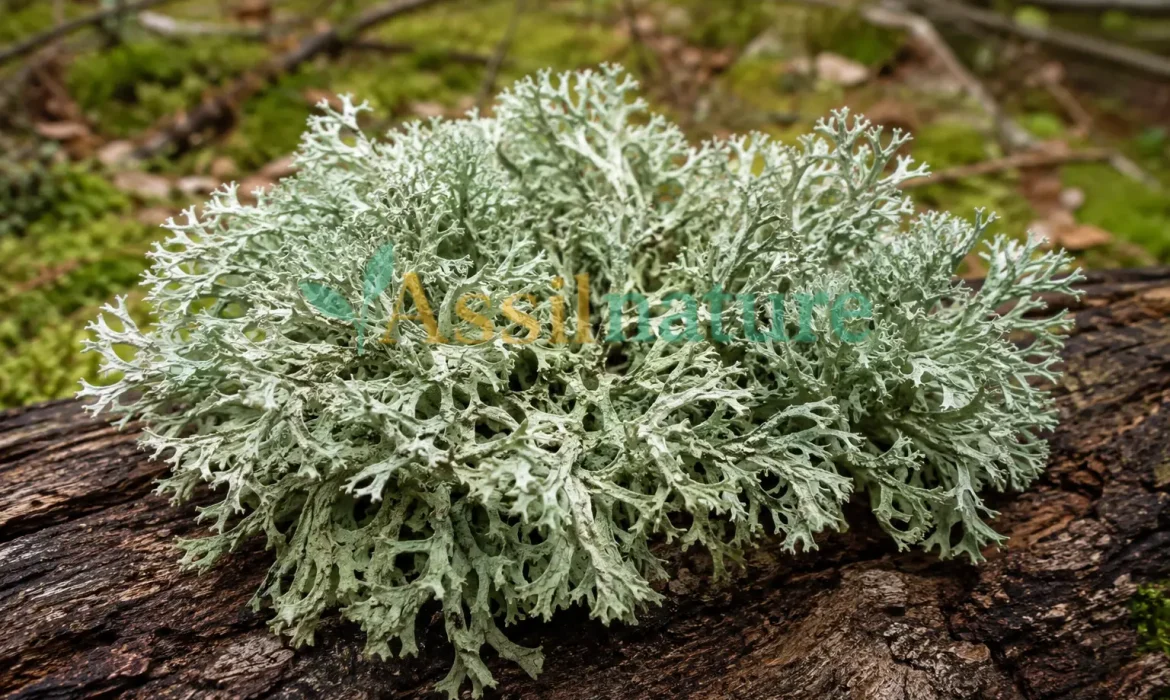
Cedarmoss Extraction: From Raw Lichen to Fragrance Ingredient
What Is Cedarmoss Extraction?
Cedarmoss extraction is the industrial processing of dried fragrance lichen to recover aromatic constituents for use in perfumery and fragrance-ingredient manufacturing. Rather than using the dried lichen directly in a perfume, processors convert the botanical raw material into a more concentrated fragrance ingredient.
This creates an important distinction in the supply chain. Raw Cedarmoss and Cedarmoss extract are not the same commercial product. The first is botanical feedstock purchased by processors and extraction companies; the second is a processed ingredient whose characteristics depend on the raw material and the extraction technology used.
For industrial buyers, understanding this relationship is important because the quality of an extract begins before extraction itself. Botanical identity, cleanliness, moisture, storage condition, foreign matter and lot consistency can all affect how efficiently a raw lichen source enters an extraction program.
Dried fragrance lichen prepared for industrial processing and evaluated according to identity, cleanliness, physical condition and the extractor’s raw-material specification.
Concentrated fragrance material obtained after extraction and subsequent processing, with specifications relevant to its intended perfumery use.
How Does Raw Cedarmoss Enter the Extraction Process?
Industrial extraction begins with qualification of the incoming botanical material. Before processing a commercial quantity, an extractor may inspect the raw lichen, review its specification and evaluate a representative sample. Pilot extraction can then help determine how the particular lot performs under the manufacturer’s process conditions.
Once accepted, the material may undergo further preparation before extraction. The exact procedure varies between manufacturers and should not be reduced to one universal production recipe. Industrial processors can use different equipment, solvent systems, operating conditions and downstream refining steps.
Nevertheless, the overall value chain can be understood as a sequence: qualify the raw lichen, prepare the feedstock, extract the desired soluble constituents, concentrate the recovered material and then standardize or further process the ingredient according to its intended use.
Buyers focused specifically on qualifying and purchasing the incoming feedstock can continue with our guide to Cedarmoss for extraction , including raw-material evaluation, sampling, pilot qualification and bulk sourcing.
Why Raw-Material Preparation Matters Before Extraction
A processor does not purchase every kilogram of a wild-collected material with the expectation that every gram represents usable target lichen. Bark fragments, wood, needles, soil and unrelated botanical matter can add weight without contributing equivalent value to the intended extraction.
Cleaning and sorting therefore have a direct commercial role. They can increase the proportion of usable lichen in the shipment and reduce unnecessary material entering the processor’s handling and extraction system.
This does not mean that one cleaning grade is universally correct. Some extraction plants can accept relatively raw material and perform additional preparation internally, while others prefer a more tightly controlled feedstock. The required grade should consequently be agreed with the buyer before pricing a commercial shipment.
Raw price per kilogram does not tell the complete extraction story. Buyers should also consider usable lichen content, preparation grade, moisture, consistency and performance under their own extraction process.
Is There a Standard Cedarmoss Extraction Yield?
A single universal extraction-yield percentage should not be assumed for Cedarmoss. Yield depends on what is being measured, the raw-material lot, preparation quality and the extraction process used by the manufacturer.
Solvent choice, extraction conditions, concentration procedures and further refining can influence the mass and characteristics of the recovered material. In addition, two raw lots sold at the same gross weight may contain different proportions of usable lichen.
Consequently, extraction companies evaluating a new Moroccan Cedarmoss source can obtain more useful information through representative sampling and pilot processing than through a generic yield claim disconnected from their own production method.
How Is Cedarmoss Extracted for Fragrance Applications?
Fragrance lichens have historically been processed using solvent-extraction techniques rather than conventional steam distillation. The objective is to recover aromatic and other solvent-soluble constituents from the prepared botanical material and convert them into a concentrated ingredient suitable for further fragrance manufacturing.
The precise industrial process varies between extraction companies. Manufacturers may use different solvent systems, extraction conditions, equipment and downstream purification or concentration steps. As a result, the term Cedarmoss extract describes a processed fragrance material but does not, by itself, define one universal manufacturing procedure.
This process dependence is commercially important. The same raw botanical source can be evaluated differently by two extraction companies because each processor may optimize for its own equipment, target ingredient and quality specification.
Identity, usable lichen content, moisture, cleanliness and storage condition influence the material entering extraction.
Solvent selection and process conditions affect what is recovered from the botanical material.
Solvent removal and concentration transform the recovered fraction into a more usable fragrance ingredient.
Additional processing may be used according to the manufacturer’s desired ingredient and technical specification.
Cedarmoss Extract, Resinoid and Absolute: Are They the Same?
Fragrance-industry terminology can describe several stages or types of processed natural material. Terms such as extract, resinoid and absolute should therefore not be treated as automatically interchangeable without knowing how the manufacturer defines and produces the ingredient.
In broad traditional fragrance processing, solvent extraction of a dry aromatic raw material can produce a concentrated extract commonly described as a resinoid. Further processing can modify or refine that material, while the term absolute is generally associated with an additional processing stage designed to obtain a different refined aromatic fraction.
However, commercial nomenclature is not always perfectly uniform between suppliers. Industrial buyers should therefore evaluate the actual product specification rather than assuming that two ingredients with similar names have identical composition, processing history or performance.
| Term | General Industrial Meaning | Buyer Consideration |
|---|---|---|
| Raw Cedarmoss | Dried botanical feedstock before industrial extraction. | Evaluate identity, preparation, cleanliness, moisture and lot consistency. |
| Cedarmoss Extract | Broad description for material obtained through extraction of the fragrance lichen. | Confirm manufacturing process and finished-product specification. |
| Resinoid | Concentrated solvent extract traditionally associated with dry aromatic botanical raw materials. | Evaluate composition, olfactory profile and applicable technical requirements. |
| Absolute | A further processed or refined aromatic material within traditional natural-extract terminology. | Do not assume equivalence with the original resinoid or another extract. |
Extraction Changes the Commercial Form of Cedarmoss
Extraction should not be viewed simply as squeezing the smell out of dried lichen. It selectively transfers soluble constituents from a complex natural material into a concentrated fraction. Consequently, the resulting ingredient has different physical and analytical characteristics from the original botanical feedstock.
Some components of the incoming material may be extracted more efficiently than others, while insoluble botanical structure remains behind. Downstream processing can further modify the composition of the commercial ingredient. Therefore, the chemical profile of the raw lichen should not be presented as identical to that of the finished extract.
This also explains why extract manufacturers need control over both sides of the process: the botanical feedstock entering production and the specification of the ingredient leaving it.
Raw-liken composition ≠ finished-extract composition. Extraction and downstream processing determine which constituents are recovered and how the final fragrance ingredient is characterized.
Why Extraction Quality Cannot Be Judged by Yield Alone
Extraction yield is commercially important because it affects the economics of converting raw lichen into a concentrated ingredient. Yet a higher mass of recovered extract does not automatically mean a better fragrance material.
An extractor also needs to evaluate whether the recovered material has the desired olfactory characteristics, analytical profile and suitability for subsequent manufacturing. Unwanted material recovered from poorly prepared feedstock can increase apparent mass without creating equivalent commercial value.
For that reason, serious qualification combines yield with quality. The objective is not simply to obtain the largest possible quantity of extract, but to determine whether a raw Cedarmoss lot produces an ingredient that fits the manufacturer’s intended specification.
Yield provides useful information about process economics and the quantity of extract recovered from the tested feedstock.
Olfactory and analytical evaluation determines whether the recovered material has the characteristics required by the manufacturer.
Moisture Can Distort Raw-Material Economics
Moisture matters before extraction because raw botanical material is normally purchased by weight. Two shipments with the same gross mass can contain different amounts of dry matter when their moisture levels differ.
Excessive or uncontrolled moisture can also complicate storage and handling. Conversely, a buyer’s acceptable moisture range should come from its technical requirements rather than from an arbitrary universal number applied to every Cedarmoss transaction.
Where moisture forms part of the commercial specification, buyer and supplier should agree on the acceptance limit and, where necessary, the measurement method used to evaluate the lot.
Storage Condition Matters Before the Lichen Reaches the Extractor
Raw fragrance lichen can spend time between collection, preparation, storage and international shipment before it enters an extraction vessel. The condition in which it is maintained during that period is therefore part of raw-material quality management.
Appropriate drying, protection from unwanted moisture and suitable packaging help preserve the physical condition of the material. Storage should also minimize avoidable contamination and deterioration before processing.
For international buyers, these controls become particularly important when the raw material travels long distances or when commercial volumes are held before scheduled production.
Pilot Extraction Connects the Sample to Industrial Performance
A representative raw sample can answer questions about appearance, preparation and botanical characteristics, but extraction performance ultimately has to be evaluated through processing.
Pilot extraction allows the manufacturer to process a manageable quantity under controlled conditions before committing to a larger commercial volume. The resulting material can then be compared with internal requirements for yield, odor, analytical characteristics and processing behavior.
When the sample genuinely represents the proposed bulk lot, this approach creates a much stronger qualification pathway than purchasing tons of Cedarmoss based only on photographs, origin claims or a price per kilogram.
Evaluate material representative of the proposed supply.
Process it under conditions relevant to the buyer’s production system.
Review yield together with olfactory, analytical and technical results.
Scale purchasing only after the material meets the agreed requirements.
Botanical Identity Matters Before Cedarmoss Extraction
Commercial terminology is useful for sourcing, but an extraction company may require greater botanical precision when qualifying a raw material. If a buyer specifies a particular lichen species, that requirement should be established before the commercial lot is approved.
This is especially relevant because fragrance-lichen terminology has developed through a combination of botanical identity, historical trade practice, geographical origin and host-tree associations. A commercial name alone should therefore not be used to guarantee a scientific identity that has not been verified for the material offered.
For a buyer that accepts a defined commercial Cedarmoss grade, the agreed specification may be sufficient. When a contract specifically requires Pseudevernia furfuracea or another botanical identity, appropriate verification should become part of lot qualification.
For the species-level context behind this requirement, see our dedicated guide to Pseudevernia furfuracea and its relationship with Cedarmoss terminology and industrial perfumery.The buyer qualifies the raw material according to an agreed commercial specification, preparation grade and extraction performance.
When a scientific name forms part of the specification, the offered material should be evaluated using an appropriate identification basis.
Does the Host Tree Affect Cedarmoss Extraction?
Host-tree context is relevant to the historical and technical discussion of fragrance lichens. Lichens develop on woody substrates, and small amounts of host-derived material can also remain associated with collected raw material.
Consequently, an extraction company may consider host information useful when characterizing a new source. However, it would be too simplistic to predict a fixed extraction yield, odor profile or chemical composition solely from whether the material was collected from cedar, pine or another tree.
Host context should therefore be treated as one part of traceability. If an extractor wants to determine whether two host-associated sources behave differently, representative samples processed under comparable conditions provide a more reliable basis for evaluation.
Host information is useful; host assumptions are not. Cedar or another woody substrate can form part of origin and traceability records, but extraction performance should be established from the actual raw-material lot rather than predicted from the host name alone.
Foreign Matter Can Enter the Extraction Economics
Wild-collected Cedarmoss can arrive with varying amounts of material that is not part of the target lichen. Bark, wood fragments, needles, soil, unrelated vegetation and other debris can increase the gross weight of a shipment.
For an extraction company, this is more than a visual-quality issue. Non-target material occupies handling and transport capacity and can reduce the proportion of useful lichen purchased per kilogram.
Some substrate-derived constituents may also enter an extract depending on the material and process. This makes controlled preparation especially valuable when a manufacturer is trying to reproduce an established extraction profile from one lot to another.
Can remain attached during wild collection and increase non-target weight.
Forest material can become mixed with lichen during collection and handling.
Adds unnecessary mass and may complicate preparation before processing.
Becomes particularly important when the buyer requires a defined botanical composition.
Lot-to-Lot Consistency Matters to Extract Manufacturers
Natural raw materials are not expected to behave like perfectly identical synthetic substances. Environmental conditions, collection areas, preparation and storage can create natural variation between Cedarmoss lots.
Industrial consistency therefore does not mean pretending that this variation does not exist. Instead, suppliers and extractors can define which parameters must remain within acceptable ranges for repeat production.
Lot coding, representative sampling, preparation records and retained reference samples can help the buyer investigate meaningful changes when a new shipment behaves differently from previously approved material.
For a deeper procurement and quality-control framework covering moisture, foreign matter, sampling, documentation and bulk consistency, see our guide to Cedarmoss quality .
Keep commercial material connected to a defined batch or sourcing lot.
Samples should reflect the shipment rather than showcase selected pieces.
Apply agreed cleaning, drying and sorting requirements consistently.
Compare future material with previously accepted quality where appropriate.
What Should Be Tested: Raw Cedarmoss or the Finished Extract?
Both can require evaluation, but they answer different technical questions. Testing raw Cedarmoss helps determine whether the incoming feedstock meets purchasing and processing requirements. Testing the finished extract determines whether the ingredient produced from that feedstock meets the manufacturer’s fragrance, analytical and compliance specifications.
A Certificate of Analysis for raw material should therefore be read according to the parameters it actually measures. It does not automatically predict every characteristic of the future extract, just as a finished-extract specification does not describe the physical cleanliness of the original lichen.
Buyers should define testing according to risk, intended use and their own processing requirements rather than accumulating analyses that do not contribute to the qualification decision.
| Evaluation Stage | Main Question | Examples of Relevant Evaluation |
|---|---|---|
| Raw Cedarmoss | Is this suitable feedstock? | Identity where required, moisture, foreign matter, physical condition, contamination risks and buyer-specific parameters. |
| Finished Extract | Does the processed ingredient meet its specification? | Olfactory profile, analytical composition, relevant restricted constituents and other manufacturer or market requirements. |
Raw Cedarmoss and Fragrance Compliance Are Different Stages
Regulatory and fragrance-industry requirements need to be interpreted at the correct point in the value chain. A wild dried lichen sold as extraction feedstock is not the same product as the concentrated fragrance extract eventually incorporated into a formulation.
For example, restrictions or specifications applying to particular fragrance extracts or their use in finished products should not automatically be rewritten as a statement that the corresponding wild raw lichen is itself prohibited from industrial trade.
At the same time, an extractor has a commercial reason to understand the regulatory profile of the ingredient it intends to manufacture. Raw-material qualification, extraction controls, analytical testing and downstream compliance therefore form connected but distinct stages.
What Makes a Cedarmoss Lot Attractive to an Extractor?
The strongest raw-material offer is not necessarily the one with the lowest price or the most elaborate marketing story. Extractors need material that can be technically evaluated and economically processed.
A commercially attractive Cedarmoss source therefore combines appropriate raw quality with transparency about what is being supplied. This gives the manufacturer a stronger foundation for pilot extraction and eventual scale-up.
Commercial grade or botanical requirement clearly defined.
Controlled preparation with an appropriate level of cleanliness.
Material that can realistically support pilot extraction and qualification.
Capacity, lot control and logistics capable of supporting commercial demand.
Moroccan Cedarmoss: From Source Qualification to Industrial Supply
Moving from a promising raw sample to a reliable industrial Cedarmoss supply requires more than proving that suitable lichen exists at origin. The buyer must be able to connect the approved sample with the commercial material that will ultimately enter extraction.
For Moroccan sourcing, this means building a qualification path around lot control, preparation grade, representative sampling, packaging and shipment documentation. These elements help reduce the gap between a small evaluation sample and the conditions encountered when purchasing hundreds of kilograms or container-scale quantities.
The objective is not to eliminate natural variability completely. It is to manage that variability sufficiently for the extractor to understand what it is buying and to reproduce its purchasing decision at commercial scale.
Packaging and Compression Affect More Than Freight Cost
Dried fragrance lichen is relatively bulky. Packaging configuration and compression can therefore have a significant impact on transport efficiency, warehouse handling and the amount of material that can be loaded into a shipment.
However, the most compact format is not automatically the best format for every buyer. Excessive compression can make inspection or downstream handling less convenient, while loose packing can create inefficient freight economics.
Packaging should therefore be agreed according to the extractor’s receiving system, preferred bag weight, handling equipment and shipment scale.
Smaller or larger bags can be selected according to receiving and handling requirements.
Helps reduce volume but should remain compatible with the buyer’s operating needs.
Connects packaged material to the corresponding commercial and quality records.
Packaging should protect the dry botanical material during storage and international transport.
What Documentation Can Support a Cedarmoss Shipment?
Documentation requirements vary according to destination, buyer specification, product classification and intended industrial use. The appropriate document set should therefore be confirmed before shipment rather than copied from an unrelated botanical transaction.
Commercial documentation normally connects the shipment to its seller, buyer, quantity, packaging, origin and transport terms. Technical documents may additionally describe the raw material or provide agreed analytical results.
When botanical identity is part of the contract, the documentation should also reflect the level of verification actually performed rather than using a scientific name as a routine commercial label without evidence.
Invoice, packing information and other export documents applicable to the transaction.
Agreed description of preparation, quality and other purchasing parameters.
Tests requested by the buyer and applicable to the qualified lot.
Lot and sourcing information relevant to maintaining continuity with the approved material.
How Should an Extractor Compare Two Cedarmoss Offers?
Comparing two offers only by price per kilogram can create a misleading result. A lower-priced material may contain more moisture, more foreign matter or require additional preparation before it is suitable for extraction.
Conversely, a more prepared lot may carry a higher purchase price but provide a larger proportion of usable feedstock and reduce internal handling. The economically better choice depends on the buyer’s own process and the performance of the material under extraction.
For a new source, technical comparison is strongest when both offers are evaluated using representative samples and comparable pilot-extraction conditions.
| Comparison Factor | Offer A | Offer B | Why It Matters |
|---|---|---|---|
| Price / kg | Compare | Compare | Useful starting point, but not the complete economics. |
| Foreign Matter | Evaluate | Evaluate | Affects usable lichen content and preparation requirements. |
| Moisture | Evaluate | Evaluate | Changes the relationship between purchased weight and dry feedstock. |
| Lot Consistency | Evaluate | Evaluate | Important when scaling from sample to repeated production. |
| Pilot Extraction | Test | Test | Shows how each source performs under the buyer’s own process. |
| Supply Capacity | Confirm | Confirm | A successful test has limited value if commercial scale cannot be maintained. |
Think in Cost per Usable Feedstock, Not Only Cost per Kilogram
The purchase price of Cedarmoss is only one component of extraction economics. A buyer may also incur costs for additional sorting, drying, handling, waste, transport and quality qualification before the material reaches production.
This makes the concept of usable feedstock more valuable than a simple gross-weight comparison. If a shipment contains less non-target material and is prepared consistently, a greater proportion of the purchased mass may become relevant to the extraction process.
The final economic decision should still come from the extractor’s own data, because usable feedstock and extraction performance are related but not identical.
The cheapest gross kilogram is not always the lowest-cost extraction feedstock. Commercial evaluation should consider usable material, preparation requirements, pilot performance, logistics and supply consistency together.
Cedarmoss Extraction RFQ: What Should the Buyer Provide?
A technically useful RFQ allows the supplier to evaluate feasibility before quoting a large volume. It can also prevent unnecessary testing when the available raw material does not match the buyer’s process or botanical requirement.
01. Is the requirement commercial Cedarmoss grade or a specifically defined botanical species?
02. What preparation and cleaning grade is required?
03. Are there defined moisture or foreign-matter limits?
04. What quantity is required for sample evaluation or pilot extraction?
05. Which raw-material analyses or documents are required before approval?
06. What is the initial commercial order quantity?
07. What recurring or annual volume is expected if qualification succeeds?
08. What packaging and compression format is preferred?
09. What is the shipment destination and preferred Incoterm?
10. Are there any buyer-specific extraction, regulatory or documentation requirements?
Cedarmoss Extraction Starts with the Right Raw Material
Industrial extraction adds value through technology, but the process still begins with a natural raw material. Clear identity, suitable preparation, controlled moisture, representative sampling and lot consistency give the extractor a stronger starting point.
The best Cedarmoss source is therefore not determined by origin claims or gross price alone. It is the source that can be technically qualified, economically processed and supplied at the scale required by the manufacturer.
For Moroccan Cedarmoss, combining Atlas sourcing knowledge with modern B2B qualification creates a clearer pathway from wild fragrance lichen to industrial fragrance ingredient.
From Moroccan Cedarmoss to Qualified Extraction Feedstock
A serious Cedarmoss extraction program connects raw-material identity, preparation, representative sampling, pilot extraction, lot control, packaging, documentation and scalable supply. Together, these factors provide a stronger commercial basis than evaluating fragrance lichen by price per kilogram alone.
For the complete framework connecting Moroccan origin, botanical identity, Oakmoss and Cedarmoss terminology, extraction, quality and industrial procurement, explore our complete guide to Moroccan Cedarmoss and Oakmoss .
Frequently Asked Questions
What is Cedarmoss extraction?
Cedarmoss extraction is the industrial processing of dried fragrance lichen to recover aromatic constituents and produce a concentrated fragrance ingredient for perfumery and related manufacturing.
How is Cedarmoss extracted?
Cedarmoss is generally processed using solvent-extraction methods rather than conventional steam distillation. The exact solvent system, operating conditions and downstream processing vary between manufacturers.
Can Cedarmoss be steam distilled like an essential oil?
Fragrance lichens are traditionally associated with solvent extraction rather than standard essential-oil steam distillation. Industrial buyers should therefore distinguish Cedarmoss extracts from conventional distilled essential oils.
What is Cedarmoss extract used for?
Cedarmoss-derived extracts can be used in fragrance manufacturing, especially where mossy, woody, earthy or substantive characteristics are desired. Exact use depends on the processed ingredient and the perfumer's formulation requirements.
Is Cedarmoss extract the same as Cedarmoss resinoid?
Not necessarily. “Extract” is a broad term, while “resinoid” traditionally describes a concentrated solvent extract of dry aromatic raw material. Buyers should confirm the manufacturer’s process and finished specification rather than relying only on the commercial name.
What is the difference between Cedarmoss resinoid and absolute?
A resinoid generally refers to a concentrated solvent extract, while an absolute is associated with further processing or refinement. Commercial terminology can vary, so technical specifications remain more reliable than names alone.
What is a typical Cedarmoss extraction yield?
There is no single universal yield that should be applied to all Cedarmoss lots. Yield can vary with raw-material quality, moisture, foreign matter, extraction technology, solvent system and downstream processing. Pilot extraction provides a stronger basis for comparison.
Does higher extraction yield mean better Cedarmoss?
No. Yield is important for process economics, but extract quality also depends on olfactory characteristics, analytical composition and the manufacturer’s intended specification. More recovered mass does not automatically mean greater fragrance value.
Why does raw Cedarmoss cleanliness matter for extraction?
Bark, wood, needles, soil and other non-target material can increase gross weight without providing equivalent useful lichen content. Better-controlled preparation can reduce unnecessary handling and improve the proportion of usable feedstock entering extraction.
Does moisture affect Cedarmoss extraction economics?
Yes. Moisture changes the relationship between purchased gross weight and actual dry botanical material. Buyers may therefore include moisture limits in the raw-material specification when relevant to their process.
Why is pilot extraction recommended before a bulk order?
Pilot extraction allows the buyer to evaluate a representative sample under its own process conditions before committing to commercial scale. It can provide information about yield, odor, analytical profile and processing behavior.
Does botanical identity matter when sourcing Cedarmoss for extraction?
It can. Some buyers purchase according to a defined commercial Cedarmoss specification, while others require a specific botanical identity such as Pseudevernia furfuracea. If scientific identity is contractual, it should be verified at lot level rather than assumed from a trade name.
Does the host tree determine Cedarmoss extraction quality?
Host-tree information can be useful for traceability, but it should not be used alone to predict extraction yield, chemical composition or odor. Buyers should evaluate the actual lot through representative sampling and, where appropriate, pilot extraction.
What should an industrial buyer specify when requesting Cedarmoss for extraction?
A useful RFQ should define botanical requirements where applicable, cleaning grade, moisture or foreign-matter limits, sample quantity, required tests, commercial volume, packaging, destination, Incoterm and any extraction-specific or documentation requirements.
References
- Joulain, D. & Tabacchi, R. — Lichen extracts as raw materials in perfumery. Part 1: Oakmoss. Flavour and Fragrance Journal, 2009. https://doi.org/10.1002/ffj.1916
- Joulain, D. & Tabacchi, R. — Lichen extracts as raw materials in perfumery. Part 2: Treemoss. Flavour and Fragrance Journal, 2009. https://doi.org/10.1002/ffj.1923
- British Lichen Society — Evernia prunastri species account. Species account
- British Lichen Society — Pseudevernia furfuracea species account. Species account
- Aoussar et al. — Moroccan research on Pseudevernia furfuracea and related biochemical characteristics. PubMed record
- Research on seasonal variation of Pseudevernia furfuracea collected in the Middle Atlas region of Morocco. https://doi.org/10.1016/j.jssas.2018.03.004
- IFRA Standards documentation and technical guidance for fragrance materials. IFRA Standards Documentation
Looking for Moroccan Cedarmoss for Industrial Extraction?
Assil Nature works with Moroccan Atlas-origin fragrance lichen for industrial sourcing and extraction applications. Buyers can specify preparation grade, sample quantity, required volume, packaging, destination and any botanical or analytical requirements relevant to qualification.
If your specification requires Pseudevernia furfuracea, Evernia prunastri or another defined botanical identity, include the requirement in your RFQ so the available lot can be evaluated accordingly.