 Mon - Fri: 9:00 - 19:00 GTM
Oakmoss IFRA Restrictions: Atranol, Chloroatranol and Fragrance Safety
Oakmoss has played an important role in perfumery for generations, particularly in mossy, woody and classical fragrance structures. Its modern use, however, is closely connected with fragrance-safety standards, compositional controls and the management of sensitizing constituents such as atranol and chloroatranol.
This has created a common misunderstanding: that oakmoss has simply been “banned.” The industrial reality is more precise. Professional buyers and formulators need to distinguish the botanical raw material from processed moss extracts, understand the applicable IFRA requirements and evaluate the specification of the actual fragrance ingredient being used.
Is Oakmoss Banned by IFRA?
Describing oakmoss as simply “banned by IFRA” is misleading. IFRA Standards can prohibit a fragrance material, restrict its use or establish specifications that a material must meet. These are different forms of risk management.
Oakmoss extracts are covered by an IFRA Standard that includes restrictions on use as well as compositional specifications. This means the relevant question is not merely whether an ingredient carries the name “oakmoss,” but which material is being evaluated, how it has been processed, what its composition is and where it will ultimately be used.
For fragrance companies, this distinction is essential because the requirements associated with a processed oakmoss extract should not automatically be described as if they were identical requirements for every piece of dried lichen entering the upstream extraction supply chain.
Key distinction: raw botanical lichen, processed oakmoss extract and the finished fragrance containing that ingredient represent different stages of the industrial supply chain. Regulatory and technical requirements must be interpreted at the correct stage.
What Does an IFRA Standard Actually Mean?
The International Fragrance Association maintains the IFRA Standards as a risk-management system for the safe use of fragrance ingredients. Depending on the safety assessment of a material, a Standard can establish a prohibition, restriction or specification.
Oakmoss is a particularly useful example because understanding its modern use requires looking at both the permitted use level of the extract and the composition of the commercial material itself.
Oakmoss and Treemoss Must Not Be Treated as the Same Botanical Material
The safety discussion surrounding moss extracts also makes correct terminology important. In perfumery and botanical usage, Oakmoss is primarily associated with Evernia prunastri, while Treemoss is primarily associated with Pseudevernia furfuracea.
These lichens are related fragrance raw materials and can occupy overlapping parts of the industrial supply chain, but they are not the same species and should not be represented as scientifically interchangeable.
This distinction is also reflected in fragrance-industry documentation: Oakmoss extracts and Treemoss extracts are treated as separate materials, even though their use can interact within the same fragrance formulation.
Where Does Cedarmoss Fit into the Discussion?
Cedarmoss is another name encountered in the fragrance-lichen trade. In relevant commercial and historical contexts, the term can be associated with Pseudevernia furfuracea growing in connection with cedar, including Atlas cedar environments.
In real sourcing environments, however, commercial names and local collection terminology do not always provide sufficient botanical identification. This is especially important when wild lichens are collected across forest environments containing different host trees and potentially more than one lichen species.
For industrial procurement, a trade name such as Oakmoss, Treemoss or Cedarmoss should therefore be combined with botanical verification whenever a buyer’s specification requires a defined species.
B2B sourcing principle: commercial terminology can help identify a market category, but it should never replace botanical identification when species identity is a contractual or technical requirement.
Why Are Atranol and Chloroatranol Important?
Atranol and chloroatranol became central to the modern safety assessment of moss extracts because of concerns related to dermal sensitization.
Their significance contributed to tighter compositional control of commercial moss extracts and to the development of analytical methods capable of measuring these constituents at low concentrations.
This is one reason why a modern fragrance house evaluating an oakmoss-derived ingredient needs considerably more information than the botanical or commercial name alone.
Raw Lichen vs Moss Extract: Why the Difference Matters
For industrial sourcing, the compliance discussion becomes much clearer when the supply chain is separated into three stages.
For a deeper explanation of the processed ingredient and its relationship with the original botanical feedstock, see our guide to Evernia prunastri extract .
Understanding the terminology is only the first step. The next question is more technical: how are atranol and chloroatranol controlled in moss extracts, what does the IFRA Oakmoss Standard actually specify, and what do those requirements mean for extract manufacturers and industrial buyers?
What Does the IFRA Standard Specify for Oakmoss Extracts?
The IFRA Standard for Oakmoss extracts does more than establish maximum use levels in finished products. It also contains specifications concerning the composition of the Oakmoss extract itself.
Three points are particularly important for technical buyers: the control of atranol, chloroatranol and the presence of dehydroabietic acid (DHA) associated with resin-acid contamination.
Important: these figures describe specifications associated with the processed Oakmoss extract covered by the IFRA Standard. They should not be copied automatically onto a specification sheet for unprocessed wild lichen without understanding which material and supply-chain stage is actually being tested.
What Does “Below 100 ppm” Actually Mean?
Parts per million, or ppm, is a concentration measurement commonly used when substances need to be controlled at relatively low levels.
In the Oakmoss Standard, IFRA states that the levels of atranol and chloroatranol should each be below 100 ppm in Oakmoss extracts. The requirement applies individually: it is not a combined 100 ppm allowance for the two substances.
This makes analytical documentation important. A fragrance manufacturer cannot reliably determine compliance by the color, odor, viscosity or commercial description of an extract.
Why Analytical Testing Matters for Modern Moss Extracts
Modern moss-extract control depends on analytical chemistry rather than traditional trade descriptions alone. This is particularly relevant for atranol and chloroatranol because the safety concern relates to their concentration in the processed fragrance material.
IFRA provides an analytical method for the quantification of atranol and chloroatranol in moss extracts. For professional buyers, this reinforces an important procurement principle: claims such as “low-atranol” should ultimately be supported by appropriate analytical evidence.
The analytical profile becomes especially important when an extract is intended for use by fragrance houses operating under defined internal specifications, IFRA conformity procedures or additional regulatory requirements.
What Is Low-Atranol Oakmoss?
The fragrance industry may use descriptions such as low-atranol Oakmoss for commercial extracts that have been processed and controlled to reduce problematic constituents.
Such terminology should not be interpreted as a separate botanical species. It describes a characteristic of the processed fragrance ingredient rather than the taxonomic identity of the original lichen.
Likewise, the phrase should not replace the supplier’s technical documentation. Professional evaluation should consider the actual specification and analytical results of the commercial material.
To understand how one important processed form fits into this technical context, see our dedicated guide to Oakmoss resinoid , including production, quality evaluation and modern perfumery use.
Why Does IFRA Mention Dehydroabietic Acid (DHA)?
One of the most technically interesting parts of the IFRA Oakmoss Standard concerns resin acids.
IFRA specifies that Oakmoss extracts must not contain added Treemoss, which it identifies in this context as a source of resin acids. At the same time, the Standard recognizes that traces of resin acids can be carried into commercial Oakmoss qualities during manufacturing.
To control this, the Standard establishes a maximum of 0.1% — or 1000 ppm — of dehydroabietic acid (DHA) in the Oakmoss extract.
IFRA also identifies an HPLC reverse-phase spectrofluorometry method as a means of measuring resin acids in Oakmoss.
Why this matters: the IFRA specification itself demonstrates why Oakmoss and Treemoss should not simply be treated as interchangeable names. Their industrial relationship is close, but material identity and composition still matter.
What Happens When Oakmoss and Treemoss Extracts Are Used Together?
Oakmoss and Treemoss are separate fragrance materials, but their use becomes connected when both extracts are present in the same fragrance mixture.
The IFRA Oakmoss Standard states that, when Treemoss extract is also present, the permitted level of Oakmoss must be reduced accordingly so that the combined amount of both extracts does not exceed the maximum permitted level for the relevant IFRA category.
This is an important formulation principle. The two extracts cannot simply be assessed as completely independent allowances when they coexist in the same fragrance mixture.
Extract Specification and Finished-Product Limits Are Two Different Controls
This distinction is essential when reading the IFRA Standard.
This includes compositional requirements such as control of atranol, chloroatranol and DHA in the Oakmoss extract.
The Standard separately establishes maximum acceptable concentrations according to the applicable IFRA finished-product category.
An Oakmoss extract therefore needs to satisfy the relevant material specification, while the fragrance formulator must separately calculate whether the amount incorporated into the intended product complies with the applicable category limit.
What Should a Fragrance Buyer Ask an Oakmoss Extract Supplier?
For professional sourcing, a commercial name and price are not enough. Depending on the intended application, buyers may need to evaluate several technical elements before approving a material.
The specification tells only part of the story. The next step is understanding how IFRA product categories affect permitted Oakmoss levels, why the limit changes according to end use, and what these rules mean for fragrance houses, extract manufacturers and upstream raw-lichen suppliers.
Why Does the Permitted Oakmoss Level Depend on the Final Product?
An IFRA restriction is not interpreted as one universal concentration that applies equally to every consumer product. The permitted use of a restricted fragrance material depends on the IFRA category of the finished product.
This matters because exposure conditions differ substantially between applications. A fragrance applied to the skin, a rinse-off product and a product with little or no direct skin contact do not represent identical exposure scenarios.
Consequently, a formulator evaluating Oakmoss extract must first identify the intended finished-product category and then apply the relevant limit from the current IFRA Standard.
Practical rule: asking “What is the IFRA limit for Oakmoss?” is incomplete unless the intended end-use category is also known.
How Do IFRA Categories Change the Compliance Question?
IFRA organizes finished products into categories and subcategories according to their use and exposure characteristics. This allows restrictions to reflect how consumers are actually exposed to a fragrance ingredient rather than applying the same limit to every application.
There Is No Single Oakmoss Limit for Every Fragrance Application
This distinction prevents one of the most common mistakes in discussions about restricted fragrance materials: taking a concentration from one product category and presenting it as the universal IFRA limit.
For Oakmoss extracts, the current Standard contains category-specific maximum acceptable concentrations. These limits vary according to the applicable product category, while Category 12 is listed as “No Restriction” under the Standard.
A technical team should therefore work from the current official IFRA Standard and the correct category for the finished product rather than copying a percentage from a secondary source.
What Does This Mean for Fine Fragrance Manufacturers?
Fine fragrance is particularly relevant to Oakmoss because moss extracts have historically contributed depth, persistence and characteristic mossy, woody and forest-like facets to perfumery compositions.
Modern use requires the perfumer or regulatory team to consider both sides of the equation: the specification of the Oakmoss extract being purchased and the maximum acceptable concentration for the intended finished fragrance category.
Compliance therefore begins before formulation. Reliable supplier documentation allows the fragrance manufacturer to understand exactly which material is entering the formula and whether it meets the relevant compositional requirements.
Who Is Responsible for What in the Oakmoss Supply Chain?
Fragrance-lichen compliance becomes easier to understand when responsibilities are separated according to the industrial stage.
The upstream supplier focuses on the agreed botanical or commercial identity, origin, collection traceability, cleanliness, moisture, foreign matter, preparation, packaging and other requirements defined by the industrial buyer.
The extractor transforms the botanical feedstock into a concentrated aromatic ingredient and controls the resulting material according to the required chemical, analytical and technical specification.
The fragrance manufacturer evaluates the ingredient within the complete formula and determines compliance with the applicable IFRA category and other relevant legal or customer requirements.
Does Raw Oakmoss Lichen Need an IFRA Certificate?
This question requires careful terminology. IFRA Standards govern the safe use of fragrance ingredients, while dried wild lichen intended as extraction feedstock sits upstream of the finished fragrance ingredient.
An extractor purchasing raw lichen may impose detailed purchasing specifications and testing requirements, but these should not be confused with an IFRA conformity document for a finished fragrance mixture.
The appropriate documentation therefore depends on what is being sold, how the buyer intends to process it and the contractual specification agreed between supplier and buyer.
For raw-lichen buyers: botanical identity, traceability and raw-material specifications can be more immediately relevant at procurement stage than asking an upstream collector for documentation designed for a downstream fragrance formulation.
Why Botanical Identification Matters Before Extraction
Regulatory control downstream does not remove the need for botanical accuracy upstream. Evernia prunastri and Pseudevernia furfuracea are distinct lichen species even though Oakmoss, Treemoss and Cedarmoss have historically occupied closely related commercial spaces.
If an extraction company requires Evernia prunastri specifically, a broad local or commercial name should not be treated as sufficient evidence that the lot meets that specification.
Conversely, Pseudevernia furfuracea should not be presented as an inferior or “fake” Oakmoss. It is a distinct fragrance lichen with its own Treemoss/Cedarmoss industrial context and should be evaluated according to the material the buyer actually requires.
What Does This Mean for Moroccan Fragrance-Lichen Sourcing?
Morocco has Atlas forest environments in which fragrance lichens occur on woody hosts, including cedar and other trees. Within traditional collection and commercial supply chains, common names can sometimes be broader than the botanical specifications used by industrial laboratories and extraction companies.
This makes transparency particularly valuable. A professional supplier should distinguish between what is known about origin and collection, what is used as a commercial trade name and what has actually been botanically verified for a specific lot.
For buyers sourcing Moroccan material for extraction, this approach can reduce specification disputes and allows samples, botanical verification and pilot extraction to be used where greater certainty is required.
For the wider relationship between Moroccan origin, botanical identity, Oakmoss, Cedarmoss, extraction, quality and industrial sourcing, see our complete guide to Moroccan Cedarmoss and Oakmoss .A Practical Evaluation Path for Industrial Lichen Buyers
For extraction companies, technical qualification is usually more meaningful than purchasing a wild botanical solely by appearance or trade name.
IFRA compliance is therefore not a single laboratory number attached to a forest lichen. It is a chain of material identification, extract specification and finished-product assessment. The final sections will bring these elements together by examining buyer documentation, IFRA certificates, EU regulatory considerations, common compliance misconceptions and a practical checklist for industrial Oakmoss, Treemoss and Cedarmoss sourcing.
IFRA Standard vs IFRA Certificate: What Is the Difference?
The terms IFRA Standard and IFRA Certificate are often used as if they mean the same thing, but they refer to different parts of the fragrance-compliance process.
An IFRA Standard establishes the conditions under which a fragrance material may be used, including restrictions or specifications where applicable. Oakmoss extracts are covered by such a Standard.
A conformity document, by contrast, is associated with a fragrance mixture and its intended applications. It should not be treated as a generic certificate proving that every upstream natural raw material is automatically “IFRA approved.”
Defines applicable restrictions, specifications or prohibitions for fragrance materials covered by the Standards.
Relates the fragrance formulation to specified end-use categories and the applicable IFRA Standards.
Is IFRA the Same as Cosmetic Law?
No. IFRA Standards and national or regional legislation must be considered separately.
IFRA provides an industry risk-management framework for fragrance ingredients. Legal requirements, however, are established by the authorities governing the market in which a product is placed.
A fragrance company can therefore need to satisfy both the relevant IFRA requirements and the legal requirements applicable to its finished product and destination market.
Compliance principle: IFRA conformity does not replace compliance with applicable cosmetic, chemical or product legislation.
What Is the EU Position on Atranol and Chloroatranol?
Within the European Union, atranol and chloroatranol have been subject to particularly strict regulatory treatment because of their sensitization potential.
Following scientific safety assessments, EU legislation prohibited atranol and chloroatranol in cosmetic products. This legal development is one of the reasons why modern moss-extract manufacturing places such strong emphasis on purification, compositional control and analytical verification.
For fragrance houses supplying cosmetic applications in Europe, it is therefore not enough to rely solely on historical use of Oakmoss. The actual composition of the modern fragrance ingredient and the applicable cosmetic rules must be considered.
Does the EU Rule Mean Raw Oakmoss or Treemoss Lichen Is Banned?
The regulatory question must again be linked to the correct stage of the supply chain.
The EU prohibition discussed above concerns atranol and chloroatranol in cosmetic products. It should not be rewritten as a blanket statement that wild Oakmoss, Treemoss or Cedarmoss lichen cannot be collected, traded or supplied as botanical extraction feedstock.
Raw-material sourcing is instead governed by the commercial specification, botanical requirements, origin rules, harvesting legality, export requirements and any testing requested by the industrial buyer. The downstream extractor is then responsible for manufacturing a fragrance ingredient suitable for its intended market.
What Documentation Should Industrial Moss Buyers Request?
Documentation should match the material being purchased. A company buying raw wild lichen for extraction does not necessarily need the same document package as a fragrance house buying a finished Oakmoss extract.
• Country and region of origin
• Traceability information
• Harvest / collection documentation where required
• Moisture specification
• Foreign matter / cleanliness
• Packing specification
• Representative sample
• Buyer-specific testing requirements
• Certificate of Analysis where applicable
• Atranol / chloroatranol data
• Relevant DHA / resin-acid information
• Safety documentation
• Batch identification and traceability
• Regulatory / IFRA-related information
• Additional customer-specific analytical data
Five Mistakes to Avoid When Sourcing Oakmoss, Treemoss or Cedarmoss
Evernia prunastri and Pseudevernia furfuracea are distinct botanical materials. Commercial overlap does not make them scientifically interchangeable.
The correct interpretation depends on the material, the IFRA Standard, its composition and the legal requirements of the destination market.
Requirements such as atranol and chloroatranol specifications in the IFRA Oakmoss Standard concern the processed fragrance material, not automatically every raw wild lot.
If a contract requires a defined species, botanical verification should support the purchasing specification.
For industrial extraction, usable dry matter, cleanliness, consistency, botanical identity and pilot-extraction performance may be more commercially meaningful than the nominal price per kilogram alone.
A Practical Checklist Before Approving a Fragrance-Lichen Supplier
For serious extraction companies and fragrance-material buyers, supplier qualification should combine botanical, commercial and technical information rather than relying on one certificate or one photograph.
Why Botanical Transparency Matters More Than Marketing Claims
Industrial buyers do not need every wild lichen supplier to pretend that field collection is as controlled as a laboratory process. They need reliable information about what is known, what has been verified and what still requires confirmation.
In Atlas sourcing environments, traditional names such as Oakmoss, Treemoss and Cedarmoss may overlap commercially. Recognizing this reality is not a weakness when it is accompanied by clear botanical distinctions and buyer-specific verification.
For extraction companies, that transparency can be more valuable than a supplier making an unsupported species claim simply because one scientific name is commercially more familiar.
Oakmoss Compliance Begins with Knowing Which Material You Actually Have
Modern Oakmoss use sits at the intersection of traditional perfumery, botanical sourcing, extraction chemistry and fragrance regulation.
IFRA controls the use and specification of Oakmoss extracts, including important compositional requirements associated with atranol, chloroatranol and resin-acid contamination. European cosmetic legislation adds separate legal requirements, including the prohibition of atranol and chloroatranol in cosmetic products.
Upstream sourcing, however, begins one step earlier: with reliable information about the lichen itself. Evernia prunastri and Pseudevernia furfuracea are related fragrance lichens with overlapping industrial histories, but they remain botanically distinct materials.
For professional buyers, the strongest supply chain therefore combines botanical transparency, traceable origin, representative sampling, appropriate testing and clear communication between the raw-material supplier, extractor and fragrance manufacturer.
Frequently Asked Questions
Is Oakmoss banned by IFRA?
No. Describing Oakmoss as simply “banned by IFRA” is inaccurate. IFRA maintains a Standard for Oakmoss extracts that includes restrictions on use and compositional specifications. The applicable conditions depend on the material and the intended finished-product category.
What is the IFRA limit for Oakmoss?
There is no single universal Oakmoss limit for every application. IFRA maximum acceptable concentrations vary according to the finished-product category, so the current Oakmoss Standard and the correct product category must be consulted.
What are atranol and chloroatranol?
Atranol and chloroatranol are constituents associated with traditional moss extracts that became important in fragrance safety because of their strong skin-sensitization potential. Their control is a major part of modern Oakmoss-extract specifications.
What levels of atranol and chloroatranol are allowed in Oakmoss extracts?
The IFRA Oakmoss Standard specifies that atranol and chloroatranol should each be below 100 ppm in Oakmoss extracts. These are separate limits for each constituent, not a combined 100 ppm total.
What does low-atranol Oakmoss mean?
Low-atranol Oakmoss generally refers to a processed commercial Oakmoss extract in which sensitizing constituents such as atranol have been reduced and controlled. It is a processing and specification term, not a separate botanical species.
What is DHA in the IFRA Oakmoss Standard?
DHA refers to dehydroabietic acid, which is used in the Standard as a marker related to resin-acid contamination. The Oakmoss Standard specifies a maximum DHA content of 0.1%, equivalent to 1000 ppm, in the extract.
Is Treemoss the same as Oakmoss?
No. Oakmoss is primarily associated with Evernia prunastri, while Treemoss is primarily associated with Pseudevernia furfuracea. They are related fragrance lichens with overlapping industrial uses, but they are botanically distinct.
Is Cedarmoss the same as Oakmoss?
Not botanically. Cedarmoss is a commercial term that can be associated with Pseudevernia furfuracea occurring in cedar-related sourcing contexts, including Atlas cedar environments. It should not automatically be treated as Evernia prunastri.
Can Oakmoss and Treemoss extracts be used together?
Yes, but their combined use must be assessed correctly. The IFRA Oakmoss Standard states that when Treemoss extract is also present, the Oakmoss level must be reduced so that the combined amount does not exceed the permitted level for the relevant category.
Does raw Oakmoss lichen need an IFRA certificate?
Raw dried lichen used as extraction feedstock should not be confused with a finished fragrance mixture. Upstream buyers generally focus on botanical identity, origin, traceability, moisture, cleanliness and agreed specifications, while IFRA conformity is assessed further downstream in the fragrance supply chain.
Are atranol and chloroatranol banned in EU cosmetics?
Yes. European Union cosmetic legislation prohibits atranol and chloroatranol in cosmetic products. This legal requirement is separate from, although related to, the IFRA framework for Oakmoss extracts.
Does IFRA compliance mean a fragrance automatically complies with EU law?
No. IFRA Standards are an industry risk-management framework and do not replace applicable laws. A fragrance company must comply with both relevant IFRA requirements and the legal requirements of the markets where the finished product is sold.
What should an industrial buyer check when sourcing raw fragrance lichen?
Buyers should define the required species or accepted commercial material, verify origin and traceability, establish moisture and foreign-matter limits, evaluate representative samples and request botanical verification or pilot extraction where the intended industrial specification requires it.
Can a supplier guarantee Evernia prunastri based only on the name Oakmoss?
No. A commercial or local trade name alone is not sufficient botanical proof. If a buyer specifically requires Evernia prunastri, the relevant lot should be supported by appropriate botanical identification or another agreed verification method.
References
Editorial note: regulatory requirements can change over time. Industrial users should always consult the latest applicable IFRA documentation and the current legislation of the destination market when assessing a fragrance ingredient or finished product.
Looking for Moroccan Fragrance Lichen for Industrial Extraction?
Assil Nature works with Moroccan Atlas-origin fragrance lichen for industrial sourcing and extraction applications. Depending on buyer requirements, we can discuss available material, origin, lot characteristics, samples, traceability, packing and botanical verification where required.
If your specification requires a defined species such as Evernia prunastri or Pseudevernia furfuracea, please include this requirement in your inquiry so the relevant lot can be evaluated accordingly.
Related Posts
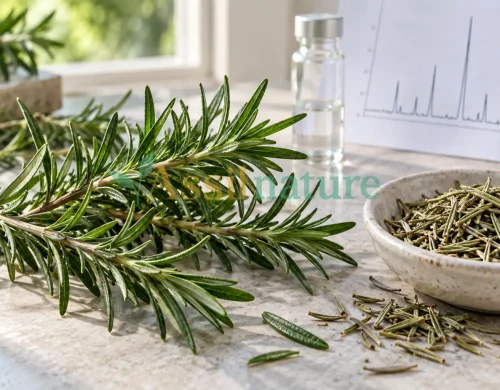
Rosemary Chemical Composition: Carnosic Acid and Key Compounds
What Is the Chemical Composition of Rosemary? The chemical composition of rosemary includes several groups of naturally...
Rosemary Pesticide Residues and EU Compliance: What Buyers Need to Verify
.assil-eu-residues-intro { max-width: 1040px; margin: 0 auto 28px; padding: 30px; color: #30352f; background:...
Rosemary Certificate of Analysis: What Bulk Buyers Should Check
.rosemary-coa-intro { max-width: 1040px; margin: 28px auto; color: #30352f; font-family: inherit; line-height: 1.75; }...