 Mon - Fri: 9:00 - 19:00 GTM

Cedarmoss Quality: How Industrial Buyers Evaluate Raw Lichen
What Defines Cedarmoss Quality?
Cedarmoss quality cannot be judged by color, appearance or origin alone. For an industrial buyer, quality means that the supplied fragrance lichen is suitable for the intended process and consistently meets the agreed raw-material specification.
This makes Cedarmoss different from a commodity that can be evaluated by weight and price alone. An extraction company may need to consider botanical or commercial identity, cleanliness, moisture, foreign matter, preparation, storage condition, lot consistency and extraction performance before approving a commercial source.
Importantly, there is no single universal specification that defines the perfect Cedarmoss lot for every processor. Extraction systems, finished ingredients and internal quality requirements differ. Therefore, the strongest B2B approach is to establish measurable requirements between buyer and supplier before scaling from sample to commercial volume.
Good Cedarmoss is not simply the cleanest-looking lichen. Industrial quality is the combination of identity, usable material, preparation, consistency and suitability for the buyer’s intended process.
Seven Factors Industrial Buyers Should Evaluate
A practical Cedarmoss specification can be built around several quality factors. Not every buyer will assign the same limit or priority to each one, but together they provide a stronger basis for qualification than visual inspection alone.
Define whether the purchase uses a commercial Cedarmoss grade or requires verification of a particular botanical species.
Bark, wood fragments, needles, soil and unrelated forest material can reduce the effective value of an extraction feedstock.
Moisture affects weight, storage stability and the economics of the usable dry feedstock delivered to the processor.
Cleaning, sorting, drying and handling determine how much additional preparation may be required before industrial processing.
Buyers should assess the physical condition of the material and investigate signs of unsuitable moisture exposure, contamination or deterioration.
A technically successful sample has limited commercial value if subsequent lots vary substantially in preparation or usable material.
For extraction buyers, representative pilot processing can provide stronger qualification evidence than appearance or generic yield claims.
Clean Appearance vs Clean Raw Material
Photographs are useful during an initial sourcing discussion, but a pale, uniform-looking batch should not automatically be classified as higher quality. Visual appearance cannot reveal every characteristic relevant to an industrial extraction process.
Physical cleanliness is more useful when it can be defined. Instead of asking whether the material “looks clean,” a buyer can specify what kinds of foreign matter are unacceptable and, where commercially necessary, establish an agreed measurement or tolerance for the supplied grade.
This converts a subjective quality discussion into a repeatable procurement requirement. It also gives the supplier a clearer target for sorting and preparation before shipment.
Why Foreign Matter Changes the Real Cost of Cedarmoss
Wild-collected lichen can arrive with material from its natural environment. Depending on the source and preparation grade, this may include pieces of bark, wood, needles, leaves, soil particles or other non-target matter.
For an industrial buyer, every kilogram of non-usable material can affect transport, handling and preparation economics. A cheaper offer with a lower proportion of usable lichen may therefore be less attractive than a higher-priced but better-prepared lot.
This is why procurement teams should compare the cost of usable feedstock, not merely the supplier’s headline price per kilogram.
Price per kilogram is not the same as cost per kilogram of usable feedstock.
Moisture, foreign matter, preparation losses, logistics and actual process suitability can all influence the economic value of a Cedarmoss lot.
Why Moisture Matters in Cedarmoss Quality
Moisture is one of the most practical variables in bulk Cedarmoss sourcing. It affects shipment weight, storage behavior and the amount of dry raw material actually available to the processor. For this reason, two lots offered at the same price per kilogram may not represent the same economic value.
Excess moisture can also create undesirable storage conditions, particularly when botanical material is compressed or packed for transport. On the other hand, moisture specifications should not be invented as universal numbers. The appropriate requirement should reflect the buyer’s process, packaging, transport conditions and internal raw-material standard.
A professional RFQ can therefore ask the supplier to report moisture according to an agreed method or to meet a buyer-defined limit. This makes comparison between samples and commercial lots more meaningful.
When moisture differs substantially between offers, headline price per kilogram can become a misleading comparison. Moisture should therefore be considered together with foreign matter and preparation losses.
Drying and Storage Before Industrial Processing
Once collected and prepared, Cedarmoss should be handled in a way that preserves the condition of the raw material until processing. Drying and storage are therefore part of quality management rather than purely logistical steps.
Material packed while inadequately conditioned can behave differently during storage from properly prepared dry feedstock. Consequently, suppliers should pay attention to moisture exposure, warehouse conditions and packaging before dispatching commercial lots.
At the same time, industrial quality should not be reduced to an unrealistic demand for visually perfect botanical material. Cedarmoss is a natural forest raw material. The objective is controlled, suitable feedstock that meets an agreed specification—not an artificial cosmetic appearance.
Remove or reduce unwanted forest matter according to the required grade.
Bring the material to the agreed condition before bulk packing.
Protect the prepared lot from inappropriate moisture exposure and contamination.
Pack the approved grade for transport while preserving lot identification.
Foreign Matter Is Not the Same as Contamination
These two concepts should be separated during quality discussions. A wild forest raw material can naturally contain pieces of bark, needles, wood or other plant debris after collection. These materials may be undesirable for extraction, but their presence is fundamentally a question of sorting, preparation and foreign-matter specification.
Contamination is a broader quality and safety issue. Depending on the buyer’s intended application and risk assessment, this may involve unwanted substances or conditions that require specific analytical, hygiene or handling controls. The appropriate testing program should be defined by the buyer’s market and manufacturing requirements.
Calling every piece of natural forest debris “contamination” can therefore create confusion. Professional specifications are clearer when physical foreign matter and analytical or safety requirements are addressed separately.
Bark, wood, needles, soil particles and other non-target material that may be controlled through sorting and preparation specifications.
Buyer-defined chemical, microbiological or other unwanted conditions that may require appropriate controls or analytical testing.
Can Cedarmoss Be Sold in Different Quality Grades?
Yes, different preparation levels can be commercially useful. However, terms such as “Grade A,” “premium” or “extra clean” have limited technical value unless the supplier and buyer define what those terms actually mean.
One processor may prefer a highly cleaned material to reduce preparation work before extraction. Another may accept a less intensively prepared grade if its own facility already includes an efficient cleaning stage and the economics remain attractive.
Therefore, a useful Cedarmoss grade is not simply a marketing label. It is a repeatable combination of measurable characteristics agreed between supplier and buyer.
Commercial or botanical requirement.
Agreed physical cleanliness criteria.
Buyer-defined requirement where necessary.
Sorting, drying and handling expectations.
How to Build a Representative Cedarmoss Sample
The purpose of a B2B sample is not to show the buyer the most attractive pieces available. It is to give the buyer a realistic preview of the commercial material being proposed.
A representative sample should therefore come from the relevant sourcing or prepared lot and reflect its normal range of material. If the supplier manually selects only unusually clean pieces, subsequent laboratory or pilot results may not represent the bulk shipment.
Where a buyer intends to perform extraction trials, the sample quantity should also be sufficient for the planned evaluation. The buyer is best placed to specify that amount because laboratory and pilot processes vary between facilities.
The best sample is not necessarily the best-looking material. It is the sample that most accurately represents the quality the supplier can reproduce at commercial scale.
Building a Cedarmoss Quality Specification Sheet
Once a sample is accepted, the agreed quality should be converted into a written specification wherever possible. This gives procurement, quality control and the supplier a common reference for subsequent shipments.
The document does not need to begin with dozens of parameters. A practical raw-material specification can start with the characteristics that materially affect the buyer’s process and become more detailed as the commercial relationship develops.
| Specification Field | What to Define | Why It Matters |
|---|---|---|
| Product Identity | Cedarmoss trade grade and botanical identity if specifically required | Prevents ambiguity about the purchased material |
| Origin | Country and relevant sourcing information | Supports traceability and procurement records |
| Preparation | Cleaning, sorting, drying and supplied form | Defines the physical grade expected at receipt |
| Foreign Matter | Agreed categories and limits where required | Protects usable-feedstock economics |
| Moisture | Buyer-defined limit and measurement method where applicable | Supports consistent weight and storage condition |
| Analytical Requirements | Tests required for the intended market or process | Aligns testing with actual buyer requirements |
| Packaging | Bag or bale format, unit weight and labeling | Supports handling, transport and traceability |
| Lot Reference | Lot or batch identification | Connects sample, analysis and commercial shipment |
A Specification Is Stronger Than a Quality Label
Words such as “premium,” “high quality” and “extra clean” can support commercial communication, but they cannot replace a technical agreement. Two suppliers may use the same quality label for very different materials.
A written specification creates a more objective relationship. The buyer knows what should arrive, while the supplier knows which characteristics must be controlled during sourcing, preparation and packing.
For long-term Cedarmoss supply, this transition from subjective descriptions to measurable requirements is one of the most important steps from a sample transaction to a repeatable industrial sourcing program.
Lot Traceability: Connecting the Sample to the Shipment
Traceability becomes increasingly important as Cedarmoss moves from a small sample to an industrial order. A buyer that has approved a particular sample needs a practical way to connect that evaluation with the material prepared for commercial shipment.
Lot identification provides that connection. The relevant sourcing or preparation lot can be assigned a reference that follows the material through sampling, testing, packing and shipment documentation. This does not require an unnecessarily complex system; it requires enough control to know which material each document and sample represents.
For repeat purchases, traceability also helps both parties investigate differences between shipments. Instead of relying on memory or photographs, the buyer and supplier can refer to defined lots and compare their preparation, analyses and technical performance.
When Does Cedarmoss Need Botanical Verification?
Botanical verification becomes particularly important when the buyer’s specification requires a defined species rather than a commercial Cedarmoss grade. In that situation, the scientific name is part of the purchasing requirement and should be treated accordingly.
For example, Pseudevernia furfuracea should not be guaranteed merely because the material was collected in a cedar environment or resembles reference photographs. Host tree, geographic origin and visual appearance can provide useful context, but they are not automatically equivalent to species-level confirmation.
Conversely, not every commercial transaction necessarily requires the same identification protocol. If an extraction company purchases according to an established commercial grade and qualifies that grade through its own process, the documentation should reflect the actual agreement rather than adding an unsupported botanical guarantee.
Documentation should describe what has actually been verified. A trade name, collection area or host-tree association should not be converted into an unsupported scientific-species declaration.
Which Analyses Should Be Required for Cedarmoss?
There is no universal analytical package that every Cedarmoss shipment must undergo regardless of its destination or application. Testing should follow the buyer’s risk assessment, manufacturing process, finished ingredient and applicable market requirements.
Some parameters concern the physical condition of the raw material, while others may involve chemical or microbiological requirements. An extraction manufacturer may also have its own incoming raw-material tests before a lot enters production.
Therefore, testing is strongest when it answers a defined commercial question. Running an expensive panel simply to produce a long certificate can add cost without necessarily improving the buyer’s qualification decision.
| Quality Area | Possible Evaluation | When Relevant |
|---|---|---|
| Identity | Appropriate botanical verification | When a species-specific specification applies |
| Moisture | Moisture measurement using an agreed method | When dry-matter consistency or storage condition matters |
| Physical Purity | Foreign-matter assessment | When preparation grade affects usable feedstock |
| Chemical Safety | Buyer-defined contaminant testing | According to origin, process, destination and risk assessment |
| Microbiological Quality | Buyer-defined microbiological testing | Where relevant to the process, specification or intended application |
What Should a Cedarmoss COA Actually Show?
A Certificate of Analysis is most useful when it refers to a defined lot and reports results that are relevant to the agreed specification. It should not function as a generic marketing document copied from one shipment to another.
Where analyses have been performed, the COA should clearly connect the reported results with the tested sample or lot. The document can also identify the product, lot reference, analysis date and applicable methods or specifications where appropriate.
Equally important is what a COA should not do: it should not present an unverified species name, invented analytical values or results from another lot as though they apply to the current shipment.
Clear commercial identity.
Connects results to material.
Agreed limits where applicable.
Actual measured values or findings.
Testing basis where relevant.
Pre-Shipment Samples Reduce Scale-Up Risk
The first qualification sample and the final commercial shipment do not always occur at the same time. When significant preparation or sourcing takes place between them, a pre-shipment sample can provide an additional quality checkpoint.
This sample should represent the prepared commercial lot rather than another specially selected collection of attractive pieces. Depending on the agreed procedure, the buyer can compare its appearance, physical characteristics or required analytical results with the approved specification before release.
Pre-shipment approval does not eliminate every commercial risk, but it creates a useful control point between laboratory qualification and container-scale delivery.
Packaging and Compression Can Affect Raw-Material Handling
Bulk fragrance lichen is a lightweight, irregular material, so packaging efficiency becomes important when commercial volumes increase. Compression can reduce transport volume and make handling more practical, but the selected format should remain compatible with the buyer’s receiving and processing system.
Buyers may prefer bags, compressed bales or another agreed bulk format depending on shipment size and factory handling. Packaging should also preserve lot identification so individual units can be connected to the shipment documents.
The objective is not maximum compression at any cost. It is an efficient packing system that protects the agreed raw-material condition while improving storage, loading and international transport.
How Do You Keep a 10-Ton Shipment Consistent with a 500-Gram Sample?
This is one of the central challenges in industrial botanical sourcing. A 500-gram sample can be manually selected and inspected in detail, while a multi-ton shipment depends on sourcing controls, preparation procedures and representative lot management.
The solution is not to promise that every individual piece of natural lichen will look identical. Instead, the supplier should work toward consistency at the lot level: the same agreed preparation standard, acceptable physical parameters, controlled packing and representative sampling.
This distinction allows natural variation while still creating a commercially repeatable raw material. For industrial extraction, that is generally more meaningful than cosmetic uniformity.
Do not scale the photograph. Scale the specification.
Moving from grams to tons requires lot control, representative sampling, defined preparation, relevant testing and traceable documentation. These controls provide a stronger basis for consistency than attempting to make every piece of a natural forest raw material visually identical.
Supplier Qualification Should Come Before Large-Scale Purchasing
Industrial Cedarmoss sourcing becomes more reliable when supplier qualification happens in stages. A buyer does not need to treat the first inquiry as a container-scale decision. Instead, the relationship can move from documentation and samples toward controlled commercial volume.
The first stage is usually information: available material, origin, preparation, approximate capacity, packaging and any buyer-specific botanical or analytical requirements. A representative sample can then be evaluated against the intended extraction or raw-material specification.
If the sample performs successfully, a trial commercial lot provides the next level of evidence. Only after the buyer is satisfied with both technical performance and the supplier’s ability to reproduce the agreed grade does recurring bulk purchasing become substantially easier to manage.
Buyers qualifying raw material specifically as extraction feedstock can continue with our guide to Cedarmoss for extraction , covering sourcing, sample qualification and preparation before industrial processing.Why a Trial Lot Matters
Laboratory samples are essential for initial qualification, but they cannot reproduce every operational condition of a commercial purchase. A trial lot tests the supplier’s ability to prepare, pack, document and deliver a larger volume under real commercial conditions.
It also allows the buyer to evaluate incoming quality across more material. Questions about lot uniformity, packing density, handling losses and process performance become easier to assess at this stage than with a small courier sample.
Successful trial supply creates a practical reference for future purchasing. The buyer can define what should remain consistent, while the supplier gains a clearer understanding of the preparation standard expected for repeat orders.
When qualification moves from raw-material approval to processing performance, see our dedicated guide to Cedarmoss extraction for the pathway from qualified lichen feedstock to fragrance ingredient.How to Compare Two Cedarmoss Offers
Two Cedarmoss quotations can look similar while representing very different commercial value. A comparison based only on price per kilogram may overlook differences in usable lichen, moisture, preparation, packaging and technical qualification.
A more useful procurement comparison evaluates both the financial offer and the condition in which the raw material reaches the extractor.
| Comparison Factor | Offer A | Offer B | Buyer Question |
|---|---|---|---|
| Price/kg | Compare | Compare | Is the supplied grade actually equivalent? |
| Foreign Matter | Verify | Verify | How much of each kilogram is usable feedstock? |
| Moisture | Verify if specified | Verify if specified | Are the dry-material economics comparable? |
| Botanical Requirement | Confirm | Confirm | Do both offers satisfy the same identity specification? |
| Sample Quality | Evaluate | Evaluate | Is the sample representative of bulk supply? |
| Extraction Performance | Pilot test | Pilot test | Which material performs better in the buyer’s actual process? |
| Scale & Consistency | Assess | Assess | Can the approved grade be repeated at commercial volume? |
Cedarmoss Sourcing Red Flags
Certain sourcing practices should trigger additional questions before a buyer commits to volume. None of these points automatically proves that a supplier is unreliable, but they justify closer qualification.
A supplier should not convert a trade name or host-tree story into a guaranteed botanical identity without a reliable basis.
Highly selected pieces may not represent what will arrive at commercial scale.
Extraction performance depends on feedstock and the manufacturer’s extraction conditions, so universal yield promises deserve scrutiny.
Analytical documentation is more useful when it clearly identifies the material actually tested.
Marketing labels should be translated into measurable preparation and quality expectations.
Serious industrial sourcing generally benefits from verifying suitability before committing to substantial volume.
From One Shipment to a Repeatable Cedarmoss Supply Program
The commercial objective for both supplier and industrial buyer is often not a single successful shipment. It is the ability to reproduce an acceptable raw-material grade across future orders.
Repeatability requires the critical quality factors to be understood. If the buyer knows which characteristics materially influence extraction, those characteristics can become part of the ongoing sourcing specification and supplier quality controls.
Natural variation cannot be removed entirely from a wild botanical raw material. The goal is instead to manage variation within commercially acceptable parameters while maintaining transparent lot identification and communication whenever meaningful changes occur.
Consistency does not mean making a natural raw material artificial. It means controlling the quality factors that matter to the buyer and communicating significant lot changes before shipment.
Industrial Buyer Checklist for Cedarmoss Quality
Before approving a new bulk source, procurement and technical teams can use the following questions to make the qualification process more precise.
01. What commercial or botanical identity does the specification require?
02. Is the submitted sample representative of the proposed bulk lot?
03. What cleaning and preparation standard has been agreed?
04. How will foreign matter be defined and controlled?
05. Is a moisture specification necessary for this process?
06. Which tests are actually required for qualification?
07. Can the sample, analyses and commercial lot be linked by traceability?
08. Is pilot extraction required before purchasing commercial volume?
09. Will a pre-shipment sample be required?
10. What packaging and compression format fits factory handling?
11. Can the supplier reproduce the approved grade at commercial scale?
12. What recurring volume may follow successful qualification?
Cedarmoss Quality Is a B2B Specification, Not a Marketing Claim
High-quality Cedarmoss cannot be defined responsibly by one photograph, one adjective or one price. Industrial quality emerges from the relationship between the raw material and the process for which it is being purchased.
Botanical or commercial identity, foreign matter, moisture, preparation, storage condition, representative sampling, testing and lot consistency can all become relevant depending on the buyer’s requirements.
The strongest sourcing relationship therefore replaces vague quality promises with an agreed specification. Once that specification performs successfully in the buyer’s process, both sides have a practical foundation for scaling Moroccan Cedarmoss from sample quantities to recurring industrial supply.
Define it. Sample it. Test it. Scale it.
A reliable Cedarmoss supply program is built around clear specifications, representative lots, relevant testing, controlled scale-up and repeatable preparation—not around subjective claims of “premium quality.”
For the broader framework connecting Moroccan origin, botanical identity, Oakmoss and Cedarmoss terminology, extraction, quality and industrial procurement, explore our complete guide to Moroccan Cedarmoss and Oakmoss .
Frequently Asked Questions
What defines high-quality Cedarmoss?
High-quality Cedarmoss is raw material that consistently meets the buyer’s agreed specification. Relevant factors can include identity, foreign matter, moisture, preparation, storage condition, lot consistency and suitability for the intended extraction process.
Is there a universal Cedarmoss quality specification?
No. Different extractors and fragrance manufacturers may require different raw-material characteristics. A commercial specification should therefore be agreed between buyer and supplier according to the intended process.
Why does moisture matter in Cedarmoss?
Moisture affects shipment weight, storage behavior and dry-feedstock economics. Buyers may define an acceptable moisture requirement and measurement method when this parameter is important to their process.
What is foreign matter in raw Cedarmoss?
Foreign matter can include non-target material such as bark, wood, needles, soil particles and other forest debris. Its acceptable level should be defined according to the preparation grade purchased.
Is foreign matter the same as contamination?
No. Foreign matter usually refers to physical non-target material that may be reduced through sorting and cleaning. Contamination concerns can involve chemical, microbiological or other unwanted conditions requiring separate risk assessment or testing.
Can Cedarmoss be sold in different grades?
Yes. Different preparation levels can be commercially useful, but labels such as “premium” or “Grade A” should be supported by measurable criteria such as preparation, moisture or foreign-matter requirements.
How should a representative Cedarmoss sample be prepared?
The sample should reflect the commercial lot being proposed rather than contain only specially selected attractive pieces. This gives the buyer a more realistic basis for laboratory or pilot evaluation.
When is botanical verification required?
Botanical verification is particularly important when the buyer’s specification requires a defined species. A commercial name, host tree or geographic origin should not be treated as automatic species confirmation.
What analyses should be performed on Cedarmoss?
Testing should follow the buyer’s intended application, risk assessment, destination market and internal specification. There is no single analytical panel that is automatically appropriate for every Cedarmoss lot.
What should a Cedarmoss COA include?
A useful COA should identify the product and lot, report relevant test results and, where appropriate, state specifications and methods. It should only contain claims and results that apply to the actual tested lot.
Why use a pre-shipment sample?
A pre-shipment sample can help confirm that the prepared commercial lot still matches the agreed quality before bulk release, particularly when substantial sourcing or preparation occurred after initial qualification.
Does compression reduce Cedarmoss quality?
Compression is mainly a packaging and logistics decision. The appropriate level should preserve the agreed raw-material condition while making handling, storage and international transport more efficient.
How can a buyer compare two Cedarmoss suppliers?
Compare identity, preparation, foreign matter, moisture where relevant, representative sample quality, extraction performance, documentation, packaging, supply capacity and price rather than price per kilogram alone.
How can Cedarmoss quality remain consistent at bulk scale?
Consistency at scale is built through defined specifications, lot traceability, representative sampling, controlled preparation, relevant testing and communication of meaningful changes between sourcing lots.
References
1. Joulain, D. & Tabacchi, R. — Lichen extracts as raw materials in perfumery. Part 1: Oakmoss. Flavour and Fragrance Journal, 2009, 24:49–61. DOI: 10.1002/ffj.1916.
2. Joulain, D. & Tabacchi, R. — Lichen extracts as raw materials in perfumery. Part 2: Treemoss. Flavour and Fragrance Journal, 2009, 24:105–116. DOI: 10.1002/ffj.1923.
3. British Lichen Society — botanical resources concerning Evernia prunastri and Pseudevernia furfuracea.
4. Aoussar, N. et al. — scientific work documenting Moroccan Pseudevernia furfuracea and Atlas-region material.
5. International Fragrance Association (IFRA) — standards and technical documentation relevant to fragrance raw materials and moss extracts.
6. Buyer-specific raw-material specifications, analytical requirements and extraction protocols remain essential because there is no single universal Cedarmoss quality grade applicable to every industrial process.
Looking for Moroccan Cedarmoss with a Defined Quality Specification?
Assil Nature works with Moroccan Atlas-origin fragrance lichen for industrial sourcing and extraction. Buyers can define the required preparation grade, sample quantity, packaging, commercial volume and quality parameters needed for their qualification process.
Where a botanical species, analysis, moisture limit, foreign-matter requirement or other technical parameter is part of your specification, include it in the RFQ so the available lot can be evaluated before commercial scale-up.
Representative samples, lot requirements and testing can be discussed according to buyer specifications and available material.
Related Posts

Moroccan Cedarmoss: Atlas Mountain Fragrance Lichens for Industrial Sourcing
Industrial Raw Lichen · Extraction Feedstock · B2B Sourcing Cedarmoss for extraction refers to raw fragrance lichen sourced and prepared as...
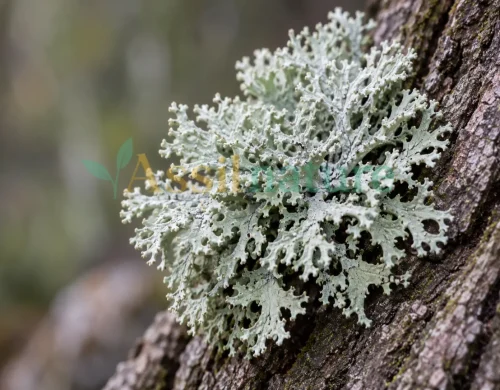
Pseudevernia furfuracea: Cedarmoss for Perfumery and Industrial Extraction
Pseudevernia furfuracea: Cedarmoss for Perfumery and Industrial Extraction Botanical Identity & Industrial Fragrance Use Pseudevernia...
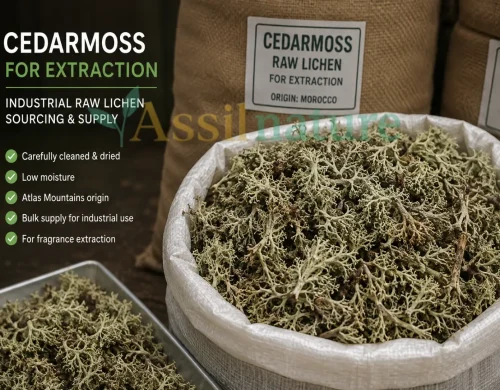
Moroccan Cedarmoss: Atlas Mountain Fragrance Lichen for Industrial Sourcing
Moroccan Origin · Atlas Forests · Industrial Fragrance Raw Material Moroccan Cedarmoss is a fragrance-lichen raw material...