 Mon - Fri: 9:00 - 19:00 GTM

Cedarmoss vs Oakmoss: Botanical, Perfumery and Sourcing Differences
Cedarmoss vs Oakmoss: Are They the Same?
Cedarmoss and Oakmoss belong to the specialized world of fragrance lichens, but professional buyers should not treat the two names as automatically interchangeable. Their commercial histories overlap, and both have been associated with mossy fragrance materials, yet botanical identity remains an important distinction.
In established perfumery terminology, Oakmoss is primarily associated with Evernia prunastri. Cedarmoss has historically been associated with fragrance lichen collected from cedar environments and, in technical literature, particularly with Pseudevernia furfuracea growing on Atlas cedar (Cedrus atlantica).
That distinction matters commercially. A fragrance manufacturer asking for Oakmoss may have an Evernia prunastri-specific requirement, while a buyer sourcing Moroccan Cedarmoss may be evaluating a different fragrance lichen raw material for extraction. The buyer’s specification should determine what must be supplied.
The species primarily associated with Oakmoss in perfumery and fragrance-industry literature.
A fragrance-trade material historically associated with cedar-hosted lichen and particularly with Pseudevernia furfuracea on Cedrus atlantica in technical literature.
The Most Important Difference Is Botanical Identity
The clearest way to understand the difference is to separate the commercial name from the organism itself. Evernia prunastri and Pseudevernia furfuracea are different lichen species. Similar fragrance applications do not make them botanically identical.
This distinction becomes particularly important in B2B transactions. A scientific name appearing in a technical specification is not merely another marketing synonym. If the buyer requires Evernia prunastri, material of another botanical identity should not be supplied under that specification simply because both materials belong to the fragrance-lichen trade.
Likewise, Cedarmoss should not be presented as Oakmoss merely because the two materials share historical links with mossy fragrance extraction. Botanical transparency makes sourcing clearer for both supplier and processor.
Evernia prunastri ≠ Pseudevernia furfuracea. Commercial overlap in perfumery does not make the two species scientifically interchangeable.
For the broader three-way distinction—including the role of Treemoss in scientific and fragrance-industry terminology—see our comparison of Oakmoss vs Cedarmoss vs Treemoss .
Does Oakmoss Only Grow on Oak Trees?
No. The common name can create a misleadingly simple picture. Evernia prunastri grows on a range of woody substrates and is not botanically defined by the presence of an oak tree.
Consequently, identifying a lichen only by looking at the tree on which it grows is not sufficient for species-level verification. Host information can contribute useful ecological and sourcing context, but it does not replace botanical identification.
This principle is particularly useful for industrial buyers because trade names such as Oakmoss and Cedarmoss can sound as though the host tree alone determines the material. In professional sourcing, the relationship is more nuanced.
Why Is Cedarmoss Associated with Atlas Cedar?
The Cedarmoss name has particular relevance to the fragrance trade because technical literature has associated it with Pseudevernia furfuracea growing on Atlas cedar, Cedrus atlantica. This gives the term a meaningful historical and sourcing context rather than making it simply another name for Oakmoss.
Morocco is especially relevant to this discussion because Atlas cedar ecosystems occur naturally in the country, while scientific studies have documented fragrance-lichen species in Moroccan Atlas environments.
Nevertheless, geographic origin and host association should not be converted into automatic species certification. A commercial lot described as Moroccan Cedarmoss can be evaluated according to its agreed trade specification, while a buyer requiring a specific scientific identity should request appropriate lot-level verification.
| Point | Oakmoss | Cedarmoss |
|---|---|---|
| Core trade name | Oakmoss | Cedarmoss |
| Principal botanical association | Evernia prunastri | Particularly Pseudevernia furfuracea on Atlas cedar in technical fragrance literature |
| Host name proves species? | No | No |
| Fragrance-industry relevance | Established perfumery raw material | Established fragrance-lichen raw material |
| Can the names be automatically interchanged? | No | No |
Cedarmoss vs Oakmoss in Perfumery
Oakmoss and Cedarmoss belong to a specialized group of natural fragrance materials valued for their contribution to mossy, woody and forest-like olfactory structures. Their historical use in perfumery helps explain why the two names sometimes appear close together in fragrance literature.
However, similar industrial applications do not make the materials interchangeable. Oakmoss associated with Evernia prunastri and Cedarmoss associated with cedar-origin fragrance lichen can differ in botanical origin, chemical profile and the characteristics of the extracts produced from them.
For a perfumer or extraction company, the practical question is therefore not simply which material is “better.” The relevant question is which botanical feedstock and resulting extract fit the intended fragrance, technical specification and manufacturing process.
Primarily associated with Evernia prunastri and historically important in mossy fragrance structures and classic perfumery.
Relevant to fragrance extraction in its own right and should be evaluated according to its botanical context, raw-material quality and extraction performance.
Do Cedarmoss and Oakmoss Smell the Same?
They should not be described as having an identical odor profile. Both belong to the broader mossy and woody fragrance space, which creates recognizable olfactory overlap, but the identity of the lichen and the extraction process can influence the character of the resulting material.
Moreover, a fragrance extract is not simply the smell of the dry lichen transferred unchanged into a bottle. Solvent selection, extraction conditions, concentration and further processing influence which constituents appear in the commercial ingredient and in what proportions.
For this reason, industrial comparison is strongest when buyers evaluate actual extracts or conduct controlled extraction trials rather than relying exclusively on broad odor descriptions of the raw material.
Shared mossy fragrance territory does not mean identical odor. Botanical identity, raw-material condition and processing all matter when comparing Oakmoss and Cedarmoss ingredients.
Oakmoss Extract vs Cedarmoss Extract
Once the raw lichens are extracted, the distinction between their botanical origins remains relevant. An Oakmoss extract derived from Evernia prunastri should not automatically be described as the same ingredient as an extract produced from Cedarmoss raw material.
Technical literature on fragrance lichens distinguishes these raw materials and their extracts precisely because their chemistry and industrial histories are not identical. Processing can further increase the importance of specifications, since different extraction and refining systems can produce different commercial grades.
Therefore, professional buyers should compare the actual botanical origin, manufacturing process, analytical specification and intended application rather than treating “moss extract” as one universal ingredient category.
Buyers researching the Oakmoss side in greater technical depth can continue with our guide to Evernia prunastri extract , including Oakmoss extraction, industrial uses and raw-material considerations.
| Evaluation Point | Oakmoss | Cedarmoss |
|---|---|---|
| Botanical basis | Primarily Evernia prunastri | Defined according to the Cedarmoss material and buyer specification |
| Commercial form | Raw lichen and processed extracts | Raw lichen and processed extracts |
| Olfactory territory | Mossy fragrance applications | Mossy and woody fragrance applications |
| Chemistry assumed identical? | No | No |
| Buyer qualification | Identity + extract specification + intended use | Identity/grade + extract performance + intended use |
Can Cedarmoss Replace Oakmoss?
There is no universal yes-or-no answer. If a formulation, customer specification or raw-material standard explicitly requires Evernia prunastri, Cedarmoss should not simply be supplied under that botanical requirement.
In other development contexts, a fragrance manufacturer may evaluate different mossy raw materials or extracts according to the olfactory effect it wants to achieve. That is a formulation and technical-development decision rather than evidence that the two raw materials are identical.
This distinction is commercially useful for Cedarmoss. Its value does not depend on pretending to be Oakmoss. A processor can evaluate Cedarmoss as a distinct fragrance raw material according to the performance and characteristics required for its own product.
It can be sourced and evaluated as a distinct fragrance-lichen raw material with its own botanical context, extraction behavior and industrial relevance.
Extraction Performance Matters More Than the Trade Name Alone
For extraction companies, a commercial name is only the beginning of qualification. The processor still needs to know what material is being supplied, how it was prepared and how it performs under the intended process.
A representative sample can be evaluated for physical quality and, where required, botanical identity. Pilot extraction can then provide information about processing behavior, recovered material and suitability for the manufacturer’s intended ingredient.
This approach is especially valuable when qualifying a new Moroccan Cedarmoss source. Instead of asking whether it is “the same as Oakmoss,” the buyer can determine whether the material meets the actual technical and commercial requirements of the extraction program.
Separate botanical requirements from broad commercial terminology.
Review cleanliness, moisture, preparation and usable lichen content.
Use pilot processing when extraction performance determines purchasing.
Evaluate the resulting ingredient against the manufacturer’s target specification.
Do Cedarmoss and Oakmoss Have the Same Chemical Composition?
No. The fact that Oakmoss and Cedarmoss occupy related areas of natural perfumery does not mean that their chemistry is identical. Evernia prunastri and Pseudevernia furfuracea are different lichen species, and their extracts should not be treated as chemically interchangeable materials.
Lichen extracts are chemically complex. Their profiles reflect the botanical source and can also be influenced by the raw material and the extraction and downstream processing applied by the manufacturer. Therefore, a commercial moss extract should be evaluated according to its actual identity and specification rather than by fragrance family alone.
This distinction becomes especially important when a buyer is developing an extract against an established analytical or olfactory reference. Similar industrial applications do not guarantee equivalent composition or performance.
Same application ≠ same chemistry. Oakmoss and Cedarmoss can both have value in fragrance extraction while remaining botanically and chemically distinct raw materials.
What About Atranol, Chloroatranol and IFRA?
Moss extracts used in fragrance manufacturing have an important safety and regulatory history. Atranol and chloroatranol, in particular, became major concerns because of skin-sensitization risk associated with traditional moss extracts.
Professional buyers should distinguish between the wild botanical feedstock, the processed fragrance extract and the finished fragrance or cosmetic product. Requirements applied to an extract or its use in a finished formulation should not automatically be rewritten as a statement that the corresponding raw lichen cannot be traded as industrial extraction feedstock.
Likewise, the regulatory status of one defined extract should not be assumed to describe every material sold under a broad moss-related commercial name. Extract manufacturers need to evaluate the actual ingredient they produce against the standards and legal requirements relevant to its intended market.
Qualified according to botanical or commercial identity, preparation, physical quality and buyer-specific extraction requirements.
Evaluated according to its composition, intended fragrance use and applicable technical, safety and regulatory requirements.
Raw Oakmoss vs Raw Cedarmoss: What Does an Extractor Actually Buy?
At the raw-material stage, extraction companies are purchasing botanical feedstock rather than a finished fragrance ingredient. This shifts attention toward factors such as identity, usable lichen content, cleanliness, moisture, lot consistency and suitability for the intended extraction process.
A visually attractive sample alone cannot answer all of these questions. Buyers may need representative sampling, defined preparation standards and pilot processing before determining whether a new source fits commercial production.
Most importantly, the botanical requirement should be clear from the beginning. If the purchase order specifies Evernia prunastri, the supplier should evaluate the offered lot against that requirement rather than assuming that another fragrance lichen is commercially equivalent.
What Should a Buyer Request When Sourcing Oakmoss?
When the requirement is specifically Oakmoss, the buyer should make that requirement technically explicit. Using the botanical name Evernia prunastri in the specification reduces ambiguity and gives the supplier a clear basis for evaluating the proposed lot.
The RFQ can then define the physical and commercial requirements needed for extraction rather than relying on the Oakmoss name alone.
For commercial sourcing, buyers specifically requiring Oakmoss can review our Moroccan Oakmoss (Evernia prunastri) page, while Cedarmoss projects can be evaluated through our dedicated Moroccan Cedarmoss supply page.
Specify Evernia prunastri when that species is required.
Define cleaning, foreign-matter and other physical requirements.
Request representative material suitable for technical qualification.
Confirm trial quantity and expected bulk or annual demand.
What Should a Buyer Request When Sourcing Cedarmoss?
A Cedarmoss RFQ should begin with the buyer’s actual technical requirement. Some manufacturers may work with an established commercial Cedarmoss grade, while others may define the required botanical identity as part of their internal specification.
Where Pseudevernia furfuracea is specifically required, that should be stated explicitly and the proposed lot evaluated accordingly. Where the purchase is based on a commercial Cedarmoss specification, the parties should instead agree on what that grade means in measurable sourcing terms.
This approach protects both sides. The buyer avoids receiving a material that does not match its technical requirement, while the supplier avoids making a botanical guarantee that was never established for the commercial lot.
Define commercial Cedarmoss grade or a specific botanical requirement.
Specify acceptable preparation and foreign-matter levels.
Define the sample quantity needed for pilot or laboratory processing.
Include volume, packaging, destination and recurring demand where known.
Why Morocco Matters for Cedarmoss Sourcing
Morocco brings a distinctive sourcing context to Cedarmoss because the Atlas Mountains contain forest environments that include the native Atlas cedar, Cedrus atlantica. This connects Moroccan origin directly with the historical fragrance-industry discussion surrounding cedar-associated lichen.
Scientific research has also documented fragrance-relevant lichen species in Moroccan Atlas environments. This supports Morocco’s importance as a genuine lichen habitat, although regional occurrence should never be used as automatic proof of the identity of every commercial lot.
For an industrial buyer, the strongest Moroccan sourcing proposition therefore combines origin with qualification: knowledge of collection environments, controlled preparation, representative sampling, traceability and botanical verification when the specification requires it.
For a dedicated discussion of Atlas origin, cedar association and the commercial sourcing context, see our guide to Moroccan Cedarmoss sourcing and Atlas origin .Oakmoss or Cedarmoss: Which One Should an Industrial Buyer Choose?
The answer depends on the application. A buyer with an existing Evernia prunastri specification should source material that satisfies that Oakmoss requirement. A manufacturer developing or purchasing Cedarmoss should evaluate Cedarmoss according to the identity, quality and extraction characteristics required for that program.
Price can influence the final procurement decision, but it should come after the materials have been technically defined. Comparing prices for two botanically or technically different materials without first confirming suitability can create a false comparison.
Ultimately, Oakmoss and Cedarmoss are best understood as related but distinct members of the fragrance-lichen supply chain. Clear terminology allows each material to be evaluated on its own industrial merits.
Start with the specification, not the name.
Define the required botanical identity, raw-material grade, extraction objective, sample protocol and commercial volume. Then evaluate Oakmoss or Cedarmoss against those requirements rather than assuming that one fragrance lichen is automatically equivalent to another.
Can Oakmoss and Cedarmoss Be Distinguished by Appearance?
Experienced lichen specialists can use morphological characteristics as part of botanical identification, but industrial buyers should be cautious about identifying commercial material from photographs alone. Color, branching structure, surface features and the appearance of the lower surface can provide useful clues, yet these characteristics require proper interpretation.
According to botanical descriptions, Evernia prunastri typically has a green-grey to yellow-grey upper surface, while its lower surface is generally paler. Pseudevernia furfuracea is commonly described with a grey upper surface and a darker lower surface in older parts, together with other morphological features used in identification.
However, dried, compressed, fragmented or commercially cleaned lichen may be more difficult to assess than intact material in its natural habitat. When species identity forms part of a purchase specification, photographs should support qualification rather than replace appropriate identification.
Surface color, branching form, lower-surface characteristics and other diagnostic features can contribute to botanical identification.
A photograph can document appearance but should not automatically be treated as definitive species-level verification.
Five Common Mistakes When Buying Fragrance Lichen
Many sourcing problems begin before the material is shipped. Ambiguous terminology, unrepresentative samples and price comparisons between different grades can create disagreements that a clearer RFQ would have prevented.
Commercial overlap does not make Evernia prunastri and other fragrance lichens scientifically interchangeable.
Host information can strengthen traceability, but the tree name alone is not a species-identification method.
An unusually clean or visually attractive sample has limited value if it does not represent the commercial lot that will actually be shipped.
Moisture, foreign matter, preparation grade, extraction performance and freight efficiency can change the real economics of the material.
Moving directly from photographs to a large order increases risk when extraction performance or botanical identity is critical.
The Sample Must Represent the Bulk Lot
A sample is commercially useful only when it helps the buyer predict the material that will arrive in the subsequent order. This is particularly important for wild-collected botanical raw materials, where natural and preparation-related variation can occur.
Representative sampling should therefore be connected to a defined sourcing lot whenever possible. Once the buyer approves that material, the supplier should avoid changing preparation grade, mixing materially different quality levels or presenting a new source as though it were identical to the tested lot.
For extraction applications, this connection becomes even stronger because the buyer may invest time and laboratory resources in pilot processing. A successful pilot based on an unrepresentative sample provides little protection when the commercial shipment is substantially different.
How Should Buyers Compare Oakmoss and Cedarmoss Suppliers?
Supplier evaluation should begin with the buyer’s required material rather than with a generic question about who offers the lowest price. A supplier that understands botanical and commercial distinctions is better positioned to discuss whether the available lot fits a defined specification.
Buyers can then compare practical capabilities: preparation quality, representative sampling, traceability, testing options, packaging, available volume and the ability to maintain an agreed grade across future shipments.
For extraction companies, technical cooperation can be particularly valuable. A supplier that can respond to pilot-extraction feedback and adjust preparation requirements may create more long-term value than one offering an undefined raw material at a superficially attractive price.
| Supplier Factor | What the Buyer Should Check | Why It Matters |
|---|---|---|
| Material Identity | Does the supplier distinguish commercial names from botanical requirements? | Reduces the risk of receiving the wrong raw material. |
| Preparation | Cleaning, sorting, drying and foreign-matter control. | Influences usable feedstock and downstream handling. |
| Sampling | Is the sample representative of the proposed bulk lot? | Makes technical qualification more meaningful. |
| Traceability | Lot coding and relevant origin or sourcing records. | Supports investigation and repeat purchasing. |
| Scale | Trial, commercial and recurring-volume capability. | Qualification only creates value if supply can scale. |
| Technical Communication | Can specifications and buyer feedback be translated into sourcing controls? | Important for long-term extraction programs. |
Buyer Checklist: Oakmoss vs Cedarmoss
Before requesting a quotation, industrial buyers can answer a small number of questions that immediately make the sourcing process more precise.
01. Do you require Oakmoss, Cedarmoss or a specifically defined botanical species?
02. If species-specific, what scientific name must the lot meet?
03. Is the material intended for industrial extraction or another application?
04. What cleaning and preparation grade is required?
05. Are moisture or foreign-matter limits specified?
06. What quantity is required for representative sampling or pilot extraction?
07. Which analyses or identification documents are required?
08. What initial commercial quantity is expected?
09. What annual or recurring volume may follow successful qualification?
10. What packaging, destination and Incoterm should the supplier quote?
Cedarmoss vs Oakmoss: The Industrial Perspective
Oakmoss and Cedarmoss share an important history within natural perfumery, but the strongest modern sourcing approach is to preserve their distinctions. Oakmoss is primarily associated with Evernia prunastri, while Cedarmoss has its own historical and industrial context within the fragrance-lichen trade.
Neither material needs to be diminished to explain the other. Their value depends on what the fragrance manufacturer or extractor intends to produce, which raw-material specification applies and how the selected lot performs during qualification.
For Moroccan Cedarmoss, this distinction is commercially valuable. Atlas origin can provide meaningful sourcing context, while botanical transparency, representative sampling and controlled preparation give industrial buyers the information needed to evaluate the material on its own merits.
Related fragrance materials, not interchangeable botanical identities.
For B2B sourcing, define the required material first. Then compare identity, preparation, sample quality, extraction performance, documentation, volume and supply consistency. This creates a more reliable procurement decision than choosing between Oakmoss and Cedarmoss by trade name or price alone.
For the complete framework covering Moroccan origin, botanical identity, fragrance-lichen terminology, extraction, quality and industrial sourcing, explore our complete guide to Moroccan Cedarmoss and Oakmoss .
Frequently Asked Questions
What is the difference between Cedarmoss and Oakmoss?
Oakmoss is primarily associated with Evernia prunastri, while Cedarmoss has a distinct fragrance-trade context associated with cedar-origin lichen material. The two should not be treated as botanically interchangeable.
Is Cedarmoss the same as Oakmoss?
No. They belong to related areas of fragrance-lichen sourcing and extraction, but Oakmoss and Cedarmoss should be evaluated as distinct commercial and botanical materials.
What is the botanical name of Oakmoss?
Oakmoss in perfumery is primarily associated with Evernia prunastri. When a buyer specifically requires Oakmoss, the botanical identity should be included in the technical specification.
What botanical species is associated with Cedarmoss?
Technical fragrance literature has particularly associated Cedarmoss with Pseudevernia furfuracea growing on Atlas cedar. However, a commercial lot should not be given a species guarantee unless its botanical identity has been appropriately verified.
Does Oakmoss only grow on oak trees?
No. Evernia prunastri can grow on different woody substrates. The common name “Oakmoss” should not be interpreted as proof that the lichen must have grown exclusively on oak.
Does Cedarmoss only grow on cedar trees?
The Cedarmoss trade name has an important historical association with cedar-hosted fragrance lichen, especially Atlas cedar. However, host-tree information alone should not be used as definitive botanical identification.
Do Cedarmoss and Oakmoss smell the same?
No. They can occupy related mossy and woody olfactory territory, but their odor profiles should not be described as identical. Botanical identity, raw-material condition and extraction process can all influence the resulting fragrance ingredient.
Can Cedarmoss replace Oakmoss in perfumery?
Not automatically. If a formulation or raw-material specification requires Evernia prunastri, Cedarmoss should not be supplied as though it were the same material. In other fragrance-development contexts, a perfumer may evaluate Cedarmoss independently according to the desired result.
Are Oakmoss extract and Cedarmoss extract chemically identical?
No. Different botanical sources should not be assumed to produce identical chemical profiles. Extraction and downstream processing can create further differences between commercial ingredients.
Are Oakmoss and Cedarmoss both used for extraction?
Yes. Both can be relevant to fragrance extraction, but the appropriate raw material depends on the manufacturer’s botanical, olfactory, analytical and processing requirements.
Can Oakmoss and Cedarmoss be identified from photographs?
Photographs can provide useful visual information, but they should not be treated as definitive species verification. Commercially dried, cleaned or compressed material can be particularly difficult to identify from appearance alone.
Does the host tree prove whether a lichen is Oakmoss or Cedarmoss?
No. Host-tree information can support traceability and ecological context, but the host alone does not prove botanical identity. Species-specific purchasing should use an appropriate identification basis.
Why is Morocco relevant to Cedarmoss sourcing?
Morocco contains Atlas Mountain forest environments with Cedrus atlantica, and scientific studies have documented fragrance-relevant lichens in Moroccan Atlas regions. This makes Morocco a meaningful sourcing origin, while lot-level identity still requires appropriate qualification where specified.
What should a buyer specify when sourcing Oakmoss or Cedarmoss?
Buyers should define the required botanical or commercial identity, cleaning grade, moisture and foreign-matter limits where relevant, sample quantity, testing requirements, commercial volume, packaging, destination and intended extraction or fragrance application.
References
1. Joulain, D. & Tabacchi, R. — Lichen extracts as raw materials in perfumery. Part 1: Oakmoss. Flavour and Fragrance Journal, 2009, 24:49–61. DOI: 10.1002/ffj.1916.
2. Joulain, D. & Tabacchi, R. — Lichen extracts as raw materials in perfumery. Part 2: Treemoss. Flavour and Fragrance Journal, 2009, 24:105–116. DOI: 10.1002/ffj.1923.
3. British Lichen Society — botanical identification resources for Evernia prunastri.
4. British Lichen Society — botanical identification resources for Pseudevernia furfuracea.
5. Aoussar, N. et al. — scientific research concerning Moroccan Pseudevernia furfuracea populations and Atlas Mountain collection environments.
6. International Fragrance Association (IFRA) — standards and technical documentation concerning Oakmoss and fragrance ingredient safety.
7. European Commission scientific and regulatory documentation concerning Oakmoss and Treemoss extracts, atranol and chloroatranol in cosmetic applications.
Looking for Moroccan Cedarmoss Raw Material?
Assil Nature works with Moroccan Atlas-origin fragrance lichen for industrial sourcing and extraction applications. Buyers can specify the required preparation grade, sample quantity, commercial volume, packaging, destination and any botanical or analytical requirements needed for qualification.
If your specification requires a particular botanical species such as Pseudevernia furfuracea or Evernia prunastri, include that requirement in your inquiry so the available lot can be evaluated accordingly.
Samples, specifications and documentation can be discussed according to buyer requirements and the available sourcing lot.
Related Posts
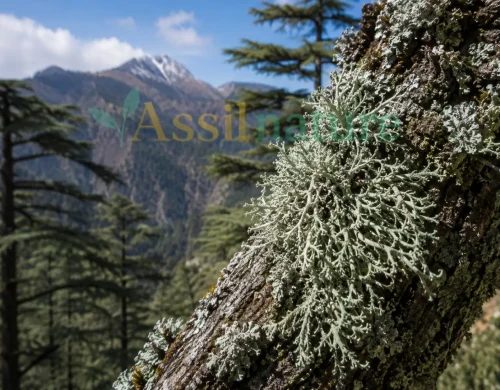
Moroccan Cedarmoss: Atlas Mountain Fragrance Lichens for Industrial Sourcing
Industrial Raw Lichen · Extraction Feedstock · B2B Sourcing Cedarmoss for extraction refers to raw fragrance lichen sourced and prepared as...
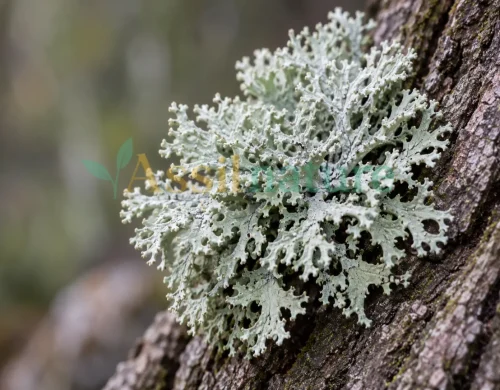
Pseudevernia furfuracea: Cedarmoss for Perfumery and Industrial Extraction
Pseudevernia furfuracea: Cedarmoss for Perfumery and Industrial Extraction Botanical Identity & Industrial Fragrance Use Pseudevernia...
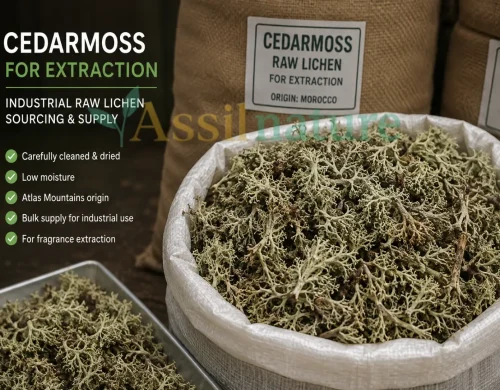
Moroccan Cedarmoss: Atlas Mountain Fragrance Lichen for Industrial Sourcing
Moroccan Origin · Atlas Forests · Industrial Fragrance Raw Material Moroccan Cedarmoss is a fragrance-lichen raw material...