+212662376234

sales@assilnature.com

TimeMon - Fri: 9:00 - 19:00 GTM


+212662376234


Rosemary Carnosic Acid HPLC Testing: A Buyer’s Guide

What Is Rosemary Carnosic Acid HPLC Testing?

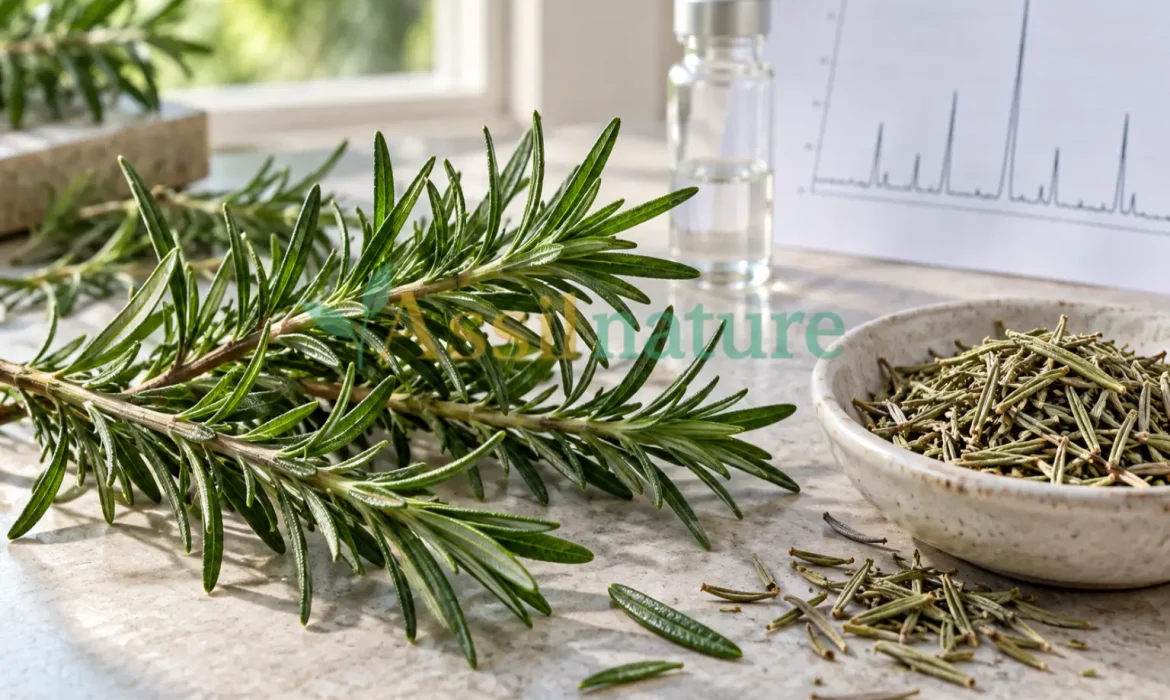
Rosemary carnosic acid HPLC testing is used to separate and quantify carnosic acid in a prepared sample of rosemary leaves, powder, or extract. HPLC stands for high-performance liquid chromatography, an analytical technique frequently used when buyers require a measurable compound specification rather than a general description such as “high-active rosemary.”

The reported result can help an extraction company determine whether a tested rosemary batch meets its minimum carnosic acid requirement. However, the numerical value is meaningful only when the sample identity, sampling procedure, preparation method, analytical method, units, and reporting basis are clearly documented.

Direct answer for buyers: An HPLC result confirms the carnosic acid value of the tested sample under the stated method. It does not automatically guarantee the same result for a different harvest, lot, processing grade, or future shipment.

Why Buyers Request Carnosic Acid Analysis

Carnosic acid is commercially relevant to companies using rosemary as an extraction raw material or producing standardized botanical ingredients. A defined minimum can assist with raw-material selection, process planning, yield expectations, and consistency between approved batches.

Before requesting testing, buyers should specify the required rosemary form, minimum carnosic acid level, analytical method or accepted laboratory procedure, result basis, commercial quantity, and whether the tested sample must represent one available shipment batch.

For an overview of carnosic acid, carnosol, rosmarinic acid, and other constituents, read our guide to rosemary chemical composition .

Buyers interested in Moroccan raw material can also review our Moroccan rosemary product page before submitting their technical specification.

How HPLC Analysis of Carnosic Acid Works

HPLC analysis involves more than placing rosemary directly into an instrument. The laboratory must prepare a representative test portion, extract the target compounds, separate them chromatographically, identify the relevant signal, and calculate the carnosic acid content using an appropriate reference standard and validated procedure.

Analytical Stage General Purpose Why It Matters to the Buyer
Sampling Obtain material intended to represent the commercial lot. Even a technically accurate analysis is commercially misleading if the sample does not represent the batch.
Sample homogenization Prepare a sufficiently uniform laboratory sample from leaves, cut material, or powder. Differences in leaf, stem, and particle distribution may influence the test portion.
Extraction Transfer carnosic acid and relevant compounds from the plant material into a solution suitable for analysis. Solvent, time, temperature, particle size, and extraction procedure can affect compound recovery.
Chromatographic separation Separate carnosic acid from other compounds present in the rosemary extract. Adequate separation supports correct identification and quantification.
Detection and identification Detect the chromatographic signal and identify the peak corresponding to carnosic acid. The report should identify the method and provide sufficient confidence that the measured signal belongs to the target compound.
Calibration and calculation Compare the analytical response with a suitable reference standard and calculate the reported concentration. Calibration quality, calculation basis, dilution, and units directly affect interpretation.
Laboratory reporting Record the result together with the sample identification, method, units, and relevant report details. A numerical result without context cannot be reliably compared with a buyer’s specification.
Important limitation: There is no single universal HPLC procedure that can be assumed from the words “carnosic acid tested.” Laboratories may use different preparation, extraction, chromatographic, detection, and calculation conditions.

Buyers comparing results from different suppliers should therefore review the complete reporting context and confirm that the values were produced using compatible methods and reporting bases.

Representative Sampling Is Essential for Reliable HPLC Results

HPLC can produce a precise measurement for the material placed into the laboratory instrument, but the commercial value of that measurement depends on whether the tested sample accurately represents the rosemary lot offered to the buyer.

Rosemary is a natural raw material. Differences in leaves, stems, particle sizes, drying exposure, storage position, and material collected from different areas of a batch can create variation. A convenient handful selected from the top of one bag may not represent several tons of product.

Common Sample Types in a Rosemary Transaction

Sample Type Main Purpose Limitation
Reference sample Demonstrate a general product form, appearance, aroma, or previously available quality. It may not represent the batch that will eventually be shipped.
Offered-batch sample Allow the buyer to evaluate material taken from an identified available lot. Its reliability still depends on how the sample was collected across the lot.
Pre-shipment sample Support approval of the prepared commercial batch before loading or dispatch. The approved batch must remain identifiable and protected from substitution or mixing.
Composite sample Combine increments collected from multiple positions, bags, or sections of the lot to improve representativeness. The sampling plan and homogenization procedure must be appropriate for the lot.
Laboratory test portion Provide the smaller prepared portion that is actually extracted and analyzed. Poor subsampling can reduce representativeness even when the original field sample was collected correctly.
Retained sample Preserve an identified portion for possible verification, comparison, or dispute review. It must be sealed, labeled, and stored under conditions that protect its integrity.

Information That Should Follow the Sample

  • Product name and botanical identity
  • Product form and preparation grade
  • Lot or batch reference
  • Harvest or production period when available
  • Sampling date and responsible party
  • Quantity represented by the sample
  • Sampling locations or number of bags sampled
  • Storage and transport conditions before analysis
Commercial rule: A result from one sample should only be applied to the commercial quantity that the sample was designed and documented to represent.

How to Read a Rosemary Carnosic Acid HPLC Result

A carnosic acid result should never be interpreted from the numerical value alone. The buyer must review the unit, calculation basis, sample description, method, and specification limit stated on the laboratory report.

Common Reporting Formats

Reporting Format General Meaning Buyer Check
Percentage (%) The reported mass proportion of carnosic acid under the stated method and calculation basis. Confirm whether the percentage is reported as received or on a dry basis.
Milligrams per gram (mg/g) Milligrams of the reported compound per gram of tested material. Verify the sample basis and whether the laboratory applies any moisture correction.
As-received basis The result includes the material’s moisture condition at the time of testing. Compare it only with a specification written on the same basis.
Dry-weight basis The result is calculated after accounting for moisture according to the stated procedure. Confirm the moisture value and calculation convention used by the laboratory.
Below the quantification limit The laboratory could not reliably quantify the compound above its stated method limit. Do not interpret this as automatically equal to zero.

Converting Percentage and Milligrams per Gram

When both values use the same sample and reporting basis, 1% is numerically equivalent to 10 mg/g. Therefore, a result of 3% corresponds to 30 mg/g on the same basis.

Do not convert blindly: The numerical conversion is valid only when the compound definition, tested material, and reporting basis are equivalent. A result expressed on a dry basis cannot be directly compared with an as-received specification without considering moisture.

Minimum, Typical, and Actual Results Are Different

  • Minimum specification: the lowest acceptable value agreed between buyer and supplier.
  • Typical value: an indicative historical value that may not be guaranteed for every batch.
  • Actual batch result: the value reported for the identified sample or commercial lot.
  • Target value: the level preferred by the buyer for process planning, which may differ from the contractual minimum.

Purchase contracts and approved specifications should clearly state which value is binding, the accepted analytical method, the reporting basis, and how borderline or disputed results will be handled.

Why Carnosic Acid Results May Differ Between Laboratories

Two laboratory reports for rosemary may show different carnosic acid values even when both laboratories operate professionally. The difference may begin before the analytical instrument is used and can continue through sample preparation, extraction, calibration, calculation, and reporting.

Source of Variation How It Can Affect the Result What Buyers Should Compare
Different samples Natural variation within the lot can produce different results when the laboratories receive separate portions. Determine whether both laboratories tested portions from the same homogenized composite sample.
Particle size and homogenization Differences in leaf, stem, and fine-particle distribution may affect the laboratory test portion. Review grinding, sieving, mixing, and subsampling procedures.
Extraction procedure Solvent system, extraction time, temperature, repetitions, and solid-to-liquid ratio may influence compound recovery. Confirm whether both laboratories used the same or demonstrably comparable preparation method.
Chromatographic conditions Column, mobile phase, gradient, detection conditions, and integration settings may influence separation and quantification. Compare the method references and confirm that carnosic acid was adequately separated and identified.
Reference standard and calibration Standard identity, purity, calibration range, and calculation approach can affect the reported value. Confirm that an appropriate carnosic acid reference standard and valid calibration were used.
Moisture correction One laboratory may report the result as received while another reports it on a dry-weight basis. Compare moisture values and ensure both results use the same reporting basis.
Storage before testing Time, heat, light, oxygen, or moisture exposure may alter the condition of the samples before analysis. Review sample sealing, transport, receipt date, and storage conditions.

How to Investigate a Disputed Result

  1. Confirm that the reports refer to the same product and identified batch.
  2. Check whether the samples came from the same properly homogenized composite sample.
  3. Compare the units and reporting basis used by both laboratories.
  4. Review sample preparation, extraction, method reference, and moisture correction.
  5. If necessary, test sealed retained material through an agreed independent laboratory.
Best contractual practice: Agree on the laboratory, method, sampling plan, reporting basis, acceptance limit, and dispute procedure before the commercial batch is tested.

What Should a Carnosic Acid HPLC Report Include?

A commercially useful HPLC report should connect the analytical result to an identifiable sample and explain how the value is expressed. Report formats differ between laboratories, but buyers should be able to verify the essential information needed to interpret and trace the result.

Report Element Information to Review
Laboratory identification Laboratory name, contact information, report reference, and relevant accreditation information when applicable.
Client and sample identification Submitted product name, sample code, botanical material, product form, and batch or lot reference.
Relevant dates Sample receipt date, testing period, and report issue date where provided.
Analytical method Method reference, internal validated method, published procedure, or other clearly identified analytical approach.
Analyte Clear identification of carnosic acid and any additional compounds included in the requested analysis.
Result and unit The numerical value with its unit, such as percentage or mg/g.
Reporting basis Confirmation of whether the result is reported as received, on a dry basis, or according to another defined calculation.
Specification or acceptance limit The agreed minimum requirement and pass/fail assessment when the laboratory has been asked to apply one.
Authorization Name, signature, electronic authorization, or other laboratory approval information used for the final report.

Is a Chromatogram Always Required?

A certificate or summary report may be sufficient for some routine commercial decisions. For technical qualification, method review, disputed results, or highly specific extraction requirements, the buyer may also request the chromatogram and additional analytical information.

A chromatogram is a visual record of detector response over the analytical run. It can support technical review, but it should not be interpreted in isolation. Peak identity, integration, calibration, sample preparation, and method suitability remain essential.

Confidentiality and verification: Laboratory reports and chromatograms may contain client, method, supplier, or batch-specific information. Full documents can be shared during qualified technical evaluation without necessarily publishing them on a public product page.

COA and Full Laboratory Report Are Not Always the Same

A supplier’s Certificate of Analysis may summarize selected batch results and specifications. A full laboratory report may provide more information about the submitted sample, analytical method, dates, result basis, and laboratory authorization. Buyers should specify which document is required at each stage of approval.

How to Write a Testable Rosemary Carnosic Acid Specification

A useful purchasing specification should be measurable, connected to the intended commercial lot, and understood in the same way by the buyer, supplier, and laboratory. Descriptions such as “high carnosic acid,” “premium extraction grade,” or “strong rosemary” are not sufficiently precise for batch approval.

Example of a Structured Buyer Requirement

Specification Field Illustrative Requirement Clarification Needed
Product Dried rosemary leaves Define whether whole, cut, or another preparation is acceptable.
Botanical identity Salvia rosmarinus (syn. Rosmarinus officinalis) State the accepted name and synonym to avoid documentation inconsistencies.
Carnosic acid Minimum 3.0% by HPLC Define the method, reporting basis, and whether the value applies to the shipment batch.
Moisture Maximum 8.0% Identify the moisture method and relationship to the compound reporting basis.
Pesticide residues Compliant with the requirements agreed for the destination market Provide the required scope, applicable limits, and product category.
Batch requirement Commercial quantity supplied from one identified and approved batch Define what constitutes one batch and how the material will remain segregated.
Verification Representative pre-shipment sample tested by an agreed laboratory Agree on sampling responsibility, laboratory, costs, timeline, and acceptance.
Illustrative example only: The values above demonstrate how a requirement can be structured. They do not constitute a universal rosemary standard, a current product specification, or a guaranteed Assil Nature batch result.

Questions to Agree Before Commissioning the Analysis

  • Which party will collect the representative sample?
  • Which laboratory and analytical method will be accepted?
  • Will the result be reported as received or on a dry basis?
  • Who will pay for initial, batch, and repeat testing?
  • What happens if the result is close to the acceptance limit?
  • Which retained sample will be used if results are disputed?
  • How long must the approved batch remain reserved?

Clarifying these points before analysis reduces duplicated costs, delays, and disputes during final batch approval.

A Practical Qualification Process for Extraction-Grade Rosemary

Specialized HPLC testing should form part of a structured supplier-qualification process. Commissioning multiple analyses before confirming the buyer’s specification, quantity, target market, and commercial interest can create unnecessary costs without establishing whether a transaction is viable.

Step 1 — Technical Inquiry

The buyer submits the required product form, target compound, minimum content, testing method, quantity, destination, compliance limits, packaging, and delivery terms.

Step 2 — Supplier Feasibility Review

The supplier evaluates available material, batch size, product form, preliminary documentation, testing requirements, lead time, and whether the requested specification appears commercially achievable.

Step 3 — Representative Sample Selection

A sample is collected from an identified available lot or prepared batch using an appropriate sampling approach. The sample is labeled and connected to the quantity it represents.

Step 4 — Initial Buyer Evaluation

The buyer reviews appearance, aroma, product form, documents, and preliminary commercial conditions before requesting costly specialized analyses when possible.

Step 5 — Agreed Laboratory Testing

The representative sample is analyzed using the laboratory, method, units, and reporting basis accepted by both parties. Responsibilities for testing costs and timing are confirmed beforehand.

Step 6 — Commercial Approval

If the sample meets the agreed requirements, the parties confirm the price, quantity, batch reservation, payment terms, preparation, packaging, inspection, and delivery schedule.

Step 7 — Pre-Shipment Verification

When required, the prepared commercial batch is sampled and tested before shipment to confirm that the material remains within the contractual specification.

Step 8 — Retained Samples and Documentation

Sealed retained samples and final documents are preserved according to the agreed procedure to support traceability and any subsequent verification.

Efficiency principle: The depth and cost of testing should be proportionate to the commercial quantity, destination-market risk, buyer requirements, and probability of a qualified order.

Common Mistakes When Requesting Rosemary HPLC Testing

Many analytical disputes originate from incomplete purchasing instructions rather than from the HPLC instrument itself. The following mistakes can lead to unnecessary testing, incompatible reports, delayed approval, or incorrect conclusions about a rosemary batch.

1. Requesting “High Carnosic Acid” Without a Minimum

The word high is subjective. The buyer should provide a numerical acceptance limit, unit, reporting basis, and analytical method.

2. Testing a Sample That Is Not Connected to the Commercial Batch

A favorable historical or reference-sample result does not confirm the composition of an unrelated shipment. The tested sample must be traceable to the quantity it is intended to represent.

3. Comparing Results on Different Bases

A dry-weight result and an as-received result may differ because of moisture. Units and calculation bases must be aligned before comparing values.

4. Assuming All HPLC Methods Are Identical

Laboratories may use different sample preparation, extraction, separation, detection, calibration, and calculation procedures. “Tested by HPLC” does not by itself establish method equivalence.

5. Treating a Typical Value as a Guaranteed Specification

A typical or historical value indicates previous experience but is not necessarily the contractual minimum for every batch.

6. Ignoring the Rosemary Form

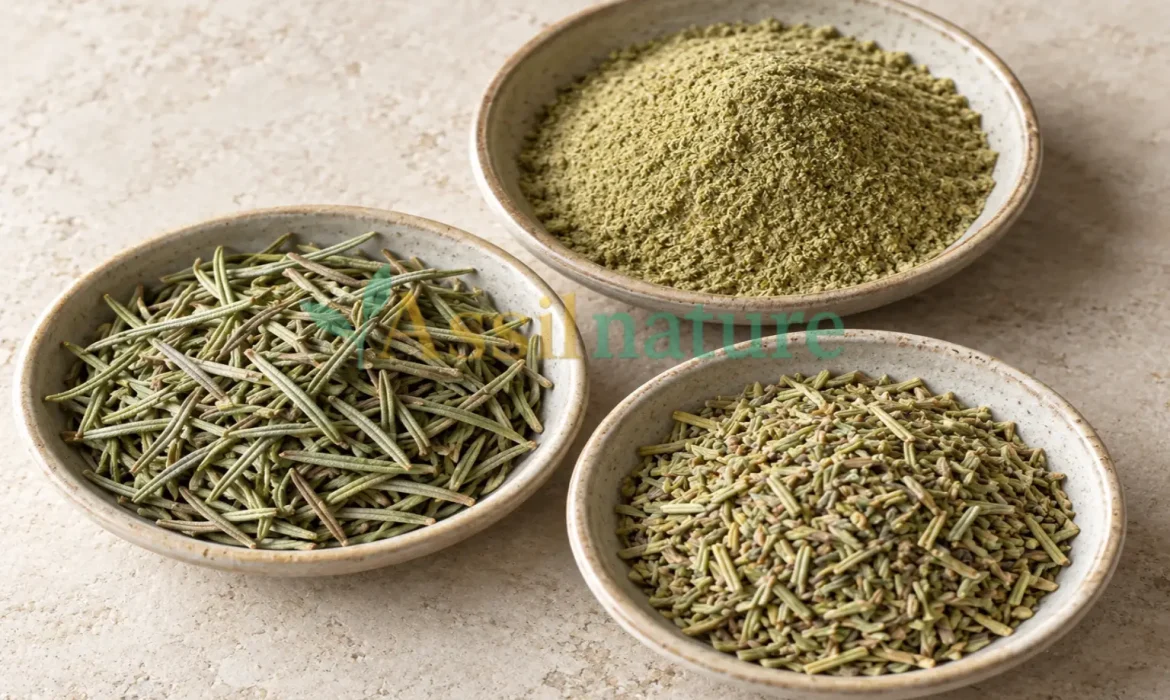
Whole leaves, cut material, powder, and standardized extract are different commercial products. Their sampling, preparation, specifications, and expected results should not be confused.

7. Using Carnosic Acid Testing as Proof of Overall Compliance

HPLC quantification of carnosic acid does not replace pesticide-residue, microbiological, heavy-metal, moisture, foreign-matter, identity, or other destination-specific controls.

8. Ordering Expensive Tests Before Qualifying the Inquiry

Custom testing should follow confirmation of the required quantity, commercial conditions, specification, accepted laboratory, destination, and serious purchase interest.

Best practice: Create one written technical specification and ensure that the buyer, supplier, laboratory, inspection party, and contract all refer to the same product, batch, method, unit, and acceptance basis.

Frequently Asked Questions

What is HPLC testing for carnosic acid in rosemary?

HPLC testing separates and quantifies carnosic acid in a prepared rosemary sample. It is used when buyers require a measurable compound value rather than a general description of rosemary quality.

Can one HPLC result represent an entire rosemary shipment?

It can support evaluation of a shipment only when the tested sample was collected using an appropriate procedure and is documented as representative of the identified commercial batch.

Is 1% carnosic acid equal to 10 mg/g?

Yes, when both values refer to the same compound, sample, and reporting basis. Results reported on a dry basis should not be directly compared with as-received results without considering moisture.

What does dry-basis carnosic acid mean?

A dry-basis result is calculated after accounting for moisture according to the laboratory’s stated procedure. Buyers should confirm the moisture value and calculation method used.

Why can two laboratories report different carnosic acid values?

Differences may result from sampling, homogenization, particle size, extraction, chromatographic conditions, calibration, moisture correction, storage, or reporting basis. Different results do not automatically prove that either laboratory is wrong.

Should the buyer request the HPLC chromatogram?

A summary report may be sufficient for routine decisions. A chromatogram and additional method information may be requested for technical qualification, method review, highly specific requirements, or disputed results.

Does HPLC testing confirm that rosemary is pesticide-free?

No. Carnosic acid HPLC testing does not replace pesticide-residue analysis. Pesticides, microbiology, heavy metals, moisture, and other parameters require their own appropriate testing.

Can an old COA be used to approve a new rosemary batch?

An old COA may show historical capability, but it does not confirm the result of a different harvest or batch. Final approval should rely on documents and testing relevant to the offered material.

Who should pay for specialized rosemary testing?

Testing responsibility should be agreed commercially before analysis. The decision may depend on order volume, qualification stage, required laboratory, test scope, and whether the analysis is standard or buyer-specific.

Can Assil Nature arrange carnosic acid testing for Moroccan rosemary?

Testing options can be evaluated after reviewing the required rosemary form, minimum content, analytical method, commercial quantity, destination, available batch, and the buyer’s complete technical requirements.

Scientific and Analytical References

The following peer-reviewed sources provide additional context for the analysis of carnosic acid and carnosol, HPLC sample preparation, compound stability, and natural variation in rosemary materials.

  1. Mantzourani, Tarantilis and Kokotou (2023) — Analytical Methods for Carnosic Acid and Carnosol
    This review examines analytical approaches used to determine carnosic acid and carnosol in plants, foods, and biological samples. It also discusses extraction and sample-preparation procedures, demonstrating why the method must be reviewed when comparing analytical results.
    Read the review in Separations
  2. Borrás-Linares et al. (2014) — HPLC Characterization of Rosemary Leaves
    The researchers used chromatographic analysis to characterize and quantify multiple compounds in rosemary-leaf extracts, including carnosic acid, carnosol, rosmarinic acid, and ursolic acid. The study also reported compositional differences among rosemary samples from different locations.
    Read the study in the International Journal of Molecular Sciences
  3. Zhang et al. (2012) — HPLC Study of Rosemary Compound Degradation
    This study evaluated the degradation of carnosic acid, carnosol, rosmarinic acid, and rosemary extract under different conditions. It supports the importance of considering temperature, light exposure, storage, and sample history when interpreting analytical results.
    View the study in the Journal of Agricultural and Food Chemistry
  4. Francolino et al. (2023) — Wild and Cultivated Rosemary Extracts
    This peer-reviewed study compared phytochemical constituents in wild and cultivated rosemary extracts. It illustrates why sourcing category alone cannot replace representative sampling and batch-specific chemical analysis.
    Read the study in Antioxidants
Analytical scope: These publications demonstrate scientific approaches and factors affecting rosemary analysis. They do not establish one universal commercial HPLC method or acceptance limit. The buyer, supplier, and laboratory should agree on the applicable method, sampling procedure, reporting basis, and specification before testing.

Request a Technical Evaluation for Moroccan Rosemary

Carnosic acid testing is most useful when it is connected to a defined commercial requirement, representative sample, accepted analytical method, and identifiable rosemary batch.

Assil Nature can evaluate sampling and testing options for professional buyers after reviewing the intended application, target specification, commercial volume, destination market, and available material.

Include the Following Information

  • Required rosemary form and preparation grade
  • Minimum carnosic acid content
  • Accepted HPLC method or laboratory requirements
  • Reporting basis: as received or dry weight
  • Trial quantity, shipment volume, and annual forecast
  • Destination country or delivery port
  • Required pesticide, microbiological, and contaminant limits
  • Packaging, documentation, and testing responsibilities

Review our Moroccan rosemary product page or submit your complete technical specification for an initial feasibility review.

Request a Representative Sample or Bulk Quotation

Specialized testing availability, cost, timing, and sample selection are evaluated according to the buyer’s confirmed requirements and the commercial opportunity.

Wild vs Cultivated Rosemary: What Bulk Buyers Should Know

Wild vs Cultivated Rosemary: Is One Always Better?

Wild rosemary and cultivated rosemary can both provide suitable botanical raw material for food, herbal, cosmetic and extraction applications. Neither sourcing method guarantees superior quality on its own.

Wild-collected rosemary may offer a distinctive origin story and access to naturally occurring populations. Cultivated rosemary may provide greater control over agricultural practices, harvest planning and supply consistency. The better option depends on the buyer’s specification, required volume, destination market and intended application.

Direct answer for bulk buyers

Choose rosemary through verified botanical identity, representative sampling, traceability, physical specifications and relevant laboratory testing. “Wild” and “cultivated” describe how the plant was sourced; they do not replace evidence of batch quality.

For example, a carefully collected and properly cleaned wild batch may meet a demanding specification, while poorly handled wild material may contain excessive stems, foreign matter or inconsistent moisture. Likewise, a cultivated batch can offer useful consistency but still requires verification against the buyer’s analytical and regulatory requirements.

Buyers evaluating Moroccan supply can review our Moroccan rosemary product page , learn about its local name in our Azir herb guide , or consult the forthcoming complete Moroccan rosemary guide .

The Practical Difference Between Wild and Cultivated Rosemary

Wild and cultivated rosemary may share the same botanical identity: Salvia rosmarinus (syn. Rosmarinus officinalis). The principal difference lies in how the plant population is established, managed, harvested and documented.

Wild rosemary grows without being planted as a conventional agricultural crop and is collected from naturally occurring populations. Cultivated rosemary is planted and managed within an agricultural production system.

Procurement Factor Wild Rosemary Cultivated Rosemary
Plant establishment Naturally occurring plant populations Planted and managed as an agricultural crop
Harvest planning Influenced by natural availability, access, weather and collection organization More directly connected to field management and planned harvest schedules
Batch uniformity May show greater natural variation between collection areas and harvest periods May offer greater control over variety, field practices and harvest timing
Traceability structure Requires clear collection-area records, collector organization and lot separation Can be linked to identified fields, production records and agricultural inputs
Volume predictability Can vary with natural resources, collection permissions and seasonal conditions Can be estimated through planted area, expected yield and production planning
Input records Focuses on collection conditions, surrounding land use and contamination risks Can include documented fertilizers, crop-protection products and field operations
Quality verification Requires specifications, representative samples and relevant batch testing Requires the same specification, sampling and batch-verification process

Sourcing method and botanical identity are separate questions

“Wild” and “cultivated” describe how rosemary entered the supply chain. They do not create two different botanical species and should not replace the scientific name, plant-part declaration or physical-form specification. Buyers who need clarification can consult our rosemary botanical-name guide .

Does Wild Rosemary Mean Organic or Pesticide-Free?

No. The term wild rosemary describes material collected from naturally occurring plant populations. It does not automatically prove organic certification, absence of pesticide residues, regulatory compliance or superior chemical composition.

Wild plants may not receive direct agricultural treatment, but collection areas can still be exposed to environmental contamination, neighboring land use, handling risks or unsuitable storage. Cultivated rosemary may involve agricultural inputs, although these inputs can be controlled, documented and evaluated against the buyer’s requirements.

Claim Does “Wild” Prove It? Appropriate Verification
Organic certified No Valid certification covering the collection, handling and supply chain
Pesticide-free No Suitable residue analysis evaluated against the applicable market limits
Higher active-compound content No Batch-specific analysis using an agreed analytical method
Microbiologically compliant No Microbiological testing against the buyer’s specification
Free from heavy metals No Relevant contaminant testing and collection-area risk assessment
Better overall quality Not by itself Complete evaluation of identity, appearance, aroma, cleanliness, moisture, contaminants and application-specific parameters

Natural origin and certified organic status are not the same

A supplier may accurately describe rosemary as wild-collected when the sourcing records support that claim. The supplier should not market the same batch as certified organic unless the relevant certification system covers the product and supply chain.

Similarly, statements such as “grown without pesticides” or “collected away from treated fields” do not replace residue testing when the buyer or destination market requires analytical confirmation.

What Actually Influences Rosemary Quality?

The quality of wild or cultivated rosemary develops through several connected stages. Growing conditions matter, but harvest decisions and post-harvest handling can preserve or reduce the value of the raw material before it reaches the buyer.

This is why two batches carrying the same botanical name and sourcing description may produce different physical and analytical results.

Growing Environment

Climate, altitude, soil, water availability and plant maturity can contribute to natural differences between rosemary populations and cultivated fields.

Harvest Timing

Season, plant-development stage and weather at harvest can influence moisture, aroma, appearance and chemical composition.

Harvested Plant Part

Leaf-to-stem ratio and the inclusion of other aerial parts affect visual quality, bulk density, processing behavior and the analytical profile.

Drying Conditions

Drying speed, airflow, temperature and protection from moisture influence color retention, aroma and storage stability.

Cleaning and Sorting

Appropriate sorting can reduce foreign matter, excessive stems and unsuitable material before packing.

Storage and Packaging

Exposure to humidity, heat, light, pests or unsuitable packaging can reduce batch quality after successful harvesting and drying.

Wild origin does not guarantee higher carnosic acid

Wild environmental conditions may contribute to chemical variation, but they do not guarantee a specific concentration of carnosic acid, rosmarinic acid, ursolic acid or other compounds in a commercial batch.

When compound content determines product acceptance, the requirement should be written into the specification and verified through batch-related analysis using the agreed method. Buyers can continue to our forthcoming guide on rosemary chemical composition and carnosic acid .

Traceability and Responsible Wild Rosemary Collection

Wild collection involves a supply chain that begins outside a conventional agricultural field. For this reason, buyers should evaluate not only the finished rosemary but also how the collection areas, collectors and lots are organized.

A credible wild-rosemary supply program should be able to explain where the material was collected, whether access and collection were authorized when required, how overharvesting risks are managed and how the harvested material remains traceable through drying, cleaning, storage and packing.

Traceability Element What the Supplier Should Know Why It Matters to the Buyer
Collection area Defined sourcing area and the lot associated with it Supports origin verification and collection-area risk assessment
Collection authorization Applicable permissions, agreements or legal access to the resource Reduces legal and reputational risks in the supply chain
Collector organization Who collects the rosemary and how collection instructions are communicated Helps control harvested plant parts, cleanliness and handling practices
Harvest records Collection date or period, received quantity and initial lot reference Connects the raw material to its season and preparation history
Sustainable harvesting Collection approach, regeneration awareness and prevention of destructive removal Supports resource continuity and long-term supply relationships
Lot separation How material from different areas or harvest periods is identified and managed Prevents uncontrolled mixing and improves batch-document reliability

Traceability does not require publishing confidential sourcing details

Suppliers do not need to disclose sensitive collector identities, exact coordinates or commercially confidential sourcing networks on a public website.

They should, however, maintain sufficient internal records to support origin, collection method and batch continuity when a qualified buyer requests documentation during supplier approval or order preparation.

Should a Bulk Buyer Choose Wild or Cultivated Rosemary?

The right choice depends on what the buyer is manufacturing and which characteristics determine acceptance. Origin story may support product positioning, but industrial procurement also requires reliable volume, repeatable preparation and compliance with the agreed specification.

The following framework can help purchasing and quality teams identify the sourcing model that deserves further evaluation.

Buyer Priority Sourcing Direction Required Verification
Documented wild origin for product positioning Evaluate traceable wild-collected rosemary Collection method, origin records, authorization where applicable, representative sample and batch specification
Planned recurring volume Cultivated supply may offer greater production predictability, although organized wild collection may also support substantial volume Available volume, seasonality, production plan, batch schedule and lead-time confirmation
Consistent physical appearance Compare prepared samples from both sourcing systems Leaf condition, stem proportion, color, cut size, foreign matter and approved reference sample
Extraction performance Select by analytical profile and process suitability, not by wild or cultivated status alone Target compounds, agreed analytical method, moisture, plant part and representative batch testing
Regulated food or herbal application Choose the batch that meets the buyer’s and destination market’s requirements Pesticide residues, contaminants, microbiology, traceability and required documentation
Certified organic product Source only from a supply chain covered by valid organic certification Certification scope, chain of custody and product documentation

The safest approach is specification-first sourcing

Define the product before comparing offers: botanical identity, plant part, physical form, quality limits, analytical requirements, quantity, packaging and destination.

Once those points are clear, request representative samples from suitable wild or cultivated batches and compare them under the same acceptance criteria. For form selection, see our guide to whole, cut and powdered rosemary .

Frequently Asked Questions

Is wild rosemary better than cultivated rosemary?

Not automatically. Either can provide suitable raw material when botanical identity, harvesting, preparation, traceability and analytical results meet the buyer’s specification.

What is wild rosemary?

Wild rosemary is collected from naturally occurring plant populations rather than from rosemary planted as a conventional agricultural crop.

What is cultivated rosemary?

Cultivated rosemary is planted and managed within an agricultural production system where field practices, harvest planning and inputs may be documented.

Is wild rosemary automatically organic?

No. Wild collection and organic certification are different concepts. Rosemary should only be marketed as certified organic when the relevant certification covers the product and its supply chain.

Does wild rosemary contain no pesticide residues?

Wild origin alone does not prove the absence of pesticide residues. When residue compliance matters, the relevant batch should be tested and evaluated against the applicable destination-market limits.

Does wild rosemary contain more carnosic acid?

Not necessarily. Carnosic acid content can vary with plant material, growing conditions, harvest timing, processing and storage. A required percentage should be verified through batch-specific analysis using an agreed method.

Can cultivated rosemary provide consistent quality?

Cultivation may improve control over variety, field practices and harvest planning, but the finished batch must still be evaluated through the agreed physical, analytical and regulatory specifications.

What traceability is needed for wild rosemary?

Useful records can include the collection area, collection period, applicable authorization, received quantity, initial lot reference, preparation history and separation of different sourcing lots.

Is wild rosemary suitable for extraction?

It can be, provided that the plant part, physical preparation, active-compound profile, contaminant results and processing characteristics meet the extractor’s requirements.

How should buyers choose between wild and cultivated rosemary?

Buyers should first define the intended application, required volume, specifications, testing, documentation and destination-market requirements. They can then compare representative batches from suitable wild and cultivated sources under the same acceptance criteria.

Scientific and Regulatory References

The distinction between wild and cultivated rosemary should be evaluated through documented sourcing, analytical testing, and the requirements of the destination market. The following scientific and regulatory sources provide additional context for professional buyers.

  1. European Parliament and Council — Regulation (EU) 2018/848 on Organic Production
    The regulation establishes specific conditions under which the collection of wild plants may qualify as organic production. Therefore, the term “wild collected” alone does not establish organic status or replace valid certification and supply-chain documentation.
    View the consolidated EU regulation
  2. Francolino et al. (2023) — Wild and Cultivated Rosemary Comparison
    This peer-reviewed study compared hydroalcoholic extracts obtained from wild and cultivated Rosmarinus officinalis. Its findings demonstrate that the cultivation system and plant source can influence phytochemical profiles, supporting the need for lot-specific analysis instead of assumptions based only on whether the rosemary is wild or cultivated.
    Read the study: Antioxidants 2023, 12(8), 1633
  3. FairWild Foundation — FairWild Standard 3.0
    The FairWild framework covers ecological, social, and business principles for the responsible collection and trade of wild plant ingredients. It is a useful reference for assessing harvesting practices, resource conservation, traceability, and responsible supply-chain management.
    Explore the FairWild Standard 3.0
Important clarification: These references are provided for scientific and procurement context. Their inclusion does not imply that every wild rosemary lot is organic, that wild material is inherently superior, or that Assil Nature holds an organic or FairWild certification. Any certification claim must be supported by valid documentation applicable to the specific product, batch, and supply chain.

Source Moroccan Rosemary According to Your Specifications

Choosing between wild and cultivated rosemary should begin with the intended application, required specifications, order volume, and destination-market requirements—not with the sourcing label alone.

Assil Nature supplies Moroccan rosemary for professional buyers, with available options depending on the requested form, preparation, quantity, and batch requirements. Product samples and supporting documentation can be discussed before confirming a commercial order.

  • Moroccan origin and batch-level sourcing information
  • Whole leaves, cut rosemary, and rosemary powder options
  • Samples available for buyer evaluation
  • COA and additional testing according to agreed requirements
  • Bulk packaging and export documentation upon request

Review our Moroccan rosemary product page or contact our team with your required form, quantity, target specifications, destination port, and intended application.

Request a Sample or Bulk Quotation

To receive a relevant offer, please include your required quantity, rosemary form, packaging preference, destination country or port, and any mandatory analytical or regulatory specifications.

Azir Herb in Morocco: Moroccan Rosemary for Bulk Buyers

Moroccan Botanical Raw Material

What Is Azir Herb?

Azir herb is a local Moroccan name commonly used for rosemary. International buyers generally know the same aromatic plant as rosemary, Moroccan rosemary or by its accepted botanical name, Salvia rosmarinus.

The former scientific name Rosmarinus officinalis also remains widely used in commercial specifications, laboratory documents and technical literature. Both scientific names may therefore appear in rosemary supply chains, although Salvia rosmarinus is the currently accepted botanical name.

Direct answer for international buyers

In Moroccan trade and everyday language, “Azir” usually refers to rosemary. However, the local name alone does not confirm the botanical species, plant part, origin, physical form or quality of a commercial batch. These details should be stated separately in the product specification and verified through traceability and batch documentation.

For B2B procurement, a clear commercial description can identify the material as: Moroccan rosemary — Salvia rosmarinus (syn. Rosmarinus officinalis), followed by the plant part, supplied form, origin and required quality parameters.

Buyers can review our Moroccan rosemary product page , compare the two scientific names in our rosemary botanical-name guide , or consult the forthcoming complete Moroccan rosemary guide .

Local and Botanical Names

Azir, Rosemary and the Names Used in Moroccan Trade

Moroccan suppliers, collectors and local buyers may refer to rosemary as Azir or use regional spelling and pronunciation variations. International importers are more likely to search for Moroccan rosemary, dried rosemary leaves, bulk rosemary or the botanical names shown in technical documents.

These terms can describe the same commercial herb, but they serve different purposes. A local name supports communication and origin context, while a botanical name provides the clearer identity required for specifications, certificates and laboratory records.

Name or Term How It Is Used What It Confirms
Azir herb Moroccan local and commercial usage Common identity in local communication, but not complete technical verification
Rosemary Standard English common name General commercial plant identity
Moroccan rosemary Origin-based B2B and export description Declared Moroccan origin when supported by traceability documents
Salvia rosmarinus Currently accepted botanical name Botanical species identity
Rosmarinus officinalis Recognized synonym still used in trade and scientific literature The same rosemary species when correctly applied

Recommended wording for a commercial specification

Product: Moroccan Rosemary (Azir)
Botanical name: Salvia rosmarinus Spenn. (syn. Rosmarinus officinalis L.)
Plant part: Leaves or aerial parts, as contractually agreed
Form: Whole leaves, cut material or powder
Origin: Morocco

Buyers who need a detailed explanation of the scientific nomenclature can read Salvia rosmarinus vs Rosmarinus officinalis . Buyers selecting a physical format can also consult our guide to whole, cut and powdered rosemary .

Origin and Sourcing

What Moroccan Origin Means for Azir Herb Buyers

Morocco offers suitable conditions for aromatic plants across Mediterranean, Atlantic-influenced and inland mountain environments. Rosemary grows in different Moroccan settings, and commercial supply may originate from wild collection, cultivated production or organized sourcing through collectors and cooperatives.

For an industrial buyer, however, country of origin is only the beginning. The commercial value of a rosemary batch depends on its traceability, harvested plant part, post-harvest handling, drying, cleaning, storage and compliance with the buyer’s specification.

Declared Origin

The supplier should be able to identify Morocco as the country of origin and support that declaration with the appropriate commercial and export documentation.

Sourcing Method

Wild-collected and cultivated rosemary require different sourcing records. The collection or cultivation method should be confirmed rather than inferred from the local name Azir.

Batch Traceability

Batch references should connect the supplied material with its sourcing, preparation, storage and relevant analytical documentation.

Export Preparation

Cleaning, sorting, controlled drying and suitable packaging directly affect the material received by food, herbal, cosmetic and extraction manufacturers.

Moroccan origin does not automatically prove every quality claim

The terms Moroccan rosemary, Atlas rosemary, wild rosemary and natural Azir should not be treated as interchangeable quality certificates.

Claims concerning pesticide residues, microbiological quality, heavy metals, moisture, foreign matter or active-compound content should be supported by the agreed specification and, when required, analysis of the relevant batch.

This distinction helps buyers avoid selecting rosemary only by origin story. The stronger procurement approach combines Moroccan provenance with clear specifications, representative samples, traceability and fit-for-purpose testing.

Commercial Forms and Applications

How Azir Herb Is Supplied to Bulk Buyers

Azir herb can enter international supply chains in several physical forms. The correct option depends on the intended manufacturing process, required particle size, handling equipment and quality specification.

Buyers should define the form before requesting a quotation because whole rosemary leaves, cut material and rosemary powder involve different processing, inspection and packaging requirements.

Commercial Form Typical Buyer Requirements Potential Applications
Whole dried leaves Leaf integrity, clean appearance, controlled moisture, aroma and limited foreign matter Herbal blends, infusions, repacking, further cutting and botanical processing
Cut rosemary Agreed cut size, particle-size consistency, dust control and application-specific cleanliness Seasoning blends, herbal products, tea blends and industrial formulations
Rosemary powder Mesh or particle-size range, microbial specification, moisture control and suitable barrier packaging Dry blends, herbal preparations and manufacturing processes requiring a milled ingredient
Extraction raw material Plant-part definition, compound targets, extraction suitability and agreed analytical methods Botanical extracts, antioxidant ingredients and specialized industrial processing

The intended application should guide the specification

A buyer sourcing rosemary for a visual herbal blend may prioritize intact leaves and appearance. A seasoning manufacturer may focus on cut size, cleanliness and aroma, while an extraction company may require specific analytical parameters and a representative batch sample.

Pharmaceutical, food, cosmetic and supplement applications may also follow different regulatory and documentation requirements in the destination market. Suitability should therefore be evaluated against the buyer’s actual use and applicable rules rather than assumed from the name Azir.

For a detailed comparison of the three principal physical forms, read our whole, cut or powdered rosemary guide . Buyers seeking whole dried material can also review the Moroccan rosemary product page .

Quality Evaluation

How Bulk Buyers Should Evaluate Azir Herb Quality

The name Azir herb identifies rosemary in local Moroccan usage, but it does not define a complete commercial grade. Two rosemary batches can share the same common and botanical names while differing in appearance, cleanliness, moisture, aroma, processing and analytical profile.

A reliable purchasing decision should combine a written specification, representative sample, batch information and the tests required for the intended market and application.

Quality Point What the Buyer Should Check Why It Matters
Botanical identity Scientific name, plant part and consistency between the specification, sample and supporting documents Reduces the risk of species, naming or raw-material confusion
Physical appearance Color, leaf condition, stem proportion, cut size and visible cleanliness Influences processing performance, presentation and acceptance of the batch
Aroma Characteristic rosemary aroma without musty, fermented or foreign odors Helps indicate handling and storage condition, but does not replace analysis
Moisture Measured result compared with the contractual maximum Affects stability, storage behavior, weight and microbiological risk
Foreign matter Extraneous plant material, soil, stones and other unwanted matter Indicates the effectiveness of collection, sorting and cleaning
Contaminants and residues Pesticide residues, heavy metals, microbiological parameters and other market-specific requirements Supports regulatory and customer compliance in the destination market
Active compounds Agreed compounds, target values and analytical methods when required Particularly important for extraction and standardized ingredient buyers

A sample is useful, but it must represent the commercial batch

A visually attractive sample does not protect the buyer if the shipped material comes from a different batch or preparation process. Before approving a bulk order, the buyer should confirm how the sample relates to the offered lot and whether the analytical documents apply to the same material.

Test panels should be agreed before final pricing whenever laboratory costs, destination-market limits or customer-specific requirements may materially affect the offer.

For a more detailed procurement framework, consult our forthcoming guide to rosemary COA and laboratory testing .

Buyer Checklist

What to Include in an Azir Herb or Moroccan Rosemary RFQ

A precise request for quotation allows the supplier to evaluate availability, preparation, testing, packaging and logistics before issuing a commercial offer. Buyers can use the following checklist when sourcing Azir herb or Moroccan rosemary.

1. Required product form Whole dried leaves, cut rosemary, powder or material intended for extraction.
2. Quantity Sample requirement, trial order, annual estimate or full-container demand.
3. Intended application Food seasoning, herbal infusion, extraction, cosmetic manufacturing or another use.
4. Technical specification Moisture, foreign matter, particle size, stem limits and other acceptance criteria.
5. Analytical requirements Required microbiological, pesticide, heavy-metal or active-compound analyses and the preferred methods when applicable.
6. Destination market Country of import and any applicable customer or regulatory requirements.
7. Packaging Preferred bag weight, liner, palletization, labeling and private-label needs.
8. Delivery terms Destination port, required Incoterm, delivery window and shipping preference.

Example of a useful initial inquiry

“We require Moroccan rosemary identified as Salvia rosmarinus (syn. Rosmarinus officinalis), supplied as whole dried leaves for botanical extraction. Please quote for the required quantity and destination, subject to our moisture, contaminant and active-compound specifications.”

Extraction buyers can continue to our forthcoming guide on rosemary raw material for extraction , while buyers evaluating active compounds can consult the planned guide to rosemary chemical composition and carnosic acid .

Frequently Asked Questions

What is Azir herb?

Azir is a local Moroccan name commonly used for rosemary. In international trade, the same herb is generally described as rosemary, Moroccan rosemary or by its botanical name.

What is the botanical name of Azir?

Rosemary is currently accepted botanically as Salvia rosmarinus. The former name Rosmarinus officinalis remains a recognized synonym and is still widely used in trade, scientific literature and technical documentation.

Is Azir the same as Moroccan rosemary?

Azir usually refers to rosemary in Moroccan local usage. For a commercial transaction, the supplier should still confirm the botanical species, country of origin, plant part, physical form and batch information.

Does the name Azir prove that rosemary is wild-collected?

No. Azir is a common name and does not establish whether the rosemary was wild-collected or cultivated. The sourcing method should be confirmed through supplier information and traceability records.

Is Moroccan Azir automatically pesticide-free?

No. A pesticide-free claim should not be based only on the local name, Moroccan origin or collection method. When pesticide compliance matters, it should be evaluated against the applicable destination-market limits using suitable batch-related testing.

In which forms can Azir herb be supplied?

Moroccan rosemary may be supplied as whole dried leaves, cut material, powder or raw material intended for further processing. Availability and technical specifications should be confirmed separately for each form.

What should buyers check in a rosemary sample?

Buyers should evaluate botanical identity, color, aroma, cleanliness, leaf condition, stem proportion and physical form. They should also confirm that the sample represents the commercial batch being offered.

Can Azir herb be used as extraction raw material?

Rosemary can be sourced for extraction, but suitability depends on the required plant part, preparation, target compounds, analytical method and the extractor’s technical specification.

Which documents may be requested for bulk Moroccan rosemary?

Depending on the transaction and destination, buyers may request a product specification, COA, Certificate of Origin, phytosanitary documentation and other commercial or technical documents. Document availability should be confirmed before the order.

What information should a buyer provide when requesting a quotation?

The inquiry should include the required form, quantity, intended application, quality parameters, testing requirements, packaging, destination and preferred Incoterm.

Scientific References

The local-name and botanical information in this article is supported by Moroccan ethnobotanical research, recognized international plant databases and the taxonomic study that placed rosemary within the genus Salvia.

  1. Kachmar, M. R. et al. (2021).
    “Traditional Knowledge of Medicinal Plants Used in the Northeastern Part of Morocco.” The study records Rosmarinus officinalis under the local name Azir, supporting its documented use as a Moroccan common name for rosemary.
    View the Moroccan ethnobotanical study
  2. Royal Botanic Gardens, Kew — Plants of the World Online.
    Salvia rosmarinus Spenn. is listed as the accepted botanical name for rosemary, while Rosmarinus officinalis L. is maintained as a recognized synonym.
    Consult the Kew botanical record
  3. Drew, B. T., González-Gallegos, J. G., Xiang, C. L., Kriebel, R., Drummond, C. P., Walker, J. B. and Sytsma, K. J. (2017).
    “Salvia united: The greatest good for the greatest number.” Taxon, 66(1), 133–145. This study provides the taxonomic basis for including the former genus Rosmarinus within Salvia.
    Read the taxonomic publication

Botanical identification note: Common plant names can vary between Moroccan regions and may sometimes be applied inconsistently. The name Azir should therefore be accompanied by the scientific name, plant part, origin and batch documentation in a professional supply specification.

Source Azir Herb from Morocco

Assil Nature supplies Moroccan rosemary identified as Salvia rosmarinus (syn. Rosmarinus officinalis) for wholesale and industrial requirements.

Tell us the required form, quantity, intended application, destination, packaging and analytical requirements. We can then evaluate the appropriate product preparation, documentation and quotation for your project.

Include in your inquiry: Product form • Quantity • Application • Required specification • Testing requirements • Packaging • Destination • Incoterm

Salvia rosmarinus vs Rosmarinus officinalis: Are They the Same Rosemary?

Rosemary Botanical Identity

Are Salvia rosmarinus and Rosmarinus officinalis the Same Rosemary?

Direct answer: Yes. Salvia rosmarinus and Rosmarinus officinalis refer to the same rosemary species in modern botanical classification. Salvia rosmarinus is the currently accepted name, while Rosmarinus officinalis remains a widely recognized synonym in trade, scientific literature and technical documentation.

The presence of either name on a product page, specification or Certificate of Analysis does not automatically indicate a different rosemary species, commercial grade or country of origin. In many cases, the difference reflects the date or nomenclature system used when the document was prepared.

For international buyers, the most practical and transparent format is:

Salvia rosmarinus (syn. Rosmarinus officinalis)

This format presents the accepted botanical name while preserving the terminology still familiar to importers, laboratories, manufacturers and regulatory teams.

Why Buyers Encounter Two Botanical Names

Rosemary was historically classified in the genus Rosmarinus and widely documented as Rosmarinus officinalis L. Botanical research later placed rosemary within the broader genus Salvia, resulting in the accepted name Salvia rosmarinus Spenn.

Scientific nomenclature can change when taxonomic evidence supports a different classification. However, commercial documents, pharmacopoeial references, older research papers and supplier databases do not all update at the same time.

As a result, a buyer may encounter:

  • Salvia rosmarinus on a modern supplier specification
  • Rosmarinus officinalis on an older laboratory method
  • Both names on a Certificate of Analysis or technical data sheet
  • Rosemary leaf as the commercial or common product name

This variation is not necessarily an error. The important question is whether the supplier can connect the commercial material, botanical identity, plant part and batch documentation clearly.

The Name Does Not Define the Commercial Grade

Botanical identity and commercial quality are related but separate purchasing considerations. The name Salvia rosmarinus identifies the species; it does not establish whether the supplied rosemary is whole, cut, powdered, wild-collected, cultivated or suitable for a particular industrial application.

It also does not independently confirm:

  • Country or region of origin
  • Leaf-to-stem composition
  • Moisture or foreign-matter levels
  • Pesticide-residue compliance
  • Microbiological quality
  • Carnosic acid, carnosol or rosmarinic acid content
  • Organic certification or wild-harvest status

These characteristics require a product specification, suitable traceability and, where necessary, batch-specific testing.

How Assil Nature Identifies Moroccan Rosemary

Assil Nature uses Salvia rosmarinus (syn. Rosmarinus officinalis) to identify Moroccan rosemary clearly for both modern botanical references and established commercial terminology.

Our whole dried Moroccan rosemary leaves are presented using both names so that buyers can compare the product with their specifications, procurement systems and laboratory documents.

The same botanical naming principle applies when rosemary is supplied in whole, cut or powdered form. The processing form may change, but the declared botanical species should remain consistent.

What Buyers Should Write in an RFQ

A professional request for quotation should include the accepted name and synonym, followed by the required plant part and physical form.

Example:

Dried rosemary leaves — Salvia rosmarinus (syn. Rosmarinus officinalis) — Moroccan origin — whole leaves — required moisture, pesticide and analytical specifications attached.

This wording reduces ambiguity and helps suppliers evaluate the request according to the actual material, form and quality requirements.

For the complete commercial context covering Moroccan origin, available forms, quality, testing and export supply, consult our complete B2B guide to Moroccan rosemary .

Botanical Classification

Why Did the Botanical Name of Rosemary Change?

For many years, rosemary was classified within the small genus Rosmarinus and identified as Rosmarinus officinalis L. This name became established across horticulture, herbal trade, scientific literature and product documentation.

Later taxonomic research showed that rosemary belongs within the much larger genus Salvia. Maintaining Rosmarinus as a separate genus would not accurately represent those botanical relationships. Rosemary was therefore incorporated into Salvia, and Salvia rosmarinus became the accepted name.

What changed? The scientific classification and accepted botanical name changed. The commercial herb known as rosemary did not become a new plant or a different raw material because of the nomenclature update.

Accepted Name and Botanical Synonym

Name Current Status Practical Use
Salvia rosmarinus Spenn. Accepted botanical name Preferred in updated botanical identification
Rosmarinus officinalis L. Recognized synonym Still common in trade, research and technical documents
Rosemary Common English name Used in commercial communication and product descriptions

A synonym is not necessarily an incorrect name. It is a previously accepted or alternative scientific name that remains connected to the same recognized species.

Why Rosmarinus officinalis Is Still Widely Used

Scientific nomenclature can be updated faster than commercial and regulatory systems. Companies may need time to revise product databases, packaging, laboratory templates and historical documentation.

The older name remains visible in:

  • Previously published scientific research
  • Laboratory methods and analytical reports
  • Buyer specifications and approved-supplier databases
  • Herbal monographs and technical references
  • Customs, procurement and enterprise systems
  • Established product labels and commercial catalogs

For this reason, immediately removing Rosmarinus officinalis from all commercial documentation could create more confusion than clarity. Showing the accepted name followed by its synonym provides a practical transition between modern taxonomy and established trade usage.

What the Name Change Does Not Mean

The botanical reclassification does not mean that:

  • Salvia rosmarinus is a premium grade and Rosmarinus officinalis is a lower grade
  • The two names represent separate commercial rosemary products
  • One name indicates wild rosemary and the other indicates cultivated rosemary
  • The accepted name guarantees a particular country or region of origin
  • Changing the name establishes a specific chemical composition
  • Rosemary has become the same species as culinary sage

Rosemary belongs to the genus Salvia, but it should not be confused with Salvia officinalis, the species commonly traded as sage. Similarity in genus names does not make rosemary and sage the same botanical raw material.

Important Buyer Distinction

Salvia rosmarinus is rosemary. Salvia officinalis is sage. A professional specification should include the complete botanical name rather than relying on the genus Salvia alone.

The Commercial Form Remains a Separate Decision

Once botanical identity has been clarified, the buyer must still select the required physical form. The same rosemary species can be offered as whole dried leaves, cut and sifted material or powder.

Our whole, cut or powdered rosemary buyer’s guide explains how processing form affects visual inspection, manufacturing, particle-size control and total usable cost.

The accepted botanical name identifies the species. The product specification defines the commercial material the buyer will actually receive.

Buyer Documentation

How to Use Rosemary Botanical Names in Specifications and COAs

Botanical nomenclature should help identify the supplied material rather than create unnecessary purchasing confusion. When a buyer and supplier use different accepted or historical names for rosemary, the documents should show the relationship between those names clearly.

For most B2B transactions, the practical identification format is:

Botanical name: Salvia rosmarinus Spenn.
Synonym: Rosmarinus officinalis L.

This format allows modern botanical identification to coexist with established buyer specifications, laboratory methods and commercial databases that still use Rosmarinus officinalis.

What Should Appear in a Product Specification?

A rosemary specification should not stop at the botanical name. It should connect the species to the actual commercial material being offered.

Specification Field Recommended Information
Product name Moroccan dried rosemary leaves, cut rosemary or rosemary powder
Accepted botanical name Salvia rosmarinus Spenn.
Botanical synonym Rosmarinus officinalis L.
Plant part Leaves or the agreed leaf-and-stem composition
Physical form Whole, cut or powdered
Country of origin Morocco
Quality parameters Moisture, foreign matter, cut size, mesh or other agreed limits
Batch identification Lot or batch reference connected to the supplied material

Can a COA Use Rosmarinus officinalis?

A Certificate of Analysis that uses Rosmarinus officinalis is not automatically incorrect or obsolete. The name remains a recognized synonym and may still appear in laboratory templates, validated methods and established customer systems.

The buyer should verify whether the COA clearly relates to:

  • The correct rosemary product
  • The relevant batch or lot
  • The declared plant part and physical form
  • The agreed analytical parameters
  • The required test methods and acceptance limits

Where clarity is required, the laboratory or supplier may present both names. However, documents should not be altered informally after issuance. Any correction should follow the document-control procedure of the issuing organization.

What If the Buyer Specification Uses the Old Name?

A buyer may issue an RFQ or technical specification under Rosmarinus officinalis. The supplier can acknowledge the requested terminology while clarifying that the currently accepted name is Salvia rosmarinus.

Recommended Supplier Wording

The offered material is Moroccan rosemary identified as Salvia rosmarinus Spenn., synonymous with Rosmarinus officinalis L. Please confirm acceptance of the updated botanical nomenclature for your specification and documentation.

This approach respects the buyer’s existing system without suggesting that a different product has been offered.

Consistency Across Commercial Documents

The product description should remain understandable across the quotation, pro forma invoice, packing list, specification and batch documentation. However, each document has a different purpose and may not require the same level of botanical detail.

Document Recommended Identification
Quotation Commercial product name, form, origin and botanical identity
Product specification Accepted name, synonym, plant part, form and quality requirements
Certificate of Analysis Botanical identification, batch reference and tested results
Commercial invoice Clear commercial description consistent with the transaction
Packing list Product description, batch reference, packaging and net weight

The wording used for customs or regulatory documentation may also depend on destination requirements and the responsible authority. Botanical names support product identity, but they do not independently determine customs classification or market authorization.

Avoid Creating a False Conflict Between Names

A supplier should not issue two separate products merely because one customer searches for Salvia rosmarinus and another searches for Rosmarinus officinalis. Doing so can create duplicate records, inconsistent documents and confusion during supplier qualification.

The more reliable approach is to maintain one controlled product identity that records the accepted name and recognized synonym together.

Buyer takeaway: A difference between Salvia rosmarinus and Rosmarinus officinalis on commercial documents should trigger clarification, not an automatic rejection. The buyer should confirm the species, plant part, batch and specification as one connected identity.

For a complete explanation of specifications, analytical reports and batch documentation, see our rosemary COA and laboratory testing guide .

Moroccan Trade Terminology

Moroccan Rosemary, Azir and Botanical Identity

In Morocco, rosemary may be referred to locally as Azir, with spelling variations such as Azir herb appearing in English-language searches and commercial inquiries.

Azir is useful as a local or common trade name, but it should not replace the complete botanical identity in professional documentation. Local names can vary between languages, regions and commercial networks, while the scientific name provides a more consistent international reference.

Recommended identification: Moroccan Rosemary / Azir — Salvia rosmarinus Spenn. (syn. Rosmarinus officinalis L.)

Is Azir a Separate Rosemary Species?

The term Azir should not automatically be interpreted as a separate botanical species, chemical type or commercial grade. In Moroccan trade usage, it commonly refers to rosemary, but a local name alone is not sufficient for formal botanical identification.

A buyer should not assume that the word Azir confirms:

  • A specific rosemary variety or subspecies
  • Wild or cultivated production
  • Atlas or Middle Atlas origin
  • Organic certification
  • Absence of pesticide residues
  • A particular essential-oil profile
  • A fixed carnosic acid or rosmarinic acid level

These characteristics require additional sourcing information, traceability, product specifications or analytical results.

Common Name, Botanical Name and Commercial Description

Identification Level Example Purpose
Local name Azir Local communication and sourcing terminology
Common English name Rosemary International commercial communication
Accepted botanical name Salvia rosmarinus Modern botanical identification
Recognized synonym Rosmarinus officinalis Established scientific and commercial terminology
Commercial product description Moroccan whole dried rosemary leaves Defines origin, form and supplied material

Why Moroccan Origin Must Be Documented Separately

The scientific name identifies the species, but it does not identify where a commercial batch was harvested or processed. Rosemary of the same species can be produced in several countries.

A claim of Moroccan origin should therefore be supported through commercial traceability and applicable origin documentation. Depending on the transaction, the evidence may include supplier records, batch identification and a Certificate of Origin.

Likewise, the expression “Atlas rosemary” should be treated as a geographic sourcing description rather than a separate scientific species. The exact collection or production area should be confirmed for the relevant commercial lot when regional origin is important to the buyer.

Wild Origin Requires More Than a Local Name

Azir may be collected from natural environments or obtained from cultivated supply. The local name does not distinguish between those sourcing systems.

When a buyer specifically requests wild-harvested Moroccan rosemary, the supplier should clarify:

  • Whether the offered batch is wild-collected or cultivated
  • The documented sourcing area
  • The applicable collection authorization or supply-chain records
  • The harvesting and post-harvest preparation method
  • Available batch traceability
  • Any testing requested for the destination market

Wild origin should not be used as a substitute for analytical compliance. It also should not be presented as certified organic unless the product and supply chain are covered by valid certification.

Avoid Confusing Azir With Similar Local Herbs

Common names can overlap, change in spelling or be interpreted differently by different suppliers. For this reason, an importer should avoid approving botanical material solely from a translated local name or verbal description.

Before commercial approval, the buyer should connect four elements:

  1. The local or commercial name
  2. The complete botanical name
  3. The plant part and physical form
  4. The relevant sample and batch documentation

Example for a Commercial Specification

Product: Moroccan Rosemary / Azir
Botanical name: Salvia rosmarinus (syn. Rosmarinus officinalis)
Origin: Morocco
Plant part: Leaves or agreed leaf-and-stem profile
Form: Whole, cut or powdered, as specified

Moroccan Origin Adds Context, Not Automatic Proof of Quality

Moroccan origin can be commercially relevant to buyers seeking rosemary from a particular sourcing environment. However, origin alone does not establish the final quality of a commercial batch.

Quality also depends on harvesting, drying, cleaning, sorting, storage, processing and specification control. The actual lot should therefore be evaluated through representative samples and the agreed documentation.

Our dedicated guide to Moroccan rosemary and Azir herb examines local terminology, origin, sourcing context and commercial supply in greater detail.

Technical Buyer Guidance

Does the Botanical Name Determine Rosemary Chemistry or Quality?

The botanical name confirms which species the material is intended to represent. It does not, by itself, confirm chemical strength, active-compound content or suitability for a specific extraction process.

Two commercial batches identified as Salvia rosmarinus may show different analytical results. The variation can reflect growing conditions, plant material, harvesting stage, drying, storage, processing and natural differences between lots.

Key distinction: Botanical identity answers “Which plant is this?” Analytical testing answers “What does this particular batch contain?”

A Name Change Does Not Change the Plant’s Composition

The transition from Rosmarinus officinalis to Salvia rosmarinus represents a change in accepted scientific classification. It does not mean that rosemary suddenly gained or lost particular natural compounds.

Research published under the older name can still be relevant to the same species, provided that the studied botanical material was correctly identified. Buyers reviewing older reports should therefore consider the synonym rather than dismissing the information solely because it uses Rosmarinus officinalis.

However, scientific literature about rosemary in general should not be used as proof of the composition of a supplier’s current commercial batch.

Important Compounds Associated With Rosemary

Rosemary leaves are studied for several naturally occurring compounds. Depending on the analytical objective, buyers and processors may discuss substances such as:

  • Carnosic acid
  • Carnosol
  • Rosmarinic acid
  • Ursolic acid
  • Other phenolic or diterpenoid constituents

The relevance of each compound depends on the buyer’s application and technical specification. A food, botanical-extract or research buyer may not request the same analytical profile.

The product name “rosemary leaves” does not guarantee a particular percentage of carnosic acid, carnosol or rosmarinic acid. Any minimum requirement must be supported by an agreed test method and results for the applicable commercial lot.

Why Extraction Buyers Need Batch Data

Extraction facilities often qualify rosemary according to more than botanical identity. They may evaluate moisture, plant-part composition, particle size, pesticide requirements and selected active compounds.

For example, a buyer may request rosemary containing a minimum level of carnosic acid measured by HPLC. In that case, identifying the material as Salvia rosmarinus is necessary but not sufficient. The required percentage must be confirmed through analysis connected to the relevant batch.

Buyer Question Required Evidence
Is the material rosemary? Botanical identification and supplier controls
Which plant part is supplied? Product specification and physical inspection
Does the batch meet the moisture limit? Batch measurement or COA result
Does it meet the carnosic acid requirement? HPLC result using the agreed method
Does it comply with pesticide requirements? Relevant residue testing against the required limits
Is it suitable for the buyer’s extraction process? Sample evaluation or pilot extraction

Whole Leaves, Powder and Extract Are Not Equivalent

The botanical name may remain the same across whole leaves, cut rosemary and ground powder, but these forms behave differently during handling and extraction.

A rosemary extract is a different commercial ingredient from dried rosemary leaves or ordinary herb powder. Extract production involves selective processing and concentration. Some extract products may be standardized for selected compounds, while dried botanical material is not automatically standardized.

The buyer should clearly distinguish among:

  • Whole dried rosemary leaves
  • Cut rosemary raw material
  • Mechanically ground rosemary powder
  • Rosemary extract or standardized extract powder
  • Rosemary essential oil

These products require different specifications, analyses and processing evaluations even when their botanical source is rosemary.

Can Moroccan or Wild Origin Predict Active-Compound Levels?

Moroccan origin or wild collection may provide useful sourcing context, but neither description alone proves a specific active-compound percentage. Origin should not replace batch analysis when chemistry determines commercial acceptance.

The same principle applies to visual appearance and aroma. A strong characteristic aroma or natural green color can support sensory evaluation, but it cannot substitute for HPLC or another required analytical method.

Recommended Qualification Sequence

  1. Confirm botanical identity and plant part.
  2. Define the required physical form and specification.
  3. Review representative samples.
  4. Agree on analytical parameters and test methods.
  5. Evaluate performance in the intended extraction process.
  6. Approve the commercial batch against the agreed requirements.

Our rosemary chemical composition and carnosic acid guide examines key compounds and analytical interpretation in greater detail.

Extraction facilities can also consult our rosemary raw material for extraction guide for specifications, sampling and industrial qualification considerations.

Bulk Buyer Checklist

How Buyers Should Confirm Rosemary Botanical Identity

Botanical identity should be confirmed as part of a wider supplier-qualification process. The scientific name is essential, but it must remain connected to the plant part, physical form, origin, sample and commercial batch.

The following checklist helps buyers avoid approving rosemary based on an incomplete name or generic product description.

Before Requesting a Sample

01

Confirm the Species

Request Salvia rosmarinus and record Rosmarinus officinalis as its recognized synonym.

02

Define the Plant Part

State whether the requirement is for leaves or an agreed composition of leaves and stems.

03

Specify the Form

Identify whether the material should be whole, cut and sifted or mechanically ground into powder.

04

Confirm the Origin

Request the country of origin and any additional regional traceability required for the project.

When Reviewing the Sample

  1. Compare the sample with the declared product and botanical identity.
  2. Confirm whether its leaf and stem profile matches the requested grade.
  3. Evaluate the whole, cut or powdered form against the intended application.
  4. Check the natural color, characteristic aroma and visible cleanliness.
  5. Perform a processing, blending, infusion or pilot-extraction trial when relevant.
  6. Identify which characteristics require laboratory confirmation rather than visual assessment.

When Reviewing the Specification and COA

Control Point What the Buyer Should Verify
Product identity The documents refer to the same rosemary material offered and sampled
Botanical nomenclature Salvia rosmarinus and Rosmarinus officinalis are presented as accepted name and synonym
Plant part and form The leaves, stem tolerance, cut or powder are identified clearly
Batch connection The COA and analytical results relate to an identifiable commercial lot
Analytical methods Required methods and reporting units match the buyer’s specification
Acceptance limits Moisture, contaminants and requested compounds meet the agreed limits
Origin and traceability The available records support the declared Moroccan origin and sourcing information

Recommended RFQ Format

Product: Dried Moroccan Rosemary Leaves

Botanical name: Salvia rosmarinus Spenn. (syn. Rosmarinus officinalis L.)

Plant part: Leaves, with the permitted stem profile stated

Form: Whole, cut or powdered

Origin: Morocco

Quality requirements: Moisture, foreign matter, particle size and required analytical limits

Commercial requirements: Quantity, packaging, destination, Incoterm, documents and required shipment date

When Should a Buyer Request Additional Verification?

Additional botanical or analytical verification may be appropriate when the material has been powdered, the local name is ambiguous, the plant part cannot be inspected clearly or the project has strict regulatory and active-compound requirements.

The level of verification should remain proportionate to the destination, application, quantity and commercial risk. Not every inquiry requires the same analytical program.

Final buyer principle: Use the botanical name to confirm the species, the specification to define the required material, the sample to evaluate suitability and the COA to verify the agreed batch parameters.

Botanical Name Questions

Frequently Asked Questions

Are Salvia rosmarinus and Rosmarinus officinalis the same plant?

Yes. Both names refer to rosemary. Salvia rosmarinus is the currently accepted botanical name, while Rosmarinus officinalis remains a recognized and widely used synonym.

What is the currently accepted botanical name for rosemary?

The currently accepted botanical name is Salvia rosmarinus Spenn. The older name Rosmarinus officinalis L. remains important as a synonym in trade, research and technical documentation.

Why was Rosmarinus officinalis changed to Salvia rosmarinus?

Taxonomic research placed rosemary within the genus Salvia. The classification and accepted name changed, but the commercial herb known as rosemary did not become a different plant because of the nomenclature update.

Is Rosmarinus officinalis now an incorrect name?

It is no longer the currently accepted botanical name, but it remains a recognized synonym. Its presence in older studies, laboratory methods, specifications or commercial records does not automatically make those documents invalid.

Is Salvia rosmarinus the same as Salvia officinalis?

No. Salvia rosmarinus is rosemary, while Salvia officinalis is sage. They belong to the same genus but represent different botanical species and commercial materials.

Does Azir refer to rosemary in Morocco?

Azir is commonly used as a local name for rosemary in Morocco. However, a local name alone should not replace complete botanical identification, plant-part information, origin records and batch documentation.

Can a rosemary COA use the name Rosmarinus officinalis?

Yes. A COA may use the recognized synonym, particularly when the laboratory method or document system retains the older name. The buyer should confirm that the COA relates to the correct product, plant part and commercial batch.

Does the botanical name confirm carnosic acid content?

No. Botanical identity confirms the species, not the percentage of a compound in a particular lot. A carnosic acid requirement should be verified through batch-related analysis using an agreed method such as HPLC.

Does Salvia rosmarinus identify wild or cultivated rosemary?

No. The botanical name identifies the species but does not establish whether the material is wild-collected or cultivated. Sourcing method, location, traceability and requested testing must be confirmed separately.

How should rosemary be named in a buyer specification?

A clear specification can use “Salvia rosmarinus Spenn. (syn. Rosmarinus officinalis L.)” followed by the plant part, physical form, origin and required quality parameters.

Botanical Sources

Scientific References

The botanical-name information in this article is based on recognized plant-taxonomy databases and the scientific publication supporting the inclusion of rosemary within the genus Salvia.

  1. Royal Botanic Gardens, Kew — Plants of the World Online.
    Salvia rosmarinus Spenn. is listed as the accepted botanical name, with Rosmarinus officinalis L. recorded among its recognized synonyms.
    View the botanical record at Kew Science
  2. Drew, B. T., González-Gallegos, J. G., Xiang, C. L., Kriebel, R., Drummond, C. P., Walker, J. B. and Sytsma, K. J. (2017).
    “Salvia united: The greatest good for the greatest number.” Taxon, 66(1), 133–145. This taxonomic study supports the placement of the former genus Rosmarinus within Salvia.
    Read the taxonomic study
  3. NCBI Taxonomy — National Center for Biotechnology Information.
    The NCBI taxonomy record provides an additional scientific reference for Salvia rosmarinus and its current taxonomic placement.
    Consult the NCBI taxonomy record

Commercial note: Scientific nomenclature establishes botanical identity, but batch quality, chemical composition and regulatory conformity must still be verified through the applicable specification, traceability records and laboratory documentation.

Bulk Rosemary Supply

Source Moroccan Rosemary with Clear Botanical Identification

Assil Nature supplies Moroccan rosemary identified as Salvia rosmarinus (syn. Rosmarinus officinalis) for wholesale and industrial requirements. Available documentation and testing requirements can be discussed according to the destination market, intended application and requested batch.

To receive a relevant quotation, specify the required rosemary form, estimated quantity, destination port or country, packaging preference and any analytical parameters that must appear on the COA.

Information to include in your inquiry: Required form • Quantity • Intended application • Quality parameters • Packaging • Destination • Incoterm

Whole, Cut or Powdered Rosemary: A Practical Guide for Bulk Buyers

Choosing between whole, cut or powdered rosemary depends on how the botanical material will be inspected, processed and used after delivery. Although the three forms may originate from the same rosemary supply, they are not operationally interchangeable.

Whole dried leaves provide the greatest visibility of the botanical material and allow buyers to perform their own cutting or milling. Cut rosemary offers a more production-ready format while retaining a recognizable herbal appearance. Rosemary powder is suitable when the ingredient must be incorporated directly into a fine dry formulation.

The best option is therefore not determined by appearance or price alone. It depends on the buyer’s equipment, finished product, required particle size, quality-control procedure and total processing cost.

Quick Answer for Rosemary Buyers

  • Choose whole dried rosemary leaves when botanical visibility, visual inspection and in-house processing flexibility are priorities.
  • Choose cut rosemary leaves when you need a defined cut, easier handling and more consistent distribution in visible herb blends.
  • Choose dried rosemary powder when the material must enter a fine formulation without additional milling.

None of these forms is automatically superior. A clean, correctly specified cut or powder can be more suitable than whole leaves for a particular production line. Likewise, whole leaves may provide better purchasing control for a manufacturer that wants to inspect and process the raw material internally.

Rosemary Forms at a Glance

Rosemary FormBest Suited ToMain Buyer Consideration
Whole dried leavesVisible-herb products and in-house processingLeaf integrity, stem content and storage volume
Cut rosemary leavesSeasoning blends, infusions and filling operationsCut size, uniformity and percentage of fines
Dried rosemary powderFine dry blends and direct formulationParticle size, moisture, flow and dust behavior

Begin With the Intended Application

A food manufacturer may require a controlled rosemary cut that remains visible in a seasoning blend. A herbal-product company may prefer whole or coarsely cut leaves for infusions. A manufacturer producing fine dry mixtures may need a rosemary powder with an agreed mesh or particle-size range.

Extraction buyers must evaluate the material according to their own equipment and validated process. Some facilities process whole or coarsely cut rosemary internally, while others require a specific prepared size. Fine powder is not automatically the best extraction material because handling and filtration requirements differ between processing systems.

The intended application should therefore be communicated before requesting a sample or quotation. This helps the supplier propose an appropriate form instead of relying on a generic description such as “premium rosemary.”

Ground Rosemary Powder Is Not Rosemary Extract Powder

Bulk buyers should also distinguish ground rosemary powder from rosemary extract powder. Ground powder is produced by mechanically milling dried rosemary. An extract is produced through a selective extraction and concentration process and may be specified according to selected compounds.

The two materials require different purchasing criteria and should not be treated as substitutes without technical, formulation and regulatory evaluation.

Moroccan Rosemary Forms Available for Bulk Supply

Assil Nature supplies rosemary in three commercial formats for professional buyers: whole dried Moroccan rosemary leaves, Moroccan cut rosemary leaves, and Moroccan rosemary powder.

Samples, available grades, particle-size options, packaging and requested documentation can be discussed according to the buyer’s application, destination and commercial volume.

For the wider sourcing context, botanical identity, quality requirements and export considerations, consult our complete B2B guide to Moroccan rosemary.

Whole leaves, cut leaves and powder describe the physical condition of dried rosemary when it reaches the buyer. The difference is created mainly by the level of mechanical processing applied after drying and cleaning.

This processing level affects how easily the material can be inspected, stored, measured and incorporated into production. However, it does not independently determine botanical quality. Each form can meet a professional specification when its identity, composition and processing requirements are clearly defined.

What Are Whole Dried Rosemary Leaves?

Whole dried rosemary leaves retain most of their recognizable needle-like structure. Some naturally broken pieces may remain after drying, handling and transport, so “whole” should not be interpreted as a guarantee that every leaf will remain completely intact.

This form provides buyers with the greatest physical visibility of the botanical material. Leaf appearance, natural color, visible stems and obvious foreign material can be evaluated more easily before the rosemary is cut or ground.

Whole leaves are particularly relevant for buyers that:

  • Want to inspect the botanical material before further processing
  • Operate their own cutting, crushing or milling equipment
  • Require visible rosemary leaves in the finished product
  • Need flexibility to produce several particle sizes from one raw material

The purchasing specification should still define the accepted leaf-to-stem profile, moisture, foreign matter and proportion of broken material. The word “whole” alone is not a sufficient quality standard.

What Are Cut Rosemary Leaves?

Cut rosemary leaves are produced by mechanically reducing dried rosemary into smaller pieces. The material remains visibly botanical but becomes easier to measure, mix and introduce into suitable filling or processing systems.

In the United States and some international botanical catalogs, buyers may see expressions such as cut and sifted rosemary, rosemary C/S or rosemary leaves cut and sifted. Sifting can help separate the processed material into a more controlled size range and reduce excessive fines or oversized pieces.

Nevertheless, “cut and sifted” does not represent one universal size. Suppliers may use different cutting equipment, screens and commercial grades. A professional inquiry should therefore define:

  • The required minimum and maximum cut size
  • The permitted percentage of fine particles
  • The acceptable proportion of stems
  • The expected visual and aromatic profile
  • The intended blending, infusion or filling application

An approved sample is often more useful than terms such as “fine cut” or “coarse cut” when no measurable particle-size range has been established.

What Is Dried Rosemary Powder?

Dried rosemary powder is obtained by milling dried rosemary into fine particles. The original leaf structure is no longer visible, so buyers must rely more heavily on supplier controls, a written specification and appropriate testing.

Powder may be convenient for manufacturers that want to add rosemary directly to a fine dry formulation. It can remove the need for internal milling, but it also introduces specific considerations such as mesh size, dust generation, flow behavior and possible caking when moisture is not properly controlled.

The buyer should confirm whether the powder is produced primarily from leaves or from an agreed mixture of leaves and stems. This information can influence its appearance, sensory profile and consistency.

How Processing Changes Buyer Control

As rosemary moves from whole leaves to cut material and then powder, production convenience generally increases while direct visual inspection becomes more limited.

Control PointWhole LeavesCut RosemaryRosemary Powder
Visible botanical structureHighModerateLimited
Need for further size reductionOften requiredDepends on the selected cutUsually limited
Particle-size specificationApplied after buyer processingDefined by cut and screening rangeDefined by mesh or particle distribution
Dust-control considerationLow during ordinary handlingDepends on finesMore important
Reliance on analytical controlsRequiredRequiredGreater because structure is no longer visible

Physical Form Is Not a Quality Grade

Whole rosemary should not automatically be marketed as better than cut rosemary or powder. Likewise, powder should not be considered inferior simply because the leaf structure is no longer visible.

Quality depends on factors such as botanical identity, plant-part composition, drying, cleaning, storage, moisture control and batch consistency. These purchasing criteria are examined in our dried rosemary quality specifications guide The most appropriate physical form is the one that produces the required result inside the buyer’s operation. Extraction facilities should also confirm the suitable form against their equipment and process rather than assuming that the finest powder will provide the best performance. Further technical considerations are covered in our guide to rosemary raw material for extraction
.

Whole Dried Rosemary Leaves for Bulk Buyers

Whole dried rosemary leaves are suitable for buyers who want to retain greater control over the inspection and subsequent processing of the botanical material. The recognizable leaf structure makes this form particularly relevant for visible-herb products, internal cutting operations and certain botanical-processing systems.

Whole leaves are not necessarily unprocessed. Before export, rosemary may be dried, cleaned, sorted and prepared according to the agreed commercial grade. The term “whole” principally indicates that the leaves have not been intentionally reduced into a defined cut or fine powder.

When Should a Buyer Choose Whole Rosemary?

Whole rosemary is a practical starting material when the buyer operates cutting or milling equipment and wants to control the final particle size internally. One incoming material may then be converted into several cuts or powder grades for different production lines.

This form may also be selected when the visible identity of the herb contributes to the finished product. Potential applications include:

  • Loose herbal infusions and botanical blends
  • Professional culinary preparations
  • Visible-herb seasoning products
  • Internal cutting, crushing or milling
  • Botanical raw-material processing
  • Extraction operations that accept whole or coarsely reduced leaves

Extraction suitability must be confirmed by the manufacturer. Equipment design, loading method and validated processing conditions can determine whether whole leaves, a controlled cut or another prepared form is more appropriate.

Main Advantages of Whole Leaves

Greater Botanical Visibility

Whole leaves allow buyers to observe more of the material’s physical characteristics before processing. They can examine the general color, leaf shape, visible stem proportion, broken material and obvious foreign matter.

This visual control does not replace botanical verification or laboratory testing. It provides an additional inspection layer that becomes less available after the rosemary has been finely ground.

Flexible In-House Processing

Manufacturers with suitable equipment can produce their own cut or powder according to internal specifications. This reduces dependence on a supplier’s standard screen or milling configuration.

The buyer can also adapt the same raw material to different products. However, the expected processing yield, labor, cleaning requirements and material loss should be included in the purchasing calculation.

Recognizable Appearance

Whole or minimally broken rosemary leaves preserve the natural appearance expected in some culinary and herbal preparations. This can be important when the ingredient remains visible to the final customer.

Appearance requirements should be supported by a representative sample. Expressions such as “premium green leaves” can be interpreted differently unless the accepted color, stem profile and physical grade are clearly established.

Whole Does Not Mean Completely Stemless

A commercial lot of dried rosemary may contain a proportion of stems, broken leaves and smaller particles resulting from harvesting, drying and handling. These elements should not be left to assumption.

Buyers that require a high leaf-content grade should define the permitted stem percentage or approve a representative sample. If completely stemless material is required, its availability, processing feasibility and price must be confirmed separately.

Physical CriterionWhat the Buyer Should Define
Leaf integrityAcceptable proportion of whole and naturally broken leaves
Stem contentPermitted level or requested leaf-grade profile
Fine particlesAcceptable quantity generated during handling
Foreign matterMaximum level under the agreed specification
ColorAccepted natural range with allowance for batch variation
AromaCharacteristic rosemary aroma without abnormal odors

Potential Limitations of Whole Rosemary

Whole leaves can require more storage volume than processed material. They may also need cutting or grinding before they can enter the buyer’s formulation.

Operational considerations include:

  • Availability of suitable size-reduction equipment
  • Additional processing and labor costs
  • Cleaning between production batches
  • Dust generated during internal milling
  • Material loss during cutting and screening
  • Ability to maintain a consistent final particle size

A buyer without botanical-processing equipment may find a supplier-prepared cut or powder more efficient, even when its initial price per kilogram is higher.

Wild and Cultivated Rosemary Require Clear Qualification

Whole leaves may come from wild-collected or cultivated rosemary supply chains. These sourcing descriptions do not independently establish quality, organic status or the absence of pesticide residues.

Buyers should evaluate the actual lot through its origin information, traceability, specification and requested testing. The commercial differences are examined separately in our wild versus cultivated rosemary guide.

Evaluating a Whole Rosemary Sample

A representative sample should be evaluated according to the same criteria that will later be applied to the commercial shipment. Buyers may examine appearance, aroma, moisture, visible cleanliness, stem proportion and performance during their own cutting, milling, infusion or extraction trial.

The approved sample should be supported by a written specification. Photographs are useful for initial discussion, but they cannot confirm moisture, microbiological quality, residue compliance or other analytical parameters.

Bulk Whole Moroccan Rosemary Leaves

Assil Nature supplies

whole dried Moroccan rosemary leaves in bulk

for professional buyers. Available grades, samples, packaging, documentation and batch-specific requirements can be discussed according to the application, volume and destination market.

A complete inquiry should identify the intended use, required leaf-to-stem profile, order quantity, destination and any tests or documents needed before shipment.

Cut Rosemary Leaves for Manufacturing and Bulk Supply

Cut rosemary leaves provide a practical balance between the botanical visibility of whole leaves and the production convenience of rosemary powder. The dried material is mechanically reduced into smaller pieces while retaining a recognizable herbal appearance.

This form is particularly relevant for buyers that require rosemary ready for blending, dosing or filling but do not want a finely milled ingredient. The correct cut should be determined by the finished product and production equipment rather than by a generic description such as “fine” or “coarse.”

What Does Cut and Sifted Rosemary Mean?

In the United States and international botanical trade, cut rosemary may be listed as cut and sifted rosemary, rosemary C/S or rosemary leaves cut and sifted.

Cutting reduces the dried material into smaller pieces. Sifting helps classify those pieces and may remove part of the excessive fines or oversized material. Nevertheless, the term “cut and sifted” does not represent one internationally fixed particle size.

Two suppliers may offer different physical grades under the same commercial name. Buyers should therefore support the requested description with:

  • A target cut-size range
  • A sieve or screening requirement
  • An approved reference sample
  • A maximum tolerance for fine particles
  • An agreed leaf-to-stem profile

When Is Cut Rosemary the Better Choice?

Cut rosemary can be the more efficient option when whole leaves are too large for the buyer’s production system but powder would be too fine for the finished product.

It may be considered for:

  • Seasoning and spice blends
  • Dry marinades and savory preparations
  • Loose herbal infusions
  • Tea and botanical sachets
  • Foodservice herb preparations
  • Visible botanical formulations
  • Selected extraction and further-processing operations

The same cut will not perform identically in every application. A culinary blend may require visually attractive pieces, while a filling line may prioritize consistent dimensions and controlled fines.

Advantages of a Controlled Rosemary Cut

Reduced In-House Processing

Purchasing rosemary in the required cut can remove an additional production stage. The buyer may reduce milling costs, preparation time, equipment use and cleaning requirements.

This advantage depends on whether the supplier can maintain the agreed physical profile. A lower processing cost is not useful if the delivered cut creates inconsistency or requires additional screening.

More Consistent Blending

A controlled cut can distribute more evenly alongside ingredients with similar dimensions. This may reduce separation between long rosemary leaves and smaller components during mixing, handling or packaging.

Particle size is only one factor. Ingredient density, moisture, mixing time and transport vibration can also affect the stability of a dry blend.

Easier Dosing and Filling

Shorter rosemary pieces may move more predictably through appropriate weighing and filling equipment than long whole leaves. They can also occupy packages more consistently.

Production performance should still be confirmed through a trial. Fine particles, irregular cuts and moisture can influence flow even when the material appears visually acceptable.

Retained Botanical Appearance

Unlike powder, cut rosemary remains visibly identifiable as a herb. This characteristic can support products in which the consumer or professional user expects to see botanical pieces.

For appearance-sensitive products, the buyer should define the acceptable color, uniformity, stem content and percentage of fines before placing a commercial order.

Specifications Buyers Should Confirm

ParameterCommercial ImportanceRecommended Buyer Action
Cut-size rangeAffects appearance, dosing and processingProvide measurable dimensions or approve a sample
Fine-particle contentCan influence dust, flow and visual qualitySet a tolerance when operationally important
Oversized materialMay interfere with blending or fillingDefine the maximum accepted size
Stem contentInfluences appearance and physical gradeAgree on a leaf-to-stem profile
MoistureRelevant to storage and handling stabilitySet the maximum accepted value
Foreign matterSupports raw-material cleanlinessDefine a maximum permitted level
Color and aromaImportant for sensory and visible applicationsUse an approved range or reference sample

Leaf Content and Stem Content

Cut rosemary may consist primarily of leaves or include an agreed proportion of fine stems. Stem material is not automatically foreign matter, but its accepted level should be defined when the buyer requires a particular visual or sensory profile.

Requests such as “leaf only,” “low stem” or “standard commercial cut” can involve different grades and preparation costs. The quotation should therefore identify what the offered material includes instead of relying on an undefined quality label.

Why Excessive Fines Matter

Fine particles are naturally generated during cutting, screening and transport. A controlled quantity may be acceptable, but excessive fines can alter appearance, increase dust and affect the behavior of the material during filling.

The acceptable level depends on the application. A visible culinary blend may require tighter control than material intended for further milling or extraction.

Packaging Cut Rosemary

The cut size, fines and bulk density can influence packaging performance. Bags should protect the rosemary from moisture, contamination, direct sunlight and strong external odors during storage and transport.

An inner food-contact liner may be requested depending on the order and destination requirements. Bag weight, sealing, labeling and pallet configuration should be confirmed before shipment.

Additional considerations are explained in our rosemary packaging, storage and export guide.

Approve the Cut Before Commercial Production

A photograph can show the general appearance of cut rosemary, but it cannot reliably demonstrate its dimensions, fine-particle content, density or performance inside the buyer’s equipment.

A representative sample allows the buyer to test blending, infusion, filling or further processing. Once approved, the sample should be paired with a written specification defining the measurable acceptance criteria.

Bulk Moroccan Cut Rosemary

Assil Nature supplies Moroccan cut rosemary leaves in bulk for food, herbal-product, ingredient and industrial buyers.

Available cut profiles, samples, packaging and documentation can be discussed according to technical feasibility and the buyer’s intended application. A quotation request should include the required cut, estimated quantity, destination and any analytical or documentation requirements.

Dried Rosemary Powder for Industrial Manufacturing

Dried rosemary powder is produced by mechanically grinding cleaned and dried rosemary into smaller particles. It is intended for buyers that require a botanical ingredient that can enter a fine formulation without an additional milling stage.

Powder offers production convenience, but its quality cannot be evaluated in the same way as whole or cut leaves. Because the original botanical structure is no longer visible, buyers need clearer controls for particle size, plant-part composition, moisture, cleanliness and batch consistency.

When Should Buyers Choose Rosemary Powder?

Rosemary powder is appropriate when visible leaves are unnecessary or undesirable in the finished product. It may also suit manufacturers that do not operate their own botanical milling equipment.

Potential applications include:

  • Fine seasoning and spice formulations
  • Dry savory mixes
  • Powdered botanical blends
  • Selected food-processing applications
  • Dry cosmetic preparations
  • Personal-care formulations designed for ground plant material
  • Further industrial processing under the buyer’s validated method

The buyer should test the powder in the intended formulation. A grade that disperses effectively in one dry blend may behave differently when ingredient density, moisture or mixing conditions change.

How Rosemary Powder Is Produced

Powder production generally begins with dried rosemary material selected according to the agreed commercial grade. The material is cleaned, milled and, when required, sifted to obtain a more controlled particle distribution.

The final characteristics depend on:

  • The quality of the incoming dried rosemary
  • The plant parts included in the milling process
  • The grinding equipment and production conditions
  • The required particle size or mesh
  • The screening procedure
  • The percentage of fines and oversized particles
  • The packaging and storage conditions

Grinding changes the physical form of rosemary. It does not automatically concentrate, isolate or standardize its natural compounds.

Why Particle Size Matters

Particle size can affect appearance, dispersion, flow, dust generation and performance during mixing or filling. A buyer should therefore avoid ordering rosemary powder based only on the word “fine.”

The purchasing request may define a mesh value, a sieve standard or an agreed particle-size range. When the buyer does not have a fixed requirement, testing more than one available grade may help identify the most suitable option.

Powder CharacteristicPotential Effect
Coarser powderRetains more visible botanical texture
Finer powderMay disperse more easily but can generate more airborne dust
Wide particle distributionCan create inconsistent appearance or separation
Excessive finesMay affect flow, handling and packaging operations
Excessive moistureCan contribute to caking and reduced handling stability

Understanding Mesh Specifications

Mesh terminology is commonly used to describe powder fineness. In general, a higher mesh number indicates smaller particles. However, the result can depend on the sieve standard and test procedure being used.

For technically sensitive applications, the buyer and supplier should agree on the measurement method rather than relying on the mesh number alone. An approved sample can complement the written particle-size specification.

Leaf Powder or Leaf-and-Stem Powder?

A rosemary powder specification should identify the plant material used for milling. Powder produced primarily from leaves may differ in appearance and physical profile from powder containing a broader mixture of leaves and stems.

Neither composition should be assumed from the product name. If the buyer requires a particular leaf-to-stem profile, this should be communicated before sampling and pricing because additional sorting may affect availability, yield and cost.

Essential Rosemary Powder Specifications

ParameterWhat the Buyer Should Confirm
Botanical identitySalvia rosmarinus, with Rosmarinus officinalis recognized as a commercial synonym
Plant partLeaf powder or an agreed leaf-and-stem composition
Particle sizeMesh, sieve standard or approved physical sample
MoistureMaximum value under the agreed batch specification
ColorAccepted natural green to olive or grey-green range
AromaCharacteristic rosemary profile without abnormal odors
Foreign matterCleanliness criteria applied before grinding
MicrobiologyRequired limits and test methods for the application
Residues and contaminantsTesting scope required by the buyer and destination market
PackagingBag size, liner, sealing and batch labeling

Rosemary Powder Is Not Rosemary Extract Powder

Buyers must distinguish ground rosemary powder from rosemary extract powder. The two products may both appear as powders, but they are produced differently and require different specifications.

Ground rosemary powder contains mechanically milled botanical material. Rosemary extract powder is produced through an extraction and concentration process. It may also contain a carrier and may be standardized according to selected compounds or an extraction ratio.

Point of ComparisonGround Rosemary PowderRosemary Extract Powder
Production methodMechanical grindingExtraction and concentration
Material profileMilled botanical matrixConcentrated extract, potentially with a carrier
Main specificationPlant part, particle size, moisture and cleanlinessExtraction ratio, carrier, solubility and active-compound level
Standardized compoundsNot automatically standardizedMay be standardized when supported by analysis

Ordinary ground rosemary powder should not be presented as standardized for carnosic acid, carnosol or rosmarinic acid without batch-specific analysis and an agreed analytical method.

These compounds and their relevance to botanical raw-material evaluation are examined in our guide to rosemary chemical composition and carnosic acid
.

Handling and Storing Rosemary Powder

Powdered rosemary should remain sealed in suitable packaging and protected from moisture, excessive heat, direct sunlight and strong external odors. Fine material may require an appropriate inner liner and secure closure according to the packaging agreement.

Manufacturers should also consider dust management when opening bags, transferring material and adding it to production equipment. The required controls depend on the fineness of the powder and the buyer’s workplace procedures.

Testing a Representative Sample

A representative sample allows the buyer to evaluate color, aroma, fineness, flow and dispersion inside the intended formulation. The sample can also be used to test filling performance and determine whether additional screening is required.

When laboratory parameters are essential, the required limits and methods should be communicated before the commercial order. Visual acceptance alone cannot confirm microbiological quality, pesticide compliance, heavy metals or selected chemical compounds.

Bulk Moroccan Rosemary Powder

Assil Nature supplies Moroccan rosemary powder in bulk for professional and industrial buyers.

Available particle sizes, samples, packaging, documentation and batch-specific testing can be discussed according to technical feasibility. For an accurate quotation, buyers should provide the required fineness, application, estimated quantity, destination and analytical requirements.

Whole vs Cut vs Powdered Rosemary: Commercial Comparison

The right rosemary form should reduce the buyer’s total production cost while meeting the required quality and finished-product specifications. Comparing only the purchase price per kilogram can produce a misleading result.

Whole leaves may offer greater inspection and processing control but require additional equipment and labor. Cut rosemary may arrive closer to the required production format. Powder may be ready for direct formulation but requires more precise particle-size and handling controls.

Side-by-Side Comparison

Buyer CriterionWhole Rosemary LeavesCut Rosemary LeavesRosemary Powder
Botanical visibilityHighestModerateLimited
Additional size reductionOften requiredMay not be requiredUsually not required
Processing flexibilityHigh for equipped buyersModerateLimited to the supplied particle size
Visible-herb applicationsHighly suitableSuitableGenerally unsuitable
Fine dry formulationsRequires millingMay require further reductionOften suitable for direct use
Dust considerationLow during normal handlingDepends on finesMore important
Storage volumeMay require more spaceUsually more compactDepends on fineness and bulk density
Primary physical controlLeaf integrity and stem contentCut size and percentage of finesParticle distribution and flow

Which Rosemary Form Is Best for Food Manufacturing?

Food manufacturers should begin with the appearance and distribution required in the finished product. Whole or coarse-cut rosemary may be appropriate when the herb should remain clearly visible. A controlled cut can be more practical in seasoning blends because its dimensions can be aligned with the other ingredients.

Rosemary powder may suit fine seasoning systems or formulations that should not contain large leaf pieces. However, the powder should be tested at the intended dosage because its fineness can affect visual distribution, dust behavior and perceived aromatic intensity.

  • Visible culinary herb: whole or coarse-cut rosemary
  • Seasoning blend: controlled cut or suitable powder
  • Fine dry mixture: rosemary powder
  • Internal herb-processing line: whole or cut rosemary

Which Form Is Best for Herbal Infusions?

Whole and cut leaves are generally more relevant when the rosemary should remain visible in a loose infusion or botanical blend. Cut material can offer more consistent dosing and may be easier to fill into suitable sachets.

Finely ground rosemary may create sediment or pass through some filter materials. Buyers should test the powder with the intended sachet, filter or infusion format before approving it.

Which Form Is Best for Extraction?

No single rosemary form is universally superior for extraction. The suitable material depends on the extraction system, loading method, solvent, filtration equipment and validated processing conditions.

Some extraction facilities purchase whole or coarsely cut rosemary and control particle reduction internally. Others require a defined cut that can enter the extraction system directly. Fine powder may increase handling or filtration complexity in certain processes.

Extraction buyers should specify:

  • The accepted plant part
  • The required physical form
  • The target particle-size range
  • The maximum moisture content
  • The permitted stem and foreign-matter levels
  • The required pesticide and contaminant limits
  • Any requested active-compound analysis

The selected form should be confirmed through a representative sample or production trial before scaling to a commercial shipment.

Which Form Is Best for Cosmetic Products?

The correct form depends on whether the formulation requires visible plant material, a ground botanical ingredient, an essential oil or a rosemary extract. These materials belong to different product categories and should not be treated as interchangeable.

Whole or cut rosemary may suit selected visible botanical preparations. Powder may be considered for dry formulations designed to contain ground plant material. The manufacturer remains responsible for confirming formulation performance, safety and regulatory suitability.

Compare Total Usable Cost, Not Only Price per Kilogram

A commercial comparison should include every cost required to convert the received rosemary into usable production material.

The calculation may include:

  • Raw-material purchase price
  • Freight and import-related expenses
  • Storage space
  • Internal cutting, milling or sifting
  • Labor and production time
  • Equipment cleaning and maintenance
  • Dust collection and workplace controls
  • Processing loss and rejected particles
  • Usable yield after preparation

Whole leaves may have an attractive initial price but become more expensive when processing and losses are added. A prepared cut or powder may cost more at purchase while reducing internal work. The stronger offer is the one that produces the lowest compliant cost in the buyer’s final process.

For a deeper commercial comparison, see ourguide to bulk rosemary price factors.

A Practical Buyer Selection Matrix

Main Buyer PriorityRecommended Starting FormVerification Required
Maximum visual inspectionWhole leavesLeaf, stem and foreign-matter assessment
Internal control of final sizeWhole leavesTrial cutting or milling yield
Ready-to-use visible piecesCut rosemaryCut range and fines
Consistent sachet fillingControlled cutProduction-line trial
Direct addition to a fine blendRosemary powderMesh, dispersion and dust behavior
Standardized active-compound levelSpecified rosemary extractAnalytical specification and batch results
Uncertain production performanceCompare multiple samplesSide-by-side application testing

When Should Buyers Request More Than One Sample?

A buyer may request samples of whole, cut and powdered rosemary when the most efficient form is not yet established. Testing several forms can reveal differences in processing time, usable yield, appearance, blending and filling performance.

This comparison is especially valuable before a recurring supply program or container-scale purchase. A small difference in processing efficiency can have a significant commercial effect when applied to large annual volumes.

Making the Final Procurement Decision

The final decision should combine technical suitability, consistent supply, documentation, packaging and total delivered cost. Search popularity or a supplier’s preferred format should not determine the buyer’s choice.

Our bulk Moroccan rosemary sourcing guide explains how importers can compare suppliers, samples, commercial grades and procurement conditions before confirming a long-term program.

Rosemary Specifications, Samples and Supplier Qualification

After selecting whole, cut or powdered rosemary, the buyer must convert the product description into a measurable commercial specification. Terms such as “premium,” “natural” or “export quality” are not sufficient for approving a bulk shipment.

A professional rosemary purchase should be based on botanical identity, physical requirements, an approved sample, relevant analytical controls and clearly defined commercial terms.

Begin With Botanical Identity and Plant Part

The specification should identify the botanical material as Salvia rosmarinus, while recognizing Rosmarinus officinalis as the established synonym still widely used in trade and technical documentation.

The buyer should also confirm the plant part supplied. A product described simply as rosemary may consist primarily of leaves or contain an agreed proportion of stems. This distinction becomes especially important for cut material and powder.

Identification FieldInformation to Confirm
Commercial nameDried rosemary leaves, cut rosemary or rosemary powder
Botanical nameSalvia rosmarinus Spenn.
Common synonymRosmarinus officinalis L.
Plant partLeaves or an agreed leaf-and-stem composition
OriginMorocco
Physical formWhole, cut or powdered

Core Quality Parameters

The applicable quality limits depend on the product, destination and intended use. However, several parameters commonly form the basis of a dried rosemary specification.

ParameterWhy It MattersBuyer Action
MoistureInfluences storage and handling stabilitySet the maximum accepted value
Foreign matterIndicates physical cleanlinessDefine the maximum permitted level
ColorSupports visual consistencyApprove a natural range or reference sample
AromaRelevant to culinary and aromatic applicationsRequire a characteristic profile without abnormal odors
Stem contentMay affect grade and appearanceDefine an acceptable leaf-to-stem profile
Cut or particle sizeAffects blending, filling and processingProvide a cut range, mesh or approved sample
Fine particlesCan affect appearance, flow and dustSet a tolerance where necessary
Microbiological criteriaMay be required by the application and marketProvide limits and test methods
Pesticide residuesSupports destination-market complianceDefine the required scope or applicable limits
Heavy metalsMay form part of the ingredient specificationIdentify the elements and accepted limits

Moisture and Foreign Matter

Moisture control is important for dried rosemary intended for storage and international transport. The accepted maximum should be agreed before shipment and supported by the applicable batch documentation when requested.

Assil Nature’s standard rosemary product specifications generally target moisture below 10 percent. Some industrial buyers, particularly extraction facilities, may request a stricter maximum such as 8 percent. Such requirements must be communicated before pricing because additional preparation or batch selection may be necessary.

Foreign matter should also be defined. It is different from rosemary stems that form part of an agreed physical grade. The specification should distinguish permitted botanical stem material from unrelated foreign material.

Testing Requirements Depend on the Destination

A testing program should be based on the buyer’s application and target market. The same analytical package is not automatically required for every shipment.

Potential requirements may include:

  • Microbiological analysis
  • Pesticide-residue screening
  • Heavy-metal testing
  • Moisture determination
  • Foreign-matter assessment
  • Active-compound analysis when commercially relevant
  • Additional contaminants required by the buyer or destination

The buyer should provide the applicable regulatory limits, customer specification or requested laboratory scope before the order. This allows the supplier to evaluate feasibility, testing cost and lead time.

Wild Does Not Automatically Mean Organic or Pesticide-Free

Wild-collected rosemary may come from areas where conventional agricultural treatments are not normally applied. However, wild origin alone does not prove organic certification, complete absence of residues or compliance with every destination-market limit.

Assil Nature should therefore avoid replacing evidence with a marketing statement. Where pesticide compliance is required, the relevant assurance should come from traceability, supply-chain controls and appropriate batch testing.

Likewise, rosemary should not be marketed as certified organic unless the applicable product and supply chain are covered by valid organic certification.

Product Specification Versus Certificate of Analysis

A product specification and a Certificate of Analysis serve different purposes. The specification defines the agreed requirements or expected commercial range. A Certificate of Analysis reports test results related to an identifiable batch.

DocumentMain Function
Product specificationDefines agreed identity, physical characteristics and acceptance parameters
Certificate of AnalysisReports parameters tested for a specific batch
Technical data sheetSummarizes product characteristics, handling and storage information
Phytosanitary CertificateSupports plant-health requirements when applicable to the shipment
Certificate of OriginConfirms the declared country of origin for trade purposes

Not every possible analysis is automatically included in a standard COA. Buyers should agree on required tests before shipment because external laboratory analysis may involve additional cost and preparation time.

Our rosemary COA and laboratory testing guide

explains how buyers can define an appropriate analytical and documentation package.

Why Sample Approval Comes Before the Bulk Order

A representative sample allows the buyer to determine whether the proposed grade is suitable before committing to a larger quantity. The evaluation method should reflect the final application.

For whole or cut rosemary, buyers may assess:

  • Leaf appearance and natural color
  • Characteristic aroma
  • Stem proportion
  • Cut uniformity
  • Visible fines and oversized pieces
  • Performance in blending, infusion or processing

For powder, buyers may also assess:

  • Fineness and particle distribution
  • Flow and dust behavior
  • Dispersion inside the formulation
  • Performance during dosing and filling

Sample approval should be paired with a written specification. A photograph can support the initial discussion, but it cannot confirm moisture, microbiological criteria, pesticide residues, heavy metals or active-compound levels.

Assil Nature Sample and MOQ Framework

  • Typical sample size: 200–500 g
  • Sample material: Available upon request
  • Sample charge: Free sample material; shipping cost applies
  • Standard MOQ: Generally 100 kg
  • Commercial preparation: Subject to the selected form and specification

A trial quantity does not automatically guarantee that every later shipment will come from the same lot. Buyers planning recurring or container-scale purchases should communicate their expected annual volume, batch requirements and acceptable natural variation.

Packaging and Documentation

Common bulk packaging options may include 5 kg, 10 kg or 25 kg food-grade bags. An inner polyethylene liner can be discussed according to the product form, order and destination requirements.

Potential documentation may include a product specification, COA, MSDS or handling information, Phytosanitary Certificate and Certificate of Origin. Availability and applicability must be confirmed for the relevant batch and destination.

Information Required for an Accurate Quotation

  1. Required form: whole, cut or powder
  2. Plant-part and physical-grade requirements
  3. Cut size or powder mesh
  4. Trial quantity and expected annual volume
  5. Intended application
  6. Required analytical limits and test methods
  7. Packaging preference
  8. Destination country, city or port
  9. Requested Incoterm
  10. Required documentation
  11. Target shipment date

Providing this information allows Assil Nature to evaluate the suitable rosemary form, available grade, testing requirements and commercial preparation instead of issuing a generic quotation.

Moroccan Rosemary in the Export Market

Physical quality is only one part of supplier selection. Importers also evaluate preparation capacity, communication, documentation and supply reliability. These wider commercial factors are discussed in our existing article on Moroccan rosemary market demand and export quality.

Bulk Buyer Decision Guide

How to Select the Right Rosemary Form

The correct rosemary form is the one that meets the buyer’s production requirements with the lowest compliant total cost. Whole leaves, cut rosemary and powder can all meet professional standards when the supplied material matches the application, equipment and agreed specification.

Whole leaves provide greater botanical visibility and internal processing flexibility. Cut rosemary reduces preparation requirements while preserving a recognizable herbal appearance. Rosemary powder can enter fine formulations more directly but requires closer control of particle size, composition and handling behavior.

The Practical Rule

Begin with the intended finished product, then work backward to the required rosemary form. Do not select whole, cut or powdered material based only on appearance, supplier preference or price per kilogram.

Rosemary Selection Matrix

Main Buyer RequirementRecommended Starting FormWhat to Verify
Maximum botanical visibilityWhole dried rosemary leavesLeaf integrity, stems and foreign matter
Internal control of cutting or millingWhole rosemary leavesProcessing yield and final particle size
Production-ready visible herb piecesCut rosemary leavesCut range, uniformity and fines
Consistent sachet or blend fillingControlled cut and sifted rosemaryPerformance in the actual filling system
Direct addition to a fine dry formulationDried rosemary powderMesh, dispersion, flow and dust behavior
Standardized active-compound contentSpecified rosemary extractExtraction ratio and analytical results
Uncertain production performanceCompare several formsRepresentative samples and application trials

Information to Prepare Before Requesting a Quote

  1. Required form: whole, cut or powdered rosemary
  2. Required plant part and acceptable stem profile
  3. Target cut size, mesh or particle-size range
  4. Intended manufacturing application
  5. Moisture, foreign-matter and quality requirements
  6. Microbiological, pesticide and contaminant limits
  7. Sample quantity and evaluation procedure
  8. Trial quantity and estimated annual volume
  9. Packaging and labeling requirements
  10. Destination, Incoterm and requested shipment date

Buyer takeaway:
An accurate specification and representative sample are more valuable than an undefined request for “premium rosemary.” The supplier should understand the product form, application, volume and destination requirements before preparing the commercial offer.

Buyer Questions

Frequently Asked Questions

Is whole rosemary better than cut rosemary?

Not automatically. Whole rosemary provides greater botanical visibility and processing flexibility, while cut rosemary may be more efficient for blending, filling and direct manufacturing. The better form depends on the buyer’s application, equipment and quality requirements.

What does cut and sifted rosemary mean?

Cut and sifted rosemary is dried material that has been mechanically reduced and screened to obtain a more controlled physical grade. The term does not define one universal particle size, so buyers should confirm the cut range, fine-particle content and permitted stem profile.

What is the difference between rosemary powder and rosemary extract powder?

Rosemary powder is produced by mechanically grinding dried botanical material. Rosemary extract powder is produced through extraction and concentration and may include a carrier or a standardized level of selected compounds. They are different ingredients and require different purchasing specifications.

Which rosemary form is suitable for extraction?

The suitable form depends on the extraction equipment, loading method, solvent, filtration system and validated process. Some facilities process whole or cut material internally, while others require an agreed particle-size range.

Should rosemary powder have a defined mesh size?

Yes, when particle size affects formulation, blending or production. The buyer and supplier should agree on the mesh, sieve standard or particle-size range and support the requirement with a representative sample when necessary.

Can buyers request a rosemary sample before placing a bulk order?

Yes. Assil Nature can provide representative rosemary samples upon request. Typical sample quantities are 200–500 g. The sample material is free, while shipping costs apply.

What is the MOQ for bulk Moroccan rosemary?

Assil Nature’s standard minimum order quantity is generally 100 kg. The applicable MOQ should be confirmed according to the rosemary form, preparation, packaging and testing requirements.

Which documents may be available for rosemary exports?

Available documentation may include a product specification, batch-specific COA, MSDS or handling information, Phytosanitary Certificate and Certificate of Origin. Availability depends on the product, batch, destination and agreed order requirements.

Does wild rosemary automatically mean organic or pesticide-free?

No. Wild origin does not automatically establish organic certification or prove the absence of pesticide residues. These claims require suitable traceability, certification or batch testing according to the buyer’s requirements.

How should buyers choose between whole, cut and powdered rosemary?

Buyers should compare the intended application, required appearance, production equipment, particle-size needs, quality controls and total usable cost. When the best form is uncertain, representative samples should be tested in the intended production process.

Authoritative Sources

Scientific and Technical References

The following authoritative sources support the botanical terminology and technical distinctions used in this buyer’s guide.

1. Botanical Name and Taxonomy

Royal Botanic Gardens, Kew — Plants of the World Online

Kew recognizes Salvia rosmarinus Spenn. as the accepted botanical name and lists Rosmarinus officinalis L. as a synonym.

View the Kew botanical record

2. Rosemary Leaf Monograph

European Medicines Agency — Rosmarini folium

The European Medicines Agency provides official herbal documentation for rosemary leaf under the established name Rosmarinus officinalis L., folium.

View the EMA rosemary leaf monograph

3. Rosemary Extract Definition

FAO/JECFA — Rosemary Extract Technical Assessment

The FAO/JECFA technical assessment describes rosemary extract as a selectively extracted and concentrated ingredient. This supports the distinction between ordinary ground rosemary powder and rosemary extract powder.

View the FAO/JECFA technical assessment

Technical note: These references support general botanical and technical information. Commercial specifications, active-compound levels and analytical results must still be confirmed for the relevant rosemary batch.

Bulk Supply from Morocco

Request Moroccan Rosemary Samples and a B2B Quote

Assil Nature supplies Moroccan rosemary for professional buyers in food processing, herbal products, botanical ingredients, cosmetics and extraction-related industries.

Select the commercial form that matches your production requirements, or send us your specification for technical review before requesting a sample or commercial quotation.

Whole Rosemary Leaves

For botanical visibility, herbal preparations and buyer-controlled cutting or milling.


View Whole Rosemary

Cut Rosemary Leaves

For seasoning blends, herbal infusions, filling operations and controlled visible cuts.


View Cut Rosemary

Rosemary Powder

For fine dry formulations requiring a defined particle size or available mesh.


View Rosemary Powder

Information to Include in Your Inquiry

For an accurate quotation, provide the required form, cut size or mesh, intended application, sample quantity, expected commercial volume, destination, packaging and analytical requirements.

Samples and available technical information can be discussed before commercial approval. Final specifications, testing, documentation, lead time and shipment terms are confirmed according to the selected product and order.

Bulk Moroccan Rosemary Sourcing: Supplier, Pricing and Export Guide

Bulk Moroccan rosemary sourcing requires more than comparing a price per kilogram. Professional buyers must define botanical identity, product form, quality specifications, testing scope, commercial quantity, packaging, destination market and delivery terms before comparing suppliers.

Morocco is an established origin for aromatic and medicinal plants, including rosemary supplied for food processing, herbal products, cosmetic manufacturing and botanical extraction. However, shipments can vary in leaf integrity, stem content, moisture, cleanliness, aroma, particle size, analytical profile and regulatory suitability.

How Should Buyers Source Bulk Moroccan Rosemary?

Begin with a written specification and request a representative sample from the proposed commercial batch or sourcing program. Evaluation should cover botanical identity, physical quality, moisture, foreign matter, intended application, contaminant requirements and any market-specific laboratory tests.

Price should only be compared after suppliers are quoting the same form, grade, packaging, Incoterm and compliance scope. A lower quotation may reflect a different stem ratio, cleaning level, testing package or logistics responsibility.

Botanical identity and origin: confirm Salvia rosmarinus, also known as Rosmarinus officinalis, and the declared origin.
Commercial form: specify whole leaves, cut rosemary, powder or extraction raw material.
Physical specification: define moisture, foreign matter, stem content, color, aroma and particle size.
Testing and documents: identify the COA parameters, residues, microbiology, contaminants and export records required.
Quantity and consistency: clarify trial volume, first order, annual demand and repeat-batch expectations.
Commercial terms: compare offers using the same packaging, Incoterm, port, payment conditions and schedule.
Scope: this guide concerns bulk botanical raw material rather than retail rosemary, finished supplements, therapeutic use or standardized extracts. Suitability and compliance must be assessed for the buyer’s application and destination.

Understanding Moroccan Rosemary as a Commercial Raw Material

Moroccan rosemary refers to rosemary sourced, collected, cultivated, processed or exported from Morocco. Its accepted botanical name is Salvia rosmarinus; Rosmarinus officinalis remains a recognized synonym in specifications and technical literature.

Origin is commercially useful, but it does not create one uniform quality grade. Shipments may differ because of growing conditions, harvest period, drying, cleaning, stem ratio, storage history and final preparation. Morocco should therefore be treated as the declared origin while the actual batch is evaluated against its intended use.

Wild-Collected and Cultivated Rosemary

Moroccan rosemary may come from wild collection, organized natural-resource supply chains or cultivated production. Neither model is automatically superior. The best option depends on volume, consistency, traceability and compliance requirements.

Sourcing FactorWild-Collected RosemaryCultivated Rosemary
Supply environmentCollected from naturally occurring populations under the applicable sourcing framework.Produced in managed fields with planned cultivation and harvesting.
VariabilityMay vary across collection zones, harvest dates and consolidated lots.Production can be organized more closely, although fields and seasons still vary.
Traceability focusCollection area, authorization where applicable, period, consolidation and batch separation.Farm or plot, inputs, harvest date and post-harvest handling.
VerificationRepresentative sampling, botanical verification, physical assessment and justified contaminant testing remain necessary.

Claims such as “wild,” “natural,” “mountain-grown” or “pesticide-free” should be supported when material to the transaction. Wild origin does not by itself prove the absence of contamination, and cultivated origin does not automatically indicate prohibited inputs. See our guide to wild versus cultivated rosemary.

Commercial Forms

Whole dried leaves: useful when visual identity and leaf integrity matter; stem tolerance must be defined.
Cut rosemary: prepared to an agreed size for blending, filling or manufacturing.
Rosemary powder: requires mesh or particle-size parameters, controlled milling and suitable packaging.
Rosemary for extraction: selected according to target compounds, analytical method and industrial process.

These forms are not interchangeable grades. Our comparison of whole, cut and powdered rosemary explains how buyers can select the appropriate format.

How to Evaluate a Moroccan Rosemary Supplier

A supplier should be assessed on more than photographs, presentation or an attractive price. The company should explain where the material comes from, how it is prepared, what quantity can be supplied and which requirements are verified for the proposed batch.

Commercial Identity and Capacity

Verify the registered company name, address, authorized contact, export role and bank beneficiary. These details should remain consistent across the quotation, pro forma invoice, payment instructions and shipping records.

Distinguish access to raw material from verified capacity. The relevant question is not how much rosemary exists in a region, but how much compliant material can be collected, cleaned, tested, packed and shipped within the requested period.

Prepared stock: quantity already cleaned or processed and available for sampling.
Seasonal capacity: realistic quantity obtainable during the relevant period.
Processing capacity: ability to dry, sort, cut, mill, pack and store the material.
Specification-qualified capacity: quantity expected to satisfy the buyer’s actual limits.

Traceability, Samples and Communication

Traceability should connect the lot with its origin, harvest or collection period, processing stage, storage history and laboratory documentation. Buyers should ask whether an offered sample represents current stock, planned production, a pilot batch or only a general origin reference.

Reliable suppliers ask questions about end use, cut size, destination, testing, packaging, quantity and delivery. Immediate guarantees of every active-compound level, residue requirement or very large volume before sampling deserve further verification.

Strong supplier behavior: separate what is currently verified from what can be tested, prepared or confirmed after reviewing the complete request.

Specifications to Define Before Requesting a Quote

A useful quotation begins with a clear specification. Without one, suppliers may quote different grades, forms, cleaning levels and testing scopes under the same product name.

ParameterWhat to DefineWhy It Matters
MoistureMaximum percentage and preferred method.Influences stability, microbial risk, dry matter and processing.
Foreign matterMaximum unintended or non-rosemary material.Reflects cleaning and usable yield.
Stem contentPercentage or approved visual reference.Changes appearance, leaf concentration and value.
Particle sizeCut range, sieve distribution or mesh.Affects blending, filling, extraction and dust.
Color and aromaNatural range and unacceptable odors or discoloration.Supports sensory evaluation but cannot replace testing.
Insect activityAbsence of live infestation and acceptance criteria.Important for import and warehouse protection.

Use the detailed guide to dried rosemary quality specifications when preparing purchasing limits.

Microbiology, Residues and Contaminants

Tests should be selected according to the application and destination. Buyers may require microbiology, pesticide residues, heavy metals, mycotoxins or other contaminants, but the panel, method and acceptance limits should be defined before testing. A general claim of “EU compliant” is not a complete technical specification.

Regulated-market buyers should review our guide to rosemary pesticide residues and EU compliance.

Active Compounds

Extraction buyers may specify carnosic acid, rosmarinic acid or another target. The compound, reporting basis and analytical method must be stated. Aroma, color and origin cannot confirm an active-compound percentage; representative sampling and an agreed method such as HPLC are required.

See rosemary raw material for extraction and rosemary carnosic acid HPLC testing.

What Determines Bulk Moroccan Rosemary Pricing?

The rosemary wholesale price reflects product form, usable leaf percentage, cleaning, processing, batch size, analytical scope, packaging, logistics and the responsibilities included in the quotation. A public dried rosemary price per kilogram should therefore be treated only as an indication.

Why Prices Vary

One offer may cover material with more stems and limited preparation, while another includes sorting, controlled cutting, laboratory testing, export packaging and delivery to a named port. Buyers should normalize these differences before choosing an offer.

Raw-material grade: leaf-to-stem ratio, season, cleanliness and usable yield.
Processing: drying, sorting, cutting, screening, milling and losses.
Verification: physical checks, microbiology, residues, contaminants or HPLC.
Packaging: bags, liners, labels, pallets and custom formats.
Export handling: inland transport, customs, documents and port charges.
Freight: transport mode, validity period, surcharges and destination charges.

Compare Landed Cost, Not Only Unit Price

The useful comparison is the expected cost of acceptable material delivered to the required point. Consider product loss, testing, repacking, transport, customs and corrective work after arrival.

Packaging, Export Documents and International Logistics

A successful export depends on packaging, labels, documentation, loading and clearly allocated transport responsibilities. Requirements differ by destination, intended use and shipment size.

Bulk Packaging

Bag construction: outer material, food-contact suitability, liner and closure.
Net weight: target kilograms per bag and tolerance.
Palletization: pallet material, dimensions, wrapping and height.
Labels: product, botanical name, origin, lot, net weight and packing information.

Commercial and Technical Documents

Depending on the destination and transaction, the shipment may require a commercial invoice, packing list, transport document, Certificate of Origin, product specification, Certificate of Analysis, phytosanitary certificate and relevant test reports or declarations.

A COA should identify the product, batch or sample code, report date, parameters, methods and results. It does not prove suitability for every destination. Read how to interpret a rosemary Certificate of Analysis.

Transport and Incoterms

Courier is generally used for samples; air freight for urgent quantities; LCL for commercial volumes below a container; and FCL for larger programs. Buyers should compare FOB, CFR and CIF on the same port, container, freight-validity and destination-charge basis.

Logistics principle: identify the current Incoterm version and named port or place in the contract. Incoterms do not replace the specification, payment agreement or import obligations.

Samples, Testing and Batch Approval

A sample is useful only when its status is understood. It may be an origin reference, pre-production sample, commercial-batch sample, pre-shipment sample or retention sample. Final approval should use material representative of the proposed lot.

Practical Approval Sequence

  1. Define the request: form, use, specification, quantity, destination and terms.
  2. Review evidence: supplier identity, photos, specification and available documents.
  3. Receive a physical sample: record its batch status and evaluate it.
  4. Agree on testing: sample, laboratory, methods, limits, cost and responsibility.
  5. Approve conditionally or finally: document accepted characteristics.
  6. Prepare and identify the batch: process, separate, pack and label it.
  7. Verify before shipment: confirm weights, labels, documents and final results.
  8. Retain traceable samples: where appropriate to the transaction’s risk.

A small sample can represent a large lot only when collected through an appropriate procedure from a sufficiently uniform batch. For large consolidated lots, the parties may use composite samples, multiple tests or third-party inspection.

When Is a Batch Commercially Approved?

When it meets the agreed specification, testing, sample reference, packaging and documentation requirements—not merely when a photograph or preliminary sample is accepted.

MOQ, Lead Time, Payment and Supply Planning

The MOQ may depend on stock, product form, processing setup, packaging and testing cost. An evaluation sample, pilot order, standard bulk order and customized production batch may each have different minimum quantities.

Lead time should begin from an agreed event such as receipt of advance payment, final specification approval or packaging confirmation. It may include material allocation, processing, testing, packing, documents and export booking; international transit time should be stated separately.

Payment and First-Order Risk

Payment terms should reflect transaction history, order value, custom work and risk. The pro forma invoice or contract should define product, quantity, price, currency, Incoterm, schedule, beneficiary and release conditions. Verify that the bank beneficiary corresponds with the contracted company.

Repeat Supply

Annual demand: forecast volume by realistic delivery periods.
Batch strategy: define approval of each lot or several shipments from one lot.
Testing frequency: separate every-batch parameters from risk-based checks.
Change notification: require notice of material changes in origin, harvest, process or method.

Bulk Rosemary RFQ Checklist

A complete request allows suppliers to assess feasibility and prepare comparable offers. Include:

  1. Product and botanical identity.
  2. Whole, cut, powder or extraction form.
  3. Intended industrial application.
  4. Moisture, foreign matter, stem and particle-size limits.
  5. Required microbiology, residues, contaminants or active-compound tests.
  6. Sample, first-order and estimated annual quantities.
  7. Bag, liner, label and pallet requirements.
  8. Destination country and named port.
  9. Requested Incoterm and delivery schedule.
  10. Required documents and commercial conditions.

Warning Signs

Warning SignWhy It MattersBuyer Response
Every specification is guaranteed immediatelySuitability normally requires questions or verification.Request batch evidence, methods and written limits.
Generic laboratory reportsThey may not represent the offered batch.Verify laboratory, report number, code and product.
Unclear legal or banking identityIt increases payment risk.Confirm registration and payment details independently.
Price far below comparable offersProcessing, testing or export costs may be excluded.Normalize specification, packaging and Incoterm.
Sample source is unexplainedThe commercial shipment may differ.Request a traceable batch or pre-shipment sample.
Capacity without a delivery planRaw-material access does not prove processing capacity.Request stock status, schedule and qualified capacity.

A Practical Framework for Sourcing Bulk Moroccan Rosemary

Successful sourcing aligns botanical identity, form, physical quality, testing, commercial terms and logistics. Origin creates context, but purchasing decisions should rest on evidence connected to the proposed batch.

  1. Define the product: identity, origin, form, use and specifications.
  2. Qualify the supplier: business identity, sourcing model, capacity and traceability.
  3. Evaluate representative material: physical sample and justified tests.
  4. Align the offer: price basis, quantity, packaging, documents, payment, Incoterm and lead time.
  5. Control shipment and repeat supply: link batch, COA, labels, documents and retained samples.

Related Rosemary Resources

Moroccan Rosemary Products

For current product information, indicative specifications and sample options, review our Moroccan rosemary product page. Final availability, analytical results and destination suitability should be confirmed for the requested lot.

Final Buyer Recommendation

Select a supplier who communicates clearly, separates verified information from conditional claims, provides representative material and understands the relationship between specification, testing, processing and export execution.

The strongest commercial offer is not always the lowest initial price. It is the offer that supplies the required material with acceptable quality evidence, traceability, delivery reliability and total landed cost.

Next step: prepare a written RFQ containing the form, use, specification, quantity, destination, tests, packaging and Incoterm. This allows Assil Nature to review the request and determine the appropriate sampling and quotation process.

Frequently Asked Questions

How can I source bulk Moroccan rosemary?

Begin with a written request that specifies the rosemary form, intended use, quality parameters, required tests, quantity, packaging, destination and Incoterm. Then evaluate a representative sample and verify the supplier’s identity, capacity and traceability before approving the commercial batch.

What is the botanical name of Moroccan rosemary?

The accepted botanical name is Salvia rosmarinus. Rosmarinus officinalis is a widely recognized scientific synonym that remains common in trade documents, specifications and technical literature.

Is Moroccan rosemary wild-collected or cultivated?

Moroccan rosemary may be wild-collected, cultivated or sourced through a structured combination of supply channels. Buyers should confirm the declared sourcing model, traceability, batch formation and relevant quality controls rather than assuming that one model is always better.

What determines the wholesale price of dried rosemary?

Price depends on product form, leaf and stem ratio, cleaning level, moisture, processing, testing, packaging, order volume, Incoterm and freight. Quotations should only be compared when they cover the same specification and commercial responsibilities.

What is the minimum order quantity for bulk rosemary?

The MOQ depends on the available stock, product form, processing, packaging and testing requirements. Evaluation samples may be available in small quantities, while customized cutting, milling, labeling or laboratory programs may require a higher commercial MOQ.

Can buyers request a rosemary sample before ordering?

Yes. A sample can be requested for physical evaluation or laboratory testing. Buyers should confirm whether it is an origin reference, pre-production sample or representative sample from the proposed commercial batch.

Which documents may be available for rosemary exports?

Depending on the shipment and destination, documents may include a commercial invoice, packing list, product specification, Certificate of Analysis, Certificate of Origin, phytosanitary certificate and relevant test reports or declarations. Requirements should be confirmed before the order is finalized.

Does a COA prove that every rosemary shipment is compliant?

No. A COA reports the parameters tested for an identified sample or batch. Buyers must verify that the report corresponds to the supplied lot, covers the necessary tests and uses suitable methods and acceptance limits for the intended market.

Can Moroccan rosemary be supplied for industrial extraction?

Rosemary can be evaluated for extraction when the buyer defines the target extract or compounds, raw-material format, analytical method and contaminant requirements. Active-compound content and extraction performance should be verified using representative batch samples.

Can Assil Nature arrange international rosemary shipments?

Assil Nature can review requests for samples and bulk Moroccan rosemary under agreed commercial and shipping terms. Availability, documentation, testing, packaging and freight options are confirmed according to the requested quantity, destination and current project requirements.

References and Official Resources

The following resources support the botanical, sampling, food-safety, phytosanitary and international-trade principles discussed in this guide. Buyers should also verify the current legal and import requirements in their destination market.

  1. Royal Botanic Gardens, Kew — Plants of the World Online. Taxonomic reference for Salvia rosmarinus and its recognized synonym Rosmarinus officinalis. View Kew botanical records
  2. International Organization for Standardization — ISO 948. Spices and condiments — Sampling. A reference for sampling principles relevant to spices and botanical materials. View ISO 948
  3. International Organization for Standardization — ISO 22000. Food safety management systems — Requirements for any organization in the food chain. View ISO 22000
  4. Codex Alimentarius Commission — CXC 1-1969. General Principles of Food Hygiene. Internationally recognized hygiene and HACCP principles covering the food chain. Read the Codex text
  5. International Plant Protection Convention — ISPM 12. Phytosanitary certificates. Requirements and guidance for the preparation and issuance of phytosanitary certificates. View ISPM 12
  6. International Chamber of Commerce — Incoterms® Rules. Official commercial framework for interpreting commonly used delivery terms in international trade. View ICC Incoterms® resources
  7. European Union — Regulation (EC) No 396/2005. Legal framework concerning maximum residue levels of pesticides in or on food and feed of plant and animal origin. View Regulation (EC) No 396/2005
  8. European Union — Regulation (EU) 2023/915. Legal framework establishing maximum levels for certain contaminants in food. View Regulation (EU) 2023/915
Regulatory note: these resources support general technical and commercial understanding. Product classification, test panels, maximum limits, certificates and import procedures must be confirmed for the specific product form, intended use, destination and shipment date.

Request a Quote for Bulk Moroccan Rosemary

Assil Nature can review inquiries for Moroccan rosemary in whole-leaf, cut, powdered or extraction-oriented formats. To prepare a relevant quotation, please provide the technical and commercial information required for your project.

Required product form: whole dried leaves, cut rosemary, powder or raw material for extraction.
Intended application: food processing, herbal products, cosmetics, extraction or another specified industrial use.
Order quantity: sample requirement, trial order, first commercial volume and estimated annual demand.
Quality specification: moisture, foreign matter, stem content, particle size and any other required physical limits.
Testing requirements: microbiology, pesticide residues, contaminants, heavy metals or active-compound analysis where applicable.
Destination and terms: country, destination port, requested Incoterm and target shipment date.
Packaging: required bag type, net weight, inner liner, palletization and label information.
Required documents: COA, specification, phytosanitary certificate, Certificate of Origin or other destination-specific records.
Please note: availability, analytical results, compliance status, freight and lead time are confirmed according to the requested batch, specification, quantity and destination. A representative sample may be arranged before a commercial order is finalized.

Send Your Rosemary Sourcing Requirements

Share your specification and commercial request with Assil Nature. We will review the required form, quantity, testing, packaging and logistics before confirming the appropriate sampling and quotation process.