 Mon - Fri: 9:00 - 19:00 GTM

Rosemary Carnosic Acid HPLC Testing: A Buyer’s Guide
What Is Rosemary Carnosic Acid HPLC Testing?
Rosemary carnosic acid HPLC testing is used to separate and quantify carnosic acid in a prepared sample of rosemary leaves, powder, or extract. HPLC stands for high-performance liquid chromatography, an analytical technique frequently used when buyers require a measurable compound specification rather than a general description such as “high-active rosemary.”
The reported result can help an extraction company determine whether a tested rosemary batch meets its minimum carnosic acid requirement. However, the numerical value is meaningful only when the sample identity, sampling procedure, preparation method, analytical method, units, and reporting basis are clearly documented.
Why Buyers Request Carnosic Acid Analysis
Carnosic acid is commercially relevant to companies using rosemary as an extraction raw material or producing standardized botanical ingredients. A defined minimum can assist with raw-material selection, process planning, yield expectations, and consistency between approved batches.
Before requesting testing, buyers should specify the required rosemary form, minimum carnosic acid level, analytical method or accepted laboratory procedure, result basis, commercial quantity, and whether the tested sample must represent one available shipment batch.
For an overview of carnosic acid, carnosol, rosmarinic acid, and other constituents, read our guide to rosemary chemical composition .
Buyers interested in Moroccan raw material can also review our Moroccan rosemary product page before submitting their technical specification.
How HPLC Analysis of Carnosic Acid Works
HPLC analysis involves more than placing rosemary directly into an instrument. The laboratory must prepare a representative test portion, extract the target compounds, separate them chromatographically, identify the relevant signal, and calculate the carnosic acid content using an appropriate reference standard and validated procedure.
| Analytical Stage | General Purpose | Why It Matters to the Buyer |
|---|---|---|
| Sampling | Obtain material intended to represent the commercial lot. | Even a technically accurate analysis is commercially misleading if the sample does not represent the batch. |
| Sample homogenization | Prepare a sufficiently uniform laboratory sample from leaves, cut material, or powder. | Differences in leaf, stem, and particle distribution may influence the test portion. |
| Extraction | Transfer carnosic acid and relevant compounds from the plant material into a solution suitable for analysis. | Solvent, time, temperature, particle size, and extraction procedure can affect compound recovery. |
| Chromatographic separation | Separate carnosic acid from other compounds present in the rosemary extract. | Adequate separation supports correct identification and quantification. |
| Detection and identification | Detect the chromatographic signal and identify the peak corresponding to carnosic acid. | The report should identify the method and provide sufficient confidence that the measured signal belongs to the target compound. |
| Calibration and calculation | Compare the analytical response with a suitable reference standard and calculate the reported concentration. | Calibration quality, calculation basis, dilution, and units directly affect interpretation. |
| Laboratory reporting | Record the result together with the sample identification, method, units, and relevant report details. | A numerical result without context cannot be reliably compared with a buyer’s specification. |
Buyers comparing results from different suppliers should therefore review the complete reporting context and confirm that the values were produced using compatible methods and reporting bases.
Representative Sampling Is Essential for Reliable HPLC Results
HPLC can produce a precise measurement for the material placed into the laboratory instrument, but the commercial value of that measurement depends on whether the tested sample accurately represents the rosemary lot offered to the buyer.
Rosemary is a natural raw material. Differences in leaves, stems, particle sizes, drying exposure, storage position, and material collected from different areas of a batch can create variation. A convenient handful selected from the top of one bag may not represent several tons of product.
Common Sample Types in a Rosemary Transaction
| Sample Type | Main Purpose | Limitation |
|---|---|---|
| Reference sample | Demonstrate a general product form, appearance, aroma, or previously available quality. | It may not represent the batch that will eventually be shipped. |
| Offered-batch sample | Allow the buyer to evaluate material taken from an identified available lot. | Its reliability still depends on how the sample was collected across the lot. |
| Pre-shipment sample | Support approval of the prepared commercial batch before loading or dispatch. | The approved batch must remain identifiable and protected from substitution or mixing. |
| Composite sample | Combine increments collected from multiple positions, bags, or sections of the lot to improve representativeness. | The sampling plan and homogenization procedure must be appropriate for the lot. |
| Laboratory test portion | Provide the smaller prepared portion that is actually extracted and analyzed. | Poor subsampling can reduce representativeness even when the original field sample was collected correctly. |
| Retained sample | Preserve an identified portion for possible verification, comparison, or dispute review. | It must be sealed, labeled, and stored under conditions that protect its integrity. |
Information That Should Follow the Sample
- Product name and botanical identity
- Product form and preparation grade
- Lot or batch reference
- Harvest or production period when available
- Sampling date and responsible party
- Quantity represented by the sample
- Sampling locations or number of bags sampled
- Storage and transport conditions before analysis
How to Read a Rosemary Carnosic Acid HPLC Result
A carnosic acid result should never be interpreted from the numerical value alone. The buyer must review the unit, calculation basis, sample description, method, and specification limit stated on the laboratory report.
Common Reporting Formats
| Reporting Format | General Meaning | Buyer Check |
|---|---|---|
| Percentage (%) | The reported mass proportion of carnosic acid under the stated method and calculation basis. | Confirm whether the percentage is reported as received or on a dry basis. |
| Milligrams per gram (mg/g) | Milligrams of the reported compound per gram of tested material. | Verify the sample basis and whether the laboratory applies any moisture correction. |
| As-received basis | The result includes the material’s moisture condition at the time of testing. | Compare it only with a specification written on the same basis. |
| Dry-weight basis | The result is calculated after accounting for moisture according to the stated procedure. | Confirm the moisture value and calculation convention used by the laboratory. |
| Below the quantification limit | The laboratory could not reliably quantify the compound above its stated method limit. | Do not interpret this as automatically equal to zero. |
Converting Percentage and Milligrams per Gram
When both values use the same sample and reporting basis, 1% is numerically equivalent to 10 mg/g. Therefore, a result of 3% corresponds to 30 mg/g on the same basis.
Minimum, Typical, and Actual Results Are Different
- Minimum specification: the lowest acceptable value agreed between buyer and supplier.
- Typical value: an indicative historical value that may not be guaranteed for every batch.
- Actual batch result: the value reported for the identified sample or commercial lot.
- Target value: the level preferred by the buyer for process planning, which may differ from the contractual minimum.
Purchase contracts and approved specifications should clearly state which value is binding, the accepted analytical method, the reporting basis, and how borderline or disputed results will be handled.
Why Carnosic Acid Results May Differ Between Laboratories
Two laboratory reports for rosemary may show different carnosic acid values even when both laboratories operate professionally. The difference may begin before the analytical instrument is used and can continue through sample preparation, extraction, calibration, calculation, and reporting.
| Source of Variation | How It Can Affect the Result | What Buyers Should Compare |
|---|---|---|
| Different samples | Natural variation within the lot can produce different results when the laboratories receive separate portions. | Determine whether both laboratories tested portions from the same homogenized composite sample. |
| Particle size and homogenization | Differences in leaf, stem, and fine-particle distribution may affect the laboratory test portion. | Review grinding, sieving, mixing, and subsampling procedures. |
| Extraction procedure | Solvent system, extraction time, temperature, repetitions, and solid-to-liquid ratio may influence compound recovery. | Confirm whether both laboratories used the same or demonstrably comparable preparation method. |
| Chromatographic conditions | Column, mobile phase, gradient, detection conditions, and integration settings may influence separation and quantification. | Compare the method references and confirm that carnosic acid was adequately separated and identified. |
| Reference standard and calibration | Standard identity, purity, calibration range, and calculation approach can affect the reported value. | Confirm that an appropriate carnosic acid reference standard and valid calibration were used. |
| Moisture correction | One laboratory may report the result as received while another reports it on a dry-weight basis. | Compare moisture values and ensure both results use the same reporting basis. |
| Storage before testing | Time, heat, light, oxygen, or moisture exposure may alter the condition of the samples before analysis. | Review sample sealing, transport, receipt date, and storage conditions. |
How to Investigate a Disputed Result
- Confirm that the reports refer to the same product and identified batch.
- Check whether the samples came from the same properly homogenized composite sample.
- Compare the units and reporting basis used by both laboratories.
- Review sample preparation, extraction, method reference, and moisture correction.
- If necessary, test sealed retained material through an agreed independent laboratory.
What Should a Carnosic Acid HPLC Report Include?
A commercially useful HPLC report should connect the analytical result to an identifiable sample and explain how the value is expressed. Report formats differ between laboratories, but buyers should be able to verify the essential information needed to interpret and trace the result.
| Report Element | Information to Review |
|---|---|
| Laboratory identification | Laboratory name, contact information, report reference, and relevant accreditation information when applicable. |
| Client and sample identification | Submitted product name, sample code, botanical material, product form, and batch or lot reference. |
| Relevant dates | Sample receipt date, testing period, and report issue date where provided. |
| Analytical method | Method reference, internal validated method, published procedure, or other clearly identified analytical approach. |
| Analyte | Clear identification of carnosic acid and any additional compounds included in the requested analysis. |
| Result and unit | The numerical value with its unit, such as percentage or mg/g. |
| Reporting basis | Confirmation of whether the result is reported as received, on a dry basis, or according to another defined calculation. |
| Specification or acceptance limit | The agreed minimum requirement and pass/fail assessment when the laboratory has been asked to apply one. |
| Authorization | Name, signature, electronic authorization, or other laboratory approval information used for the final report. |
Is a Chromatogram Always Required?
A certificate or summary report may be sufficient for some routine commercial decisions. For technical qualification, method review, disputed results, or highly specific extraction requirements, the buyer may also request the chromatogram and additional analytical information.
A chromatogram is a visual record of detector response over the analytical run. It can support technical review, but it should not be interpreted in isolation. Peak identity, integration, calibration, sample preparation, and method suitability remain essential.
COA and Full Laboratory Report Are Not Always the Same
A supplier’s Certificate of Analysis may summarize selected batch results and specifications. A full laboratory report may provide more information about the submitted sample, analytical method, dates, result basis, and laboratory authorization. Buyers should specify which document is required at each stage of approval.
How to Write a Testable Rosemary Carnosic Acid Specification
A useful purchasing specification should be measurable, connected to the intended commercial lot, and understood in the same way by the buyer, supplier, and laboratory. Descriptions such as “high carnosic acid,” “premium extraction grade,” or “strong rosemary” are not sufficiently precise for batch approval.
Example of a Structured Buyer Requirement
| Specification Field | Illustrative Requirement | Clarification Needed |
|---|---|---|
| Product | Dried rosemary leaves | Define whether whole, cut, or another preparation is acceptable. |
| Botanical identity | Salvia rosmarinus (syn. Rosmarinus officinalis) | State the accepted name and synonym to avoid documentation inconsistencies. |
| Carnosic acid | Minimum 3.0% by HPLC | Define the method, reporting basis, and whether the value applies to the shipment batch. |
| Moisture | Maximum 8.0% | Identify the moisture method and relationship to the compound reporting basis. |
| Pesticide residues | Compliant with the requirements agreed for the destination market | Provide the required scope, applicable limits, and product category. |
| Batch requirement | Commercial quantity supplied from one identified and approved batch | Define what constitutes one batch and how the material will remain segregated. |
| Verification | Representative pre-shipment sample tested by an agreed laboratory | Agree on sampling responsibility, laboratory, costs, timeline, and acceptance. |
Questions to Agree Before Commissioning the Analysis
- Which party will collect the representative sample?
- Which laboratory and analytical method will be accepted?
- Will the result be reported as received or on a dry basis?
- Who will pay for initial, batch, and repeat testing?
- What happens if the result is close to the acceptance limit?
- Which retained sample will be used if results are disputed?
- How long must the approved batch remain reserved?
Clarifying these points before analysis reduces duplicated costs, delays, and disputes during final batch approval.
A Practical Qualification Process for Extraction-Grade Rosemary
Specialized HPLC testing should form part of a structured supplier-qualification process. Commissioning multiple analyses before confirming the buyer’s specification, quantity, target market, and commercial interest can create unnecessary costs without establishing whether a transaction is viable.
Step 1 — Technical Inquiry
The buyer submits the required product form, target compound, minimum content, testing method, quantity, destination, compliance limits, packaging, and delivery terms.
Step 2 — Supplier Feasibility Review
The supplier evaluates available material, batch size, product form, preliminary documentation, testing requirements, lead time, and whether the requested specification appears commercially achievable.
Step 3 — Representative Sample Selection
A sample is collected from an identified available lot or prepared batch using an appropriate sampling approach. The sample is labeled and connected to the quantity it represents.
Step 4 — Initial Buyer Evaluation
The buyer reviews appearance, aroma, product form, documents, and preliminary commercial conditions before requesting costly specialized analyses when possible.
Step 5 — Agreed Laboratory Testing
The representative sample is analyzed using the laboratory, method, units, and reporting basis accepted by both parties. Responsibilities for testing costs and timing are confirmed beforehand.
Step 6 — Commercial Approval
If the sample meets the agreed requirements, the parties confirm the price, quantity, batch reservation, payment terms, preparation, packaging, inspection, and delivery schedule.
Step 7 — Pre-Shipment Verification
When required, the prepared commercial batch is sampled and tested before shipment to confirm that the material remains within the contractual specification.
Step 8 — Retained Samples and Documentation
Sealed retained samples and final documents are preserved according to the agreed procedure to support traceability and any subsequent verification.
Common Mistakes When Requesting Rosemary HPLC Testing
Many analytical disputes originate from incomplete purchasing instructions rather than from the HPLC instrument itself. The following mistakes can lead to unnecessary testing, incompatible reports, delayed approval, or incorrect conclusions about a rosemary batch.
1. Requesting “High Carnosic Acid” Without a Minimum
The word high is subjective. The buyer should provide a numerical acceptance limit, unit, reporting basis, and analytical method.
2. Testing a Sample That Is Not Connected to the Commercial Batch
A favorable historical or reference-sample result does not confirm the composition of an unrelated shipment. The tested sample must be traceable to the quantity it is intended to represent.
3. Comparing Results on Different Bases
A dry-weight result and an as-received result may differ because of moisture. Units and calculation bases must be aligned before comparing values.
4. Assuming All HPLC Methods Are Identical
Laboratories may use different sample preparation, extraction, separation, detection, calibration, and calculation procedures. “Tested by HPLC” does not by itself establish method equivalence.
5. Treating a Typical Value as a Guaranteed Specification
A typical or historical value indicates previous experience but is not necessarily the contractual minimum for every batch.
6. Ignoring the Rosemary Form
Whole leaves, cut material, powder, and standardized extract are different commercial products. Their sampling, preparation, specifications, and expected results should not be confused.
7. Using Carnosic Acid Testing as Proof of Overall Compliance
HPLC quantification of carnosic acid does not replace pesticide-residue, microbiological, heavy-metal, moisture, foreign-matter, identity, or other destination-specific controls.
8. Ordering Expensive Tests Before Qualifying the Inquiry
Custom testing should follow confirmation of the required quantity, commercial conditions, specification, accepted laboratory, destination, and serious purchase interest.
Frequently Asked Questions
What is HPLC testing for carnosic acid in rosemary?
HPLC testing separates and quantifies carnosic acid in a prepared rosemary sample. It is used when buyers require a measurable compound value rather than a general description of rosemary quality.
Can one HPLC result represent an entire rosemary shipment?
It can support evaluation of a shipment only when the tested sample was collected using an appropriate procedure and is documented as representative of the identified commercial batch.
Is 1% carnosic acid equal to 10 mg/g?
Yes, when both values refer to the same compound, sample, and reporting basis. Results reported on a dry basis should not be directly compared with as-received results without considering moisture.
What does dry-basis carnosic acid mean?
A dry-basis result is calculated after accounting for moisture according to the laboratory’s stated procedure. Buyers should confirm the moisture value and calculation method used.
Why can two laboratories report different carnosic acid values?
Differences may result from sampling, homogenization, particle size, extraction, chromatographic conditions, calibration, moisture correction, storage, or reporting basis. Different results do not automatically prove that either laboratory is wrong.
Should the buyer request the HPLC chromatogram?
A summary report may be sufficient for routine decisions. A chromatogram and additional method information may be requested for technical qualification, method review, highly specific requirements, or disputed results.
Does HPLC testing confirm that rosemary is pesticide-free?
No. Carnosic acid HPLC testing does not replace pesticide-residue analysis. Pesticides, microbiology, heavy metals, moisture, and other parameters require their own appropriate testing.
Can an old COA be used to approve a new rosemary batch?
An old COA may show historical capability, but it does not confirm the result of a different harvest or batch. Final approval should rely on documents and testing relevant to the offered material.
Who should pay for specialized rosemary testing?
Testing responsibility should be agreed commercially before analysis. The decision may depend on order volume, qualification stage, required laboratory, test scope, and whether the analysis is standard or buyer-specific.
Can Assil Nature arrange carnosic acid testing for Moroccan rosemary?
Testing options can be evaluated after reviewing the required rosemary form, minimum content, analytical method, commercial quantity, destination, available batch, and the buyer’s complete technical requirements.
Scientific and Analytical References
The following peer-reviewed sources provide additional context for the analysis of carnosic acid and carnosol, HPLC sample preparation, compound stability, and natural variation in rosemary materials.
-
Mantzourani, Tarantilis and Kokotou (2023) — Analytical Methods for Carnosic Acid and Carnosol
This review examines analytical approaches used to determine carnosic acid and carnosol in plants, foods, and biological samples. It also discusses extraction and sample-preparation procedures, demonstrating why the method must be reviewed when comparing analytical results.
Read the review in Separations -
Borrás-Linares et al. (2014) — HPLC Characterization of Rosemary Leaves
The researchers used chromatographic analysis to characterize and quantify multiple compounds in rosemary-leaf extracts, including carnosic acid, carnosol, rosmarinic acid, and ursolic acid. The study also reported compositional differences among rosemary samples from different locations.
Read the study in the International Journal of Molecular Sciences -
Zhang et al. (2012) — HPLC Study of Rosemary Compound Degradation
This study evaluated the degradation of carnosic acid, carnosol, rosmarinic acid, and rosemary extract under different conditions. It supports the importance of considering temperature, light exposure, storage, and sample history when interpreting analytical results.
View the study in the Journal of Agricultural and Food Chemistry -
Francolino et al. (2023) — Wild and Cultivated Rosemary Extracts
This peer-reviewed study compared phytochemical constituents in wild and cultivated rosemary extracts. It illustrates why sourcing category alone cannot replace representative sampling and batch-specific chemical analysis.
Read the study in Antioxidants
Request a Technical Evaluation for Moroccan Rosemary
Carnosic acid testing is most useful when it is connected to a defined commercial requirement, representative sample, accepted analytical method, and identifiable rosemary batch.
Assil Nature can evaluate sampling and testing options for professional buyers after reviewing the intended application, target specification, commercial volume, destination market, and available material.
Include the Following Information
- Required rosemary form and preparation grade
- Minimum carnosic acid content
- Accepted HPLC method or laboratory requirements
- Reporting basis: as received or dry weight
- Trial quantity, shipment volume, and annual forecast
- Destination country or delivery port
- Required pesticide, microbiological, and contaminant limits
- Packaging, documentation, and testing responsibilities
Review our Moroccan rosemary product page or submit your complete technical specification for an initial feasibility review.
Request a Representative Sample or Bulk Quotation
Specialized testing availability, cost, timing, and sample selection are evaluated according to the buyer’s confirmed requirements and the commercial opportunity.
Ask via WhatsAppRelated Posts
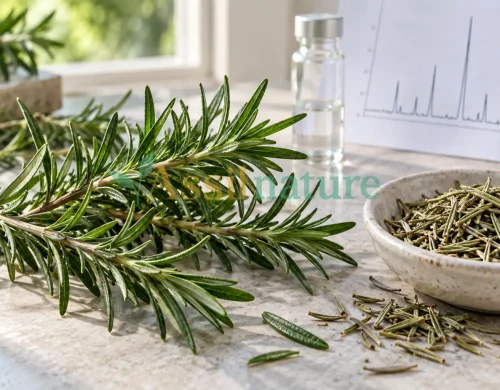
Rosemary Chemical Composition: Carnosic Acid and Key Compounds
What Is the Chemical Composition of Rosemary? The chemical composition of rosemary includes several groups of naturally...
Rosemary Pesticide Residues and EU Compliance: What Buyers Need to Verify
.assil-eu-residues-intro { max-width: 1040px; margin: 0 auto 28px; padding: 30px; color: #30352f; background:...
Rosemary Certificate of Analysis: What Bulk Buyers Should Check
.rosemary-coa-intro { max-width: 1040px; margin: 28px auto; color: #30352f; font-family: inherit; line-height: 1.75; }...