 Mon - Fri: 9:00 - 19:00 GTM

Wild vs Cultivated Rosemary: What Bulk Buyers Should Know
Wild vs Cultivated Rosemary: Is One Always Better?
Wild rosemary and cultivated rosemary can both provide suitable botanical raw material for food, herbal, cosmetic and extraction applications. Neither sourcing method guarantees superior quality on its own.
Wild-collected rosemary may offer a distinctive origin story and access to naturally occurring populations. Cultivated rosemary may provide greater control over agricultural practices, harvest planning and supply consistency. The better option depends on the buyer’s specification, required volume, destination market and intended application.
Direct answer for bulk buyers
Choose rosemary through verified botanical identity, representative sampling, traceability, physical specifications and relevant laboratory testing. “Wild” and “cultivated” describe how the plant was sourced; they do not replace evidence of batch quality.
For example, a carefully collected and properly cleaned wild batch may meet a demanding specification, while poorly handled wild material may contain excessive stems, foreign matter or inconsistent moisture. Likewise, a cultivated batch can offer useful consistency but still requires verification against the buyer’s analytical and regulatory requirements.
Buyers evaluating Moroccan supply can review our Moroccan rosemary product page , learn about its local name in our Azir herb guide , or consult the forthcoming complete Moroccan rosemary guide .
The Practical Difference Between Wild and Cultivated Rosemary
Wild and cultivated rosemary may share the same botanical identity: Salvia rosmarinus (syn. Rosmarinus officinalis). The principal difference lies in how the plant population is established, managed, harvested and documented.
Wild rosemary grows without being planted as a conventional agricultural crop and is collected from naturally occurring populations. Cultivated rosemary is planted and managed within an agricultural production system.
| Procurement Factor | Wild Rosemary | Cultivated Rosemary |
|---|---|---|
| Plant establishment | Naturally occurring plant populations | Planted and managed as an agricultural crop |
| Harvest planning | Influenced by natural availability, access, weather and collection organization | More directly connected to field management and planned harvest schedules |
| Batch uniformity | May show greater natural variation between collection areas and harvest periods | May offer greater control over variety, field practices and harvest timing |
| Traceability structure | Requires clear collection-area records, collector organization and lot separation | Can be linked to identified fields, production records and agricultural inputs |
| Volume predictability | Can vary with natural resources, collection permissions and seasonal conditions | Can be estimated through planted area, expected yield and production planning |
| Input records | Focuses on collection conditions, surrounding land use and contamination risks | Can include documented fertilizers, crop-protection products and field operations |
| Quality verification | Requires specifications, representative samples and relevant batch testing | Requires the same specification, sampling and batch-verification process |
Sourcing method and botanical identity are separate questions
“Wild” and “cultivated” describe how rosemary entered the supply chain. They do not create two different botanical species and should not replace the scientific name, plant-part declaration or physical-form specification. Buyers who need clarification can consult our rosemary botanical-name guide .
Does Wild Rosemary Mean Organic or Pesticide-Free?
No. The term wild rosemary describes material collected from naturally occurring plant populations. It does not automatically prove organic certification, absence of pesticide residues, regulatory compliance or superior chemical composition.
Wild plants may not receive direct agricultural treatment, but collection areas can still be exposed to environmental contamination, neighboring land use, handling risks or unsuitable storage. Cultivated rosemary may involve agricultural inputs, although these inputs can be controlled, documented and evaluated against the buyer’s requirements.
| Claim | Does “Wild” Prove It? | Appropriate Verification |
|---|---|---|
| Organic certified | No | Valid certification covering the collection, handling and supply chain |
| Pesticide-free | No | Suitable residue analysis evaluated against the applicable market limits |
| Higher active-compound content | No | Batch-specific analysis using an agreed analytical method |
| Microbiologically compliant | No | Microbiological testing against the buyer’s specification |
| Free from heavy metals | No | Relevant contaminant testing and collection-area risk assessment |
| Better overall quality | Not by itself | Complete evaluation of identity, appearance, aroma, cleanliness, moisture, contaminants and application-specific parameters |
Natural origin and certified organic status are not the same
A supplier may accurately describe rosemary as wild-collected when the sourcing records support that claim. The supplier should not market the same batch as certified organic unless the relevant certification system covers the product and supply chain.
Similarly, statements such as “grown without pesticides” or “collected away from treated fields” do not replace residue testing when the buyer or destination market requires analytical confirmation.
What Actually Influences Rosemary Quality?
The quality of wild or cultivated rosemary develops through several connected stages. Growing conditions matter, but harvest decisions and post-harvest handling can preserve or reduce the value of the raw material before it reaches the buyer.
This is why two batches carrying the same botanical name and sourcing description may produce different physical and analytical results.
Growing Environment
Climate, altitude, soil, water availability and plant maturity can contribute to natural differences between rosemary populations and cultivated fields.
Harvest Timing
Season, plant-development stage and weather at harvest can influence moisture, aroma, appearance and chemical composition.
Harvested Plant Part
Leaf-to-stem ratio and the inclusion of other aerial parts affect visual quality, bulk density, processing behavior and the analytical profile.
Drying Conditions
Drying speed, airflow, temperature and protection from moisture influence color retention, aroma and storage stability.
Cleaning and Sorting
Appropriate sorting can reduce foreign matter, excessive stems and unsuitable material before packing.
Storage and Packaging
Exposure to humidity, heat, light, pests or unsuitable packaging can reduce batch quality after successful harvesting and drying.
Wild origin does not guarantee higher carnosic acid
Wild environmental conditions may contribute to chemical variation, but they do not guarantee a specific concentration of carnosic acid, rosmarinic acid, ursolic acid or other compounds in a commercial batch.
When compound content determines product acceptance, the requirement should be written into the specification and verified through batch-related analysis using the agreed method. Buyers can continue to our forthcoming guide on rosemary chemical composition and carnosic acid .
Traceability and Responsible Wild Rosemary Collection
Wild collection involves a supply chain that begins outside a conventional agricultural field. For this reason, buyers should evaluate not only the finished rosemary but also how the collection areas, collectors and lots are organized.
A credible wild-rosemary supply program should be able to explain where the material was collected, whether access and collection were authorized when required, how overharvesting risks are managed and how the harvested material remains traceable through drying, cleaning, storage and packing.
| Traceability Element | What the Supplier Should Know | Why It Matters to the Buyer |
|---|---|---|
| Collection area | Defined sourcing area and the lot associated with it | Supports origin verification and collection-area risk assessment |
| Collection authorization | Applicable permissions, agreements or legal access to the resource | Reduces legal and reputational risks in the supply chain |
| Collector organization | Who collects the rosemary and how collection instructions are communicated | Helps control harvested plant parts, cleanliness and handling practices |
| Harvest records | Collection date or period, received quantity and initial lot reference | Connects the raw material to its season and preparation history |
| Sustainable harvesting | Collection approach, regeneration awareness and prevention of destructive removal | Supports resource continuity and long-term supply relationships |
| Lot separation | How material from different areas or harvest periods is identified and managed | Prevents uncontrolled mixing and improves batch-document reliability |
Traceability does not require publishing confidential sourcing details
Suppliers do not need to disclose sensitive collector identities, exact coordinates or commercially confidential sourcing networks on a public website.
They should, however, maintain sufficient internal records to support origin, collection method and batch continuity when a qualified buyer requests documentation during supplier approval or order preparation.
Should a Bulk Buyer Choose Wild or Cultivated Rosemary?
The right choice depends on what the buyer is manufacturing and which characteristics determine acceptance. Origin story may support product positioning, but industrial procurement also requires reliable volume, repeatable preparation and compliance with the agreed specification.
The following framework can help purchasing and quality teams identify the sourcing model that deserves further evaluation.
| Buyer Priority | Sourcing Direction | Required Verification |
|---|---|---|
| Documented wild origin for product positioning | Evaluate traceable wild-collected rosemary | Collection method, origin records, authorization where applicable, representative sample and batch specification |
| Planned recurring volume | Cultivated supply may offer greater production predictability, although organized wild collection may also support substantial volume | Available volume, seasonality, production plan, batch schedule and lead-time confirmation |
| Consistent physical appearance | Compare prepared samples from both sourcing systems | Leaf condition, stem proportion, color, cut size, foreign matter and approved reference sample |
| Extraction performance | Select by analytical profile and process suitability, not by wild or cultivated status alone | Target compounds, agreed analytical method, moisture, plant part and representative batch testing |
| Regulated food or herbal application | Choose the batch that meets the buyer’s and destination market’s requirements | Pesticide residues, contaminants, microbiology, traceability and required documentation |
| Certified organic product | Source only from a supply chain covered by valid organic certification | Certification scope, chain of custody and product documentation |
The safest approach is specification-first sourcing
Define the product before comparing offers: botanical identity, plant part, physical form, quality limits, analytical requirements, quantity, packaging and destination.
Once those points are clear, request representative samples from suitable wild or cultivated batches and compare them under the same acceptance criteria. For form selection, see our guide to whole, cut and powdered rosemary .
Frequently Asked Questions
Is wild rosemary better than cultivated rosemary?
Not automatically. Either can provide suitable raw material when botanical identity, harvesting, preparation, traceability and analytical results meet the buyer’s specification.
What is wild rosemary?
Wild rosemary is collected from naturally occurring plant populations rather than from rosemary planted as a conventional agricultural crop.
What is cultivated rosemary?
Cultivated rosemary is planted and managed within an agricultural production system where field practices, harvest planning and inputs may be documented.
Is wild rosemary automatically organic?
No. Wild collection and organic certification are different concepts. Rosemary should only be marketed as certified organic when the relevant certification covers the product and its supply chain.
Does wild rosemary contain no pesticide residues?
Wild origin alone does not prove the absence of pesticide residues. When residue compliance matters, the relevant batch should be tested and evaluated against the applicable destination-market limits.
Does wild rosemary contain more carnosic acid?
Not necessarily. Carnosic acid content can vary with plant material, growing conditions, harvest timing, processing and storage. A required percentage should be verified through batch-specific analysis using an agreed method.
Can cultivated rosemary provide consistent quality?
Cultivation may improve control over variety, field practices and harvest planning, but the finished batch must still be evaluated through the agreed physical, analytical and regulatory specifications.
What traceability is needed for wild rosemary?
Useful records can include the collection area, collection period, applicable authorization, received quantity, initial lot reference, preparation history and separation of different sourcing lots.
Is wild rosemary suitable for extraction?
It can be, provided that the plant part, physical preparation, active-compound profile, contaminant results and processing characteristics meet the extractor’s requirements.
How should buyers choose between wild and cultivated rosemary?
Buyers should first define the intended application, required volume, specifications, testing, documentation and destination-market requirements. They can then compare representative batches from suitable wild and cultivated sources under the same acceptance criteria.
Scientific and Regulatory References
The distinction between wild and cultivated rosemary should be evaluated through documented sourcing, analytical testing, and the requirements of the destination market. The following scientific and regulatory sources provide additional context for professional buyers.
-
European Parliament and Council — Regulation (EU) 2018/848 on Organic Production
The regulation establishes specific conditions under which the collection of wild plants may qualify as organic production. Therefore, the term “wild collected” alone does not establish organic status or replace valid certification and supply-chain documentation.
View the consolidated EU regulation -
Francolino et al. (2023) — Wild and Cultivated Rosemary Comparison
This peer-reviewed study compared hydroalcoholic extracts obtained from wild and cultivated Rosmarinus officinalis. Its findings demonstrate that the cultivation system and plant source can influence phytochemical profiles, supporting the need for lot-specific analysis instead of assumptions based only on whether the rosemary is wild or cultivated.
Read the study: Antioxidants 2023, 12(8), 1633 -
FairWild Foundation — FairWild Standard 3.0
The FairWild framework covers ecological, social, and business principles for the responsible collection and trade of wild plant ingredients. It is a useful reference for assessing harvesting practices, resource conservation, traceability, and responsible supply-chain management.
Explore the FairWild Standard 3.0
Source Moroccan Rosemary According to Your Specifications
Choosing between wild and cultivated rosemary should begin with the intended application, required specifications, order volume, and destination-market requirements—not with the sourcing label alone.
Assil Nature supplies Moroccan rosemary for professional buyers, with available options depending on the requested form, preparation, quantity, and batch requirements. Product samples and supporting documentation can be discussed before confirming a commercial order.
- Moroccan origin and batch-level sourcing information
- Whole leaves, cut rosemary, and rosemary powder options
- Samples available for buyer evaluation
- COA and additional testing according to agreed requirements
- Bulk packaging and export documentation upon request
Review our Moroccan rosemary product page or contact our team with your required form, quantity, target specifications, destination port, and intended application.
Request a Sample or Bulk Quotation
To receive a relevant offer, please include your required quantity, rosemary form, packaging preference, destination country or port, and any mandatory analytical or regulatory specifications.
Ask via WhatsAppRelated Posts
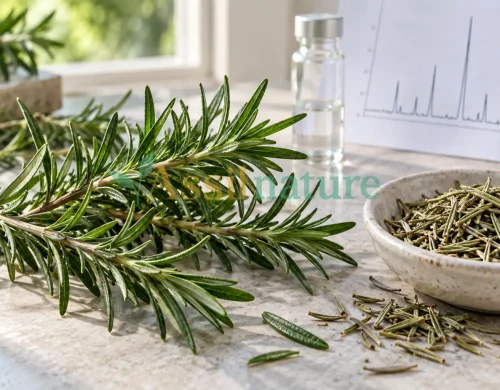
Rosemary Chemical Composition: Carnosic Acid and Key Compounds
What Is the Chemical Composition of Rosemary? The chemical composition of rosemary includes several groups of naturally...
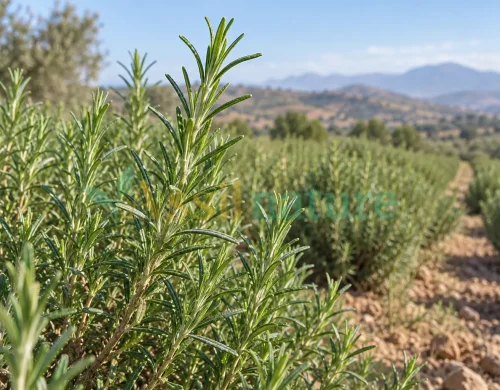
Rosemary Pesticide Residues and EU Compliance: What Buyers Need to Verify
.assil-eu-residues-intro { max-width: 1040px; margin: 0 auto 28px; padding: 30px; color: #30352f; background:...
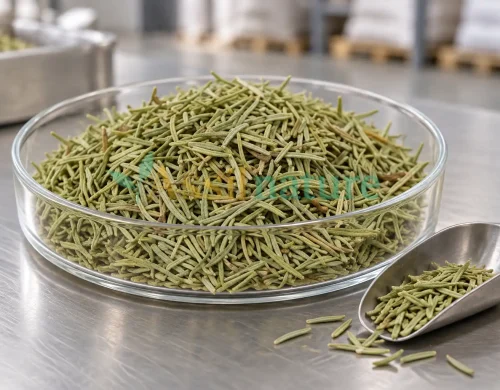
Rosemary Certificate of Analysis: What Bulk Buyers Should Check
.rosemary-coa-intro { max-width: 1040px; margin: 28px auto; color: #30352f; font-family: inherit; line-height: 1.75; }...