 Mon - Fri: 9:00 - 19:00 GTM

Azir Herb in Morocco: Moroccan Rosemary for Bulk Buyers
Moroccan Botanical Raw Material
What Is Azir Herb?
Azir herb is a local Moroccan name commonly used for rosemary. International buyers generally know the same aromatic plant as rosemary, Moroccan rosemary or by its accepted botanical name, Salvia rosmarinus.
The former scientific name Rosmarinus officinalis also remains widely used in commercial specifications, laboratory documents and technical literature. Both scientific names may therefore appear in rosemary supply chains, although Salvia rosmarinus is the currently accepted botanical name.
In Moroccan trade and everyday language, “Azir” usually refers to rosemary. However, the local name alone does not confirm the botanical species, plant part, origin, physical form or quality of a commercial batch. These details should be stated separately in the product specification and verified through traceability and batch documentation.
For B2B procurement, a clear commercial description can identify the material as: Moroccan rosemary — Salvia rosmarinus (syn. Rosmarinus officinalis), followed by the plant part, supplied form, origin and required quality parameters.
Buyers can review our Moroccan rosemary product page , compare the two scientific names in our rosemary botanical-name guide , or consult the forthcoming complete Moroccan rosemary guide .
Local and Botanical Names
Azir, Rosemary and the Names Used in Moroccan Trade
Moroccan suppliers, collectors and local buyers may refer to rosemary as Azir or use regional spelling and pronunciation variations. International importers are more likely to search for Moroccan rosemary, dried rosemary leaves, bulk rosemary or the botanical names shown in technical documents.
These terms can describe the same commercial herb, but they serve different purposes. A local name supports communication and origin context, while a botanical name provides the clearer identity required for specifications, certificates and laboratory records.
| Name or Term | How It Is Used | What It Confirms |
|---|---|---|
| Azir herb | Moroccan local and commercial usage | Common identity in local communication, but not complete technical verification |
| Rosemary | Standard English common name | General commercial plant identity |
| Moroccan rosemary | Origin-based B2B and export description | Declared Moroccan origin when supported by traceability documents |
| Salvia rosmarinus | Currently accepted botanical name | Botanical species identity |
| Rosmarinus officinalis | Recognized synonym still used in trade and scientific literature | The same rosemary species when correctly applied |
Recommended wording for a commercial specification
Product: Moroccan Rosemary (Azir)
Botanical name: Salvia rosmarinus Spenn.
(syn. Rosmarinus officinalis L.)
Plant part: Leaves or aerial parts, as contractually agreed
Form: Whole leaves, cut material or powder
Origin: Morocco
Buyers who need a detailed explanation of the scientific nomenclature can read Salvia rosmarinus vs Rosmarinus officinalis . Buyers selecting a physical format can also consult our guide to whole, cut and powdered rosemary .
Origin and Sourcing
What Moroccan Origin Means for Azir Herb Buyers
Morocco offers suitable conditions for aromatic plants across Mediterranean, Atlantic-influenced and inland mountain environments. Rosemary grows in different Moroccan settings, and commercial supply may originate from wild collection, cultivated production or organized sourcing through collectors and cooperatives.
For an industrial buyer, however, country of origin is only the beginning. The commercial value of a rosemary batch depends on its traceability, harvested plant part, post-harvest handling, drying, cleaning, storage and compliance with the buyer’s specification.
Declared Origin
The supplier should be able to identify Morocco as the country of origin and support that declaration with the appropriate commercial and export documentation.
Sourcing Method
Wild-collected and cultivated rosemary require different sourcing records. The collection or cultivation method should be confirmed rather than inferred from the local name Azir.
Batch Traceability
Batch references should connect the supplied material with its sourcing, preparation, storage and relevant analytical documentation.
Export Preparation
Cleaning, sorting, controlled drying and suitable packaging directly affect the material received by food, herbal, cosmetic and extraction manufacturers.
Moroccan origin does not automatically prove every quality claim
The terms Moroccan rosemary, Atlas rosemary, wild rosemary and natural Azir should not be treated as interchangeable quality certificates.
Claims concerning pesticide residues, microbiological quality, heavy metals, moisture, foreign matter or active-compound content should be supported by the agreed specification and, when required, analysis of the relevant batch.
This distinction helps buyers avoid selecting rosemary only by origin story. The stronger procurement approach combines Moroccan provenance with clear specifications, representative samples, traceability and fit-for-purpose testing.
Commercial Forms and Applications
How Azir Herb Is Supplied to Bulk Buyers
Azir herb can enter international supply chains in several physical forms. The correct option depends on the intended manufacturing process, required particle size, handling equipment and quality specification.
Buyers should define the form before requesting a quotation because whole rosemary leaves, cut material and rosemary powder involve different processing, inspection and packaging requirements.
| Commercial Form | Typical Buyer Requirements | Potential Applications |
|---|---|---|
| Whole dried leaves | Leaf integrity, clean appearance, controlled moisture, aroma and limited foreign matter | Herbal blends, infusions, repacking, further cutting and botanical processing |
| Cut rosemary | Agreed cut size, particle-size consistency, dust control and application-specific cleanliness | Seasoning blends, herbal products, tea blends and industrial formulations |
| Rosemary powder | Mesh or particle-size range, microbial specification, moisture control and suitable barrier packaging | Dry blends, herbal preparations and manufacturing processes requiring a milled ingredient |
| Extraction raw material | Plant-part definition, compound targets, extraction suitability and agreed analytical methods | Botanical extracts, antioxidant ingredients and specialized industrial processing |
The intended application should guide the specification
A buyer sourcing rosemary for a visual herbal blend may prioritize intact leaves and appearance. A seasoning manufacturer may focus on cut size, cleanliness and aroma, while an extraction company may require specific analytical parameters and a representative batch sample.
Pharmaceutical, food, cosmetic and supplement applications may also follow different regulatory and documentation requirements in the destination market. Suitability should therefore be evaluated against the buyer’s actual use and applicable rules rather than assumed from the name Azir.
For a detailed comparison of the three principal physical forms, read our whole, cut or powdered rosemary guide . Buyers seeking whole dried material can also review the Moroccan rosemary product page .
Quality Evaluation
How Bulk Buyers Should Evaluate Azir Herb Quality
The name Azir herb identifies rosemary in local Moroccan usage, but it does not define a complete commercial grade. Two rosemary batches can share the same common and botanical names while differing in appearance, cleanliness, moisture, aroma, processing and analytical profile.
A reliable purchasing decision should combine a written specification, representative sample, batch information and the tests required for the intended market and application.
| Quality Point | What the Buyer Should Check | Why It Matters |
|---|---|---|
| Botanical identity | Scientific name, plant part and consistency between the specification, sample and supporting documents | Reduces the risk of species, naming or raw-material confusion |
| Physical appearance | Color, leaf condition, stem proportion, cut size and visible cleanliness | Influences processing performance, presentation and acceptance of the batch |
| Aroma | Characteristic rosemary aroma without musty, fermented or foreign odors | Helps indicate handling and storage condition, but does not replace analysis |
| Moisture | Measured result compared with the contractual maximum | Affects stability, storage behavior, weight and microbiological risk |
| Foreign matter | Extraneous plant material, soil, stones and other unwanted matter | Indicates the effectiveness of collection, sorting and cleaning |
| Contaminants and residues | Pesticide residues, heavy metals, microbiological parameters and other market-specific requirements | Supports regulatory and customer compliance in the destination market |
| Active compounds | Agreed compounds, target values and analytical methods when required | Particularly important for extraction and standardized ingredient buyers |
A sample is useful, but it must represent the commercial batch
A visually attractive sample does not protect the buyer if the shipped material comes from a different batch or preparation process. Before approving a bulk order, the buyer should confirm how the sample relates to the offered lot and whether the analytical documents apply to the same material.
Test panels should be agreed before final pricing whenever laboratory costs, destination-market limits or customer-specific requirements may materially affect the offer.
For a more detailed procurement framework, consult our forthcoming guide to rosemary COA and laboratory testing .
Buyer Checklist
What to Include in an Azir Herb or Moroccan Rosemary RFQ
A precise request for quotation allows the supplier to evaluate availability, preparation, testing, packaging and logistics before issuing a commercial offer. Buyers can use the following checklist when sourcing Azir herb or Moroccan rosemary.
Example of a useful initial inquiry
“We require Moroccan rosemary identified as Salvia rosmarinus (syn. Rosmarinus officinalis), supplied as whole dried leaves for botanical extraction. Please quote for the required quantity and destination, subject to our moisture, contaminant and active-compound specifications.”
Extraction buyers can continue to our forthcoming guide on rosemary raw material for extraction , while buyers evaluating active compounds can consult the planned guide to rosemary chemical composition and carnosic acid .
Frequently Asked Questions
What is Azir herb?
Azir is a local Moroccan name commonly used for rosemary. In international trade, the same herb is generally described as rosemary, Moroccan rosemary or by its botanical name.
What is the botanical name of Azir?
Rosemary is currently accepted botanically as Salvia rosmarinus. The former name Rosmarinus officinalis remains a recognized synonym and is still widely used in trade, scientific literature and technical documentation.
Is Azir the same as Moroccan rosemary?
Azir usually refers to rosemary in Moroccan local usage. For a commercial transaction, the supplier should still confirm the botanical species, country of origin, plant part, physical form and batch information.
Does the name Azir prove that rosemary is wild-collected?
No. Azir is a common name and does not establish whether the rosemary was wild-collected or cultivated. The sourcing method should be confirmed through supplier information and traceability records.
Is Moroccan Azir automatically pesticide-free?
No. A pesticide-free claim should not be based only on the local name, Moroccan origin or collection method. When pesticide compliance matters, it should be evaluated against the applicable destination-market limits using suitable batch-related testing.
In which forms can Azir herb be supplied?
Moroccan rosemary may be supplied as whole dried leaves, cut material, powder or raw material intended for further processing. Availability and technical specifications should be confirmed separately for each form.
What should buyers check in a rosemary sample?
Buyers should evaluate botanical identity, color, aroma, cleanliness, leaf condition, stem proportion and physical form. They should also confirm that the sample represents the commercial batch being offered.
Can Azir herb be used as extraction raw material?
Rosemary can be sourced for extraction, but suitability depends on the required plant part, preparation, target compounds, analytical method and the extractor’s technical specification.
Which documents may be requested for bulk Moroccan rosemary?
Depending on the transaction and destination, buyers may request a product specification, COA, Certificate of Origin, phytosanitary documentation and other commercial or technical documents. Document availability should be confirmed before the order.
What information should a buyer provide when requesting a quotation?
The inquiry should include the required form, quantity, intended application, quality parameters, testing requirements, packaging, destination and preferred Incoterm.
Scientific References
The local-name and botanical information in this article is supported by Moroccan ethnobotanical research, recognized international plant databases and the taxonomic study that placed rosemary within the genus Salvia.
-
Kachmar, M. R. et al. (2021).
“Traditional Knowledge of Medicinal Plants Used in the Northeastern Part of Morocco.” The study records Rosmarinus officinalis under the local name Azir, supporting its documented use as a Moroccan common name for rosemary.
View the Moroccan ethnobotanical study -
Royal Botanic Gardens, Kew — Plants of the World Online.
Salvia rosmarinus Spenn. is listed as the accepted botanical name for rosemary, while Rosmarinus officinalis L. is maintained as a recognized synonym.
Consult the Kew botanical record -
Drew, B. T., González-Gallegos, J. G., Xiang, C. L., Kriebel, R.,
Drummond, C. P., Walker, J. B. and Sytsma, K. J. (2017).
“Salvia united: The greatest good for the greatest number.” Taxon, 66(1), 133–145. This study provides the taxonomic basis for including the former genus Rosmarinus within Salvia.
Read the taxonomic publication
Botanical identification note: Common plant names can vary between Moroccan regions and may sometimes be applied inconsistently. The name Azir should therefore be accompanied by the scientific name, plant part, origin and batch documentation in a professional supply specification.
Source Azir Herb from Morocco
Assil Nature supplies Moroccan rosemary identified as Salvia rosmarinus (syn. Rosmarinus officinalis) for wholesale and industrial requirements.
Tell us the required form, quantity, intended application, destination, packaging and analytical requirements. We can then evaluate the appropriate product preparation, documentation and quotation for your project.
Related Posts
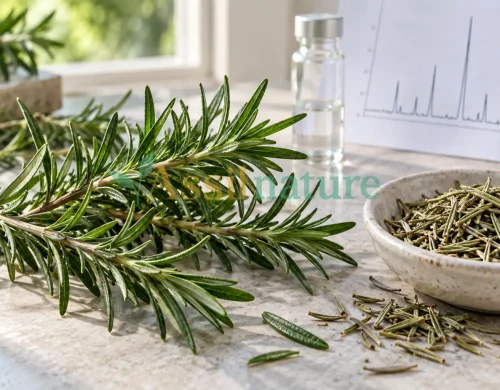
Rosemary Chemical Composition: Carnosic Acid and Key Compounds
What Is the Chemical Composition of Rosemary? The chemical composition of rosemary includes several groups of naturally...
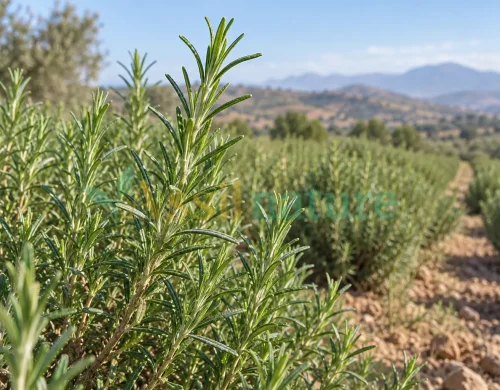
Rosemary Pesticide Residues and EU Compliance: What Buyers Need to Verify
.assil-eu-residues-intro { max-width: 1040px; margin: 0 auto 28px; padding: 30px; color: #30352f; background:...
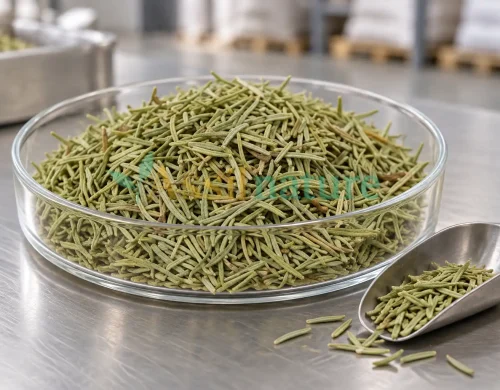
Rosemary Certificate of Analysis: What Bulk Buyers Should Check
.rosemary-coa-intro { max-width: 1040px; margin: 28px auto; color: #30352f; font-family: inherit; line-height: 1.75; }...