 Mon - Fri: 9:00 - 19:00 GTM
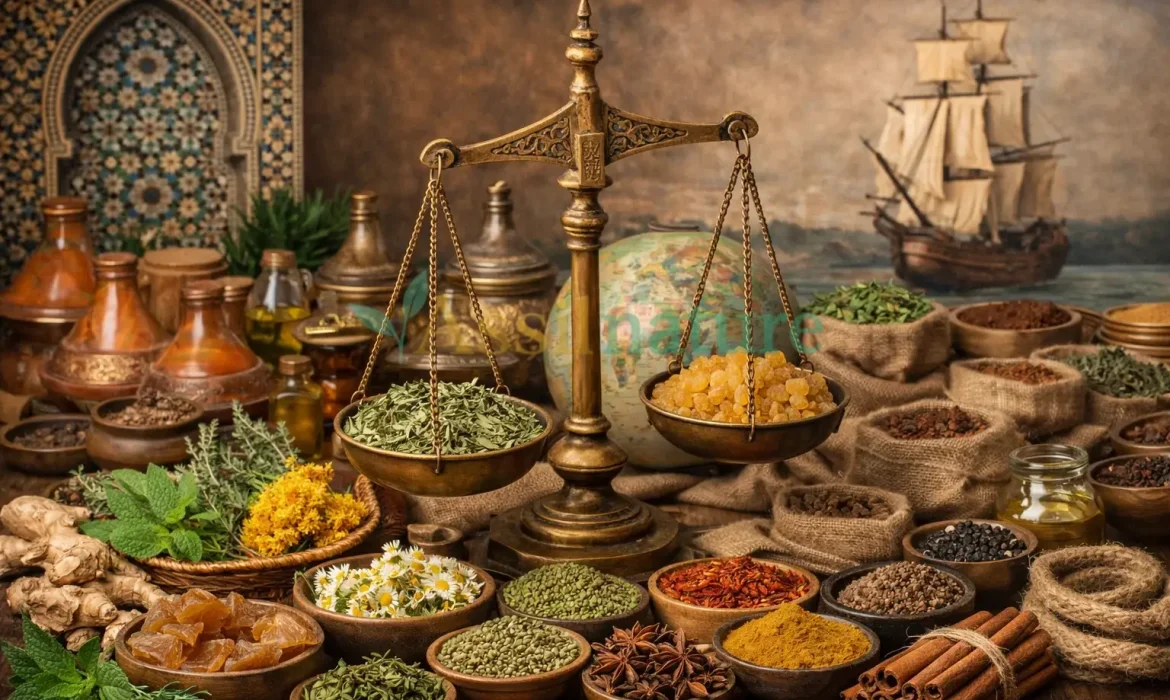
Moroccan Medicinal Herbs in Global Trade
The global trade of medicinal herbs has expanded significantly as international buyers seek reliable natural ingredients with consistent quality and traceable origins. Within this evolving landscape, Morocco has established a distinct position as a long-standing supplier of medicinal herbs and aromatic plants.
Moroccan medicinal herbs have moved beyond regional trade and traditional distribution channels. Today, they are integrated into global supply chains serving pharmaceutical, cosmetic, food, and natural product industries across multiple markets.
This article examines Moroccan medicinal herbs in global trade by exploring market dynamics, buyer expectations, and the strategic factors that shape international sourcing decisions. The focus remains on trade structure, quality considerations, and commercial relevance rather than product claims.
Morocco’s Position in the Global Medicinal Herb Market
Morocco occupies a strategic position in the global medicinal herb market due to its geographic location, ecological diversity, and established sourcing networks. These factors allow Moroccan suppliers to serve a wide range of international buyers with varied requirements.
The country’s role in global trade is shaped by both traditional harvesting regions and modern export-oriented operations. This combination enables Morocco to supply bulk raw materials as well as value-focused botanical ingredients for different market segments.
International buyers often view Morocco as a bridge between regional sourcing and global distribution. Its proximity to Europe, access to maritime trade routes, and experience with export documentation support efficient trade flows.
Rather than competing solely on volume, Moroccan medicinal herbs are positioned within global trade through reliability, adaptability, and alignment with buyer-driven sourcing models.
Key Export Markets and Buyer Segments
Moroccan medicinal herbs are exported to a diverse range of international markets, each with distinct purchasing behaviors and regulatory expectations. Understanding these markets helps clarify how Moroccan products are positioned within global trade.
European markets remain among the primary destinations due to geographic proximity and established trade relationships. Buyers in these regions often prioritize documentation, consistency, and alignment with quality and safety standards.
North America represents another important buyer segment. Importers and brands in this market focus on traceability, supplier transparency, and the ability to support long-term supply agreements.
Emerging markets in the Middle East and parts of Asia also contribute to global demand. These buyers may emphasize volume flexibility and reliable logistics while gradually increasing quality and documentation requirements.
Across these markets, buyer segments typically include ingredient importers, cosmetic and personal care manufacturers, food and beverage producers, and distributors supplying downstream industries.
Trade Flows, Logistics, and Supply Chain Considerations
Global trade in Moroccan medicinal herbs relies on established logistics networks that connect sourcing regions with international buyers. Efficient trade flows depend on coordination between suppliers, exporters, logistics providers, and destination-market partners.
Maritime transport remains the primary channel for bulk shipments, supporting cost efficiency and scalability. At the same time, smaller or time-sensitive orders may move through alternative logistics arrangements depending on buyer requirements.
Supply chain planning also involves inventory management and seasonal alignment. Moroccan herbal availability can vary throughout the year, which requires coordination between harvesting cycles, processing capacity, and export scheduling.
Documentation accuracy and shipment preparation play a critical role in logistics performance. Clear records, proper packaging, and alignment with destination-market expectations help reduce delays during inspection and customs clearance.
For global buyers, understanding these supply chain considerations supports better planning. It allows procurement teams to anticipate lead times, manage risk, and align sourcing strategies with operational needs.
Quality Standards, Sourcing Practices, and Buyer Expectations
Quality standards play a central role in how Moroccan medicinal herbs are evaluated in global trade. International buyers expect sourcing practices that support consistency, traceability, and alignment with destination-market requirements.
Professional suppliers apply structured sourcing methods rather than ad-hoc collection. This includes defined harvesting criteria, controlled post-harvest handling, and storage practices designed to preserve botanical integrity throughout the supply chain.
Buyers also assess how quality is monitored over time. Clear procedures for inspection, batch segregation, and corrective actions help reduce variability and support repeat procurement.
In addition, buyer expectations extend beyond physical product characteristics. Documentation accuracy, transparency in communication, and responsiveness to technical questions are often viewed as indicators of overall supplier reliability.
Together, quality standards and sourcing practices form the basis for trust in global trade. They enable buyers to integrate Moroccan medicinal herbs into their operations with greater confidence and reduced operational risk.
To understand how quality is assessed in international sourcing, see our article on quality control in medicinal herb export.
Strategic Relevance of Moroccan Medicinal Herbs in Global Trade
Within global trade, Moroccan medicinal herbs hold strategic relevance beyond short-term supply considerations. Buyers increasingly view sourcing decisions as part of broader risk management and long-term positioning strategies.
Morocco offers a combination of botanical diversity, established trade relationships, and adaptable supply structures. This allows buyers to integrate Moroccan origin into diversified sourcing portfolios rather than relying on single-market dependencies.
In addition, Moroccan suppliers often operate within mixed sourcing models that combine traditional knowledge with export-oriented practices. This balance supports both authenticity and commercial scalability when aligned with modern quality systems.
For international buyers, strategic relevance also lies in flexibility. The ability to adjust volumes, specifications, and documentation over time enables smoother responses to market changes and regulatory updates.
As global trade environments continue to evolve, Moroccan medicinal herbs remain positioned as reliable inputs within sourcing strategies that prioritize continuity, adaptability, and long-term cooperation.
Positioning Moroccan Medicinal Herbs Within a Global Trade Framework
In a competitive global environment, the value of Moroccan medicinal herbs is defined by how well they align with international trade frameworks rather than by origin alone. Buyers increasingly seek suppliers and origins that combine sourcing reliability with clear operational standards.
When integrated into global trade strategies, Moroccan medicinal herbs benefit from structured sourcing practices, quality oversight, and adaptable logistics. These elements help buyers manage risk while maintaining flexibility across markets and product categories.
For decision-makers, understanding this positioning supports informed procurement planning. It clarifies how Moroccan origin can contribute to diversified sourcing portfolios without compromising consistency or compliance.
Ultimately, Moroccan medicinal herbs occupy a sustainable role in global trade when cultural context, quality systems, and commercial discipline operate together. This balance enables long-term participation in international supply chains.
For a comprehensive overview, explore our main resource on Moroccan medicinal herbs guide developed for global buyers and importers.
Frequently Asked Questions
What role do Moroccan medicinal herbs play in global trade?
Moroccan medicinal herbs serve as reliable botanical inputs in global trade, supporting diversified sourcing strategies through established supply networks and export experience.
Which industries commonly source Moroccan medicinal herbs?
Common buyer segments include ingredient importers, cosmetic manufacturers, food and beverage producers, and distributors supplying natural product industries.
Why do buyers value Moroccan origin in international markets?
Buyers value Moroccan origin due to its combination of botanical diversity, sourcing continuity, and alignment with international trade and quality expectations.
How do quality standards affect global trade positioning?
Quality standards support consistency, traceability, and buyer confidence, enabling Moroccan medicinal herbs to integrate smoothly into regulated global markets.
Are Moroccan medicinal herbs suitable for long-term sourcing strategies?
Yes. When supported by structured sourcing and export practices, Moroccan medicinal herbs can contribute to stable, long-term supply arrangements.
Who benefits most from understanding Moroccan herbal trade dynamics?
Importers, procurement teams, brand strategists, and distributors benefit from understanding trade dynamics to optimize sourcing and market positioning.